
Skip to content

KUKA KSS00006 Drives Not Enabled – Real Causes & Practical Fixes (KRC4 Guide)

Error Code Overview

  • Error Code: KSS00006
  • Category: Drive / System Readiness
  • Severity: High
  • System: KRC4 Controller / KSP-KPP Drive System
  • Impact: Robot axes cannot move until servo drives are enabled

Quick Fix for KUKA KSS00006

If KSS00006 appears, go through th is checklist before deep diagnostics:

  • Clear all active safety alarms (KSS00001 / KSS00002 / KSS00004)
  • Confirm safety circuit is fully closed (E-stop, doors, relays)
  • Check SmartPAD deadman switch (manual mode)
  • Verify correct operation mode (T1 / T2 / AUT)
  • Reset safety system via SmartHMI
  • Press DrivesON and listen for contactor response

👉 Field Tip:
If there is no contactor “click” when pressing DrivesON, the issue is almost always upstream (safety or power), not the servo drive.

What KSS00006 Actually Means

KSS00006 simply means:

“The controller refused to turn drivesON.”

It doesn’t tell you why.

Before drives can be enabled, the KRC4 checks a full chain:

  • Safety system OK
  • Controller fully initialized
  • Power supply stable
  • Drive modules ready
  • Enable signal valid

If any one of these fails, you get KSS00006.

What Is KUKA KSS00006 Drives Not Enabled?

KUKA KSS00006 is a controller-level status error indicating that the KRC4 cannot activate the servo drives because one or more required enable conditions are not satisfied.

When th is error is active:

  • Servo drives remain disabled
  • Robot axes cannot move
  • Drive power is blocked by the controller
  • Motion is not possible until all enable conditions are valid

The controller only enables drives after confirming:

  • Safety system is valid
  • Controller startup is complete
  • Power supply is stable
  • Drive modules (KSP/KPP) are ready
  • Enable signal path is complete

Common Symptoms

Operators commonly report the following:

  • SmartHMI displays KSS00006 Drives Not Enabled
  • “DrivesON” button does not respond
  • Robot remains in idle / ready mode without movement
  • Contactors fail to engage when enabling drives
  • Startup sequence completes, but motion is blocked

Field Tip:
If the robot boots normally but the drives never energize, KSS00006 often points to an enable-chain interruption rather than a failed servo drive.

Common Causes of KSS00006

1. Safety Chain Not Closed

This is the #1 reason.

Typical triggers:

  • Emergency stop still active
  • Safety door open
  • Faulty safety relay
  • SIB/CIB module issue

Drives will never enable until safety is 100% valid.

2. Deadman / SmartPAD Issue

In manual mode, this is very common.

  • Deadman not pressed correctly
  • Worn or faulty switch
  • SmartPAD cable issue
  • Wrong operation mode

If no enable signal → no drives.

3. Contactor / Power Side Problem

If you press DrivesON and hear nothing:

  • Main contactor not pulling in
  • Coil voltage missing
  • Fuse or breaker issue
  • KPP power module fault

This is a classic “no click = upstream issue” situation.

4. KSP / KPP Drive Not Ready

Sometimes the drives themselves are the blocker.

  • KSP not initialized
  • KPP fault or overheating
  • Internal drive error

Check LEDs before replacing anything.

5. Startup / Communication Not Complete

KRC4 must finish startup first.

  • EtherCAT / internal bus issues
  • Config mismatch
  • Initialization interrupted

Drives won’t enable if the system isn’t fully ready.

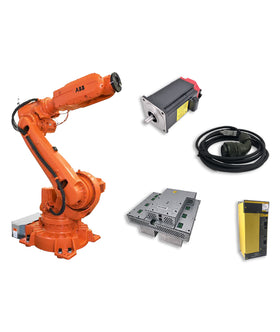
Recommended Replacement Parts

Component

Description

Use Case

KSP Servo Drive Modules

axis drive modules

Replace if LEDs indicate fault or KRC shows drive error

KPP Power Modules

Power supply for servo drives

Faulty or unresponsive power modules

Teach Pendant / SmartPAD (00-168-334)

Deadman / enabling switch

Replace if deadman switch fails to signal enable

Safety Relays & Contactors

Pilz / Sick certified

Restore safety-to-drive signal path

Main Contactors & Power Supply Units

High-current switching

Repair unstable drive power conditions

Safety PLC / SIB/CIB Modules

Safety interface boards

Faults causing drive enable blockage

⚠️ Compatibility Tip: Verify KRC4 version, KSP/KPP firmware, and SmartPAD revision before replacing components.

Troubleshooting Steps

Step 1 – Check Safety Status

  • Confirm no active KSS00001 / 00002 / 00004 alarms
  • Verify safety loop is fully closed

Step 2 – Verify Enable Signal

  • Press deadman switch
  • Confirm correct operating mode
  • Check SmartHMI enable signal diagnostics

Step 3 – Test DrivesON Signal Path

  • Press DrivesON button
  • Listen for contactor engagement
  • Verify controller output signal

Step 4 – Check Main Power Supply

  • Measure incoming voltage
  • Verify contactor operation
  • Inspect fuses and breakers

Step 5 – Inspect KSP / KPP Modules

  • Review LED indicators
  • Check temperature / status logs
  • Confirm module readiness

Step 6 – Diagnose Communication Systems

  • Inspect EtherCAT / KUKA bus
  • Check connectors and cables
  • Verify bus initialization

Step 7 – Verify Startup Sequence

  • Confirm KRC4 startup completed normally
  • Review startup-related fault logs

Step 8 – Replace Faulty Components

  • Replace failed drives, relays, switches, or contactors as needed

Parts That Actually Fail (Real Replacement Focus)

From real maintenance cases, these are the parts most often involved:

Component

When to Suspect It

SmartPAD (00-168-334)

Deadman not responding

KPP Power Module

No power / contactor issues

KSP Servo Module

Drive not ready

Safety Relay / Contactor

No “click” on DrivesON

SIB / CIB Module

Safety chain won’t close

Pro Diagnostic Tips

Experienced technicians often diagnose KSS00006 by tracing the full enable chain:

Drive Enable Logic Path:
Safety → Controller Logic → DrivesON Signal → Main Contactor → KPP → KSP → Servo Ready

Helpful checks include:

  • Monitor KSP/KPP LED patterns
  • Measure contactor coil voltage during DrivesON
  • Use SmartHMI diagnostics to review enable checklist
  • Trace where the signal chain stops

Field Tip:
If pressing “DrivesON” produces no click from the contactor, the problem is usually upstream—not inside the servo drive.

Fix Methods

Dependingon root cause:

  • Clear active safety faults
  • Repair safety circuit / relays
  • Replace faulty SmartPAD / enabling switch
  • Repair contactor / power supply faults
  • Replace failed KSP / KPP modules
  • Resolve communication or startup errors

Prevention & Maintenance

Reduce future KSS00006 faults with routine maintenance:

  • Inspect safety wiring and relays regularly
  • Test deadman switch and SmartPAD functions
  • Monitor KSP/KPP health and temperature
  • Maintain stable plant power quality
  • Review startup logs during PM checks

Recommended Inspection Schedule:

  • Monthly: Check SmartPAD, relays, and safety inputs
  • Quarterly: Review drive logs and contactor condition
  • Semi-Annually: Verify power quality and bus health

Related Errors

Safety Errors

Drive Errors

Startup Errors

⚠️ Technical Note: KSS00006 is often a secondary symptom of unresolved safety or power conditions.

FAQ

Why can’t I enable drives after resetting errors?

One or more drive enable conditions are still not satisfied, such as safety, power, or communication readiness.

Does KSS00006 mean the drives are bad?

Not necessarily. Most cases are caused by safety chain or enable logic issues rather than failed drives.

What is required for DrivesON?

The controller requires valid safety signals, completed startup, functional power supply, and ready KSP/KPP modules.

How do I reset KUKA KSS00006?

Clear all related faults, verify enable conditions, then restart and press DrivesON again.

Final Thoughts

KUKA KSS00006 is a drive enable status fault indicating that the controller cannot activate the servo system.

Because It is usually a secondary alarm, the true root cause is often found upstream in the safety chain, power circuit, enable logic, or startup sequence.

A systematic troubleshooting process—following the drive enable chain from safety input to servo output—is the fastest way to isolate and resolve the issue.

Explore the Full Guide: Industrial Robot Fault Codes Library  →  KUKA Error Codes

Explore the complete guide for troubleshooting, repair strategies, and component replacement across industrial robot systems.

🔧 Recommended Parts for KUKA Error Troubleshooting

Key components commonly involved in kuka error troubleshooting issues and replacements.

Previous article UR Joint Overload Error – Symptoms & Diagnostic Guide

Leave a comment on this topic

* Required fields

Blog posts

Compare products

{"one"=>"Select 2 or 3 items to compare", "other"=>"{{ count }} of 3 items selected"}

Select first item to compare

Select second item to compare

Select third item to compare

Compare