



Error Code: KSS15017
Category: Servo Drive / Overcurrent Protection
Severity: Critical
System: KRC4 / KSP Servo Drive System
Impact: Axis shutdown, drive protection triggered, robot motion interrupted
If the robot suddenly stops with an overcurrent alarm, try this first:
Never continue operation repeatedly after overcurrent alarms without checking the mechanical load condition.
👉 If the alarm disappears after restart but returns during acceleration or heavy motion, it usually indicates excessive servo load or early-stage drive degradation.
KUKA KSS15017 indicates that the servo drive detected abnormal motor current exceeding the configured protection threshold.
In KUKA KRC4 architecture:
When KSS15017 is triggered:
As a result:
👉 In short: the servo system is demanding more current than the drive or motor can safely handle.
This is one of the most common real-world causes.
Typical examples include:
Even minor resistance inside a robot axis can dramatically increase motor current during acceleration.
KUKA robots are highly sensitive to payload configuration.
Common causes include:
Heavy inertia creates sudden torque spikes during acceleration and deceleration, pushing servo current beyond protection limits.
Overly aggressive motion tuning can overload the servo system.
Examples:
👉 KSS15017 often appears during dynamic transitions rather than constant-speed motion.
Electrical instability can also trigger overcurrent protection.
Common issues include:
In many factories, intermittent cable damage causes random overcurrent alarms that are difficult to reproduce consistently.
If the same axis repeatedly triggers KSS15017 with no obvious mechanical issue, the KSP drive itself may be failing.
Typical failure modes:
👉 Persistent single-axis overcurrent faults often point to early-stage KSP degradation.
Servo motors can also create abnormal current draw.
Possible causes:
In this situation, the motor may draw excessive current even during normal movement.
| Component | Recommended Replacement Trigger | Diagnostic Condition | Engineering Notes |
| KUKA KSP Servo Drive Module | Replace when overcurrent repeatedly affects same axis | - Repeated overcurrent alarms on identical axis - Current spikes without mechanical cause - Drive enters protective shutdown |
Indicates internal current regulation instability or output stage degradation |
| Servo Motor Assembly | Required if winding or thermal degradation is confirmed | - Motor temperature rises abnormally under normal load - Insulation resistance decline - Torque output becomes inconsistent |
Motor degradation often amplifies current demand, triggering false overcurrent alarms |
| Motor Power Cable Assembly | Critical when intermittent short or insulation damage is suspected | - Random overcurrent during motion - Fault correlates with cable movement - Visible insulation wear or heating spots |
High-resistance or partial short causes unstable current draw and protective triggering |
| Gearbox / Mechanical Transmission Components | Necessary when mechanical resistance increases servo load | - Axis becomes stiff or noisy - Load increases gradually over time - Overcurrent occurs only under motion |
Mechanical friction is a major hidden cause of persistent current overload faults |
| Check Item | Why It Matters |
| Motor current specification | Mismatch leads to chronic overload or false current limiting |
| Payload configuration | Incorrect payload inflates torque demand estimation |
| KSP drive model and firmware | Affects current loop control strategy and protection thresholds |
| Axis gearing and transmission ratio | Incorrect ratio causes torque miscalculation and overload misdiagnos is |
Determine:
Single-axis faults usually indicate localized mechanical or electrical problems.
With power OFF:
👉 Mechanical drag is one of the most overlooked causes of servo overcurrent.
Temporarily reduce:
Then retest the robot.
If KSS15017 disappears under softer motion profiles, excessive dynamic load is likely the root cause.
Check:
Pay special attention to cable sections near robot joints where repeated flexing occurs.
Navigate to:
SmartHMI → Diagnostics → Drive → Current Monitoring
Check for:
👉 Comparing current behavior between healthy and faulty axes is extremely valuable.
If available:
This helps separate mechanical problems from electrical failures.
KSS15017 is often treated as a pure electrical alarm, but experienced engineers first evaluate the mechanical load condition before replacing electronics.
👉 Key diagnostic logic:
👉 In real industrial environments, the most common root causes are:
Permanent solutions usually involve one or more of the following:
👉 In real industrial environments, the final root cause is most commonly:
—not catastrophic motor failure.
To reduce long-term servo overload risk:
Preventive maintenance is far less expensive than unexpected servo shutdowns during production.
⚠️ Technical Note: Following errors are commonly associated with excessive servo load, mechanical resistance, drive stress, or current regulation instability:
During acceleration, the motor requires significantly higher torque. If mechanical resistance, payload inertia, or tuning issues exist, current spikes exceed the servo drive protection threshold.
Heavy tooling increases rotational inertia. During fast motion transitions, the servo system demands much higher current to maintain acceleration and positioning accuracy.
No. Single-axis overcurrent is more commonly caused by gearbox resistance, cable problems, or joint friction rather than complete motor failure.
Low-speed motion requires relatively stable torque. High-speed acceleration creates large transient current spikes that expose mechanical resistance or servo instability.
Inspect:
Mechanical load problems are frequently misdiagnosed as drive failures.
Explore the Full Guide: Industrial Robot Fault Codes Library → KUKA Error Codes
Explore the complete guide for troubleshooting, repair strategies, and component replacement across industrial robot systems.
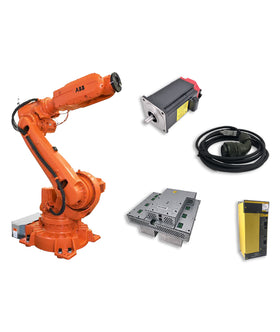
Key components commonly involved in kuka error troubleshooting issues and replacements.


{"one"=>"Select 2 or 3 items to compare", "other"=>"{{ count }} of 3 items selected"}
Leave a comment on this topic