

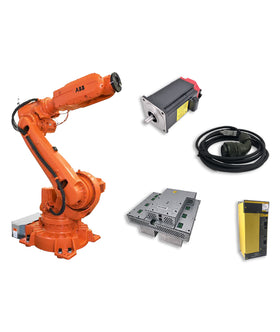
Mitsubishi industrial robots are the backbone of electronics manufacturing, precision assembly, and automated material handling lines worldwide. At the heart of every MELFA robot systemis the robot controller, where specialized electronic boards coordinate motion control, communication, safety logic, and power management.
This index provides a structured overview of Mitsubishi controller board architecture, major controller generations (CR750, CR751, CR800), replaceable board categories, and troubleshooting guidance. Use this reference to help maintenance engineers quickly identify the correct controller PCB repair or replacement path to minimize production downtime.
The Role of Controller Boards in Mitsubishi Robot Systems
Inside a Mitsubishi robot controller, individual electronic boards perform dedicated real-time control functions, including:
- Main CPU Boards: Execute trajectory generation, program interpretation, and system diagnostics.
- Servo Control Boards: Manage real-time communication between the controller, servo amplifiers, and motor encoders.
- I/O & Fieldbus Boards: Integrate robots with PLC systems, sensors, and network protocols (CC-Link, Ethernet).
- Power Supply Units (PSU): Provide stable voltage regulation and fault detection.
if !supportLineBreakNewLine
"To gain a broader understanding of controller hardware options, you can [explore our comprehensive range of industrial mainboards] categorized by system generation and functional role."
-
Mitsubishi HR113-640 Circuit Board PCB
-
Mitsubishi MDS-C1-V2-2020 Control Board
-
Mitsubishi FCU6-DX451 I/O Module
-
MITSUBISHI-MDS-C1-CV-370-Power Supply Unit
Because these boards operate continuously in industrial environments characterized by heat, vibration, and electrical noise, they are among the most critical robot spare parts in long-running cells.

Major Mitsubishi Robot Controller Generations
Controller board compatibility is determined primarily by the controller platform rather than the robot arm itself.
1. CR750 / CR760 Series Controllers
The CR750 and CR760 platforms remain widely installed across global factories.
Typical internal board groups include:
- Main control CPU board
- Servo communication / motion control board
- Digital and analog I/O interface boards
- Fieldbus communication boards (CC-Link, Ethernet-based networks)
-
Power supply and monitoring boards
Due to the large installed base, these controllers generate steady long-term spare-parts demand.
2. CR751 Series Controllers
The CR751 generation introduced improved processing capability and expanded communication support.
Common service scenarios include:
- Replacement of CPU or motion-control boards after aging faults
- I/O board repair due to electrical surge or wiring issues
- Communication board failure affecting production-line integration
CR751 systems are still actively used in electronics and compact automation cells, making board-level repair economically valuable.
3. CR800 / CR800-D Series Controllers
The CR800 family represents Mitsubishis modern controller architecture, offering:
- Higher processing performance
- Advanced safety integration
- Expanded Ethernet-based communication
- Improved diagnostic capability
Although newer, these controllers already show maintenance demand in high-duty production environments, especially for:
- Power supply units
- Communication interface boards
- Servo control electronics
Main Types of Mitsubishi Controller Boards
Across controller generations, Mitsubishi robot boards can be grouped into several functional categories.
1. Main CPU & Motion Control Boards
These boards execute:
- Robot program interpretation
- Trajectory generation
- Servo synchronization
- System diagnostics
Failure symptoms may include:
- Controller unable to boot
- Program execution errors
- Loss of servo readiness
Because they are core system components, replacement typically requires firmware and parameter verification.
2. Servo Communication & Amplifier Interface Boards
Responsible for real-time communication between:
- Controller
- Servo amplifiers
- Robot motors and encoders
Common faults:
- Servo alarms across multiple axes
- Communication timeout errors
- Robot unable to enable drives
These issues often indicate board-level communication failure rather than motor damage.
3. I/O & Fieldbus Communication Boards
Used to integrate robots with:
- PLC systems
- Sensors and actuators
- Production line safety circuits
- Industrial networks such as CC-Link or Ethernet-based protocols
Typical failures include:
- Loss of external signals
- Network communication interruption
- Intermittent production stops
These boards are frequently replaced in aging automation lines.
4. Power Supply & System Monitoring Boards
Provide:
- Stable voltage regulation
- Startup sequencing
- Fault detection and protection
Symptoms of failure:
- Controller not powering on
- Random shutdowns
- Voltage or temperature alarms
Power-related boards are among the most commonly serviced controller components.
Common Signs a Mitsubishi Controller Board Needs Repair
Maintenance engineers usually suspect board failure when:
- System Failures: The controller fails to boot or reports persistent system-level alarms.
- Servo Errors: Multiple robot axes report communication or servo errors simultaneously.
- Communication Drops: I/O or network communication suddenly stops.
- Power Instability: Voltage instability or unexpected shutdowns occur.
- Peripherals Check: Problems remain after replacing cables, motors, or teach pendants.
Repair vs. Full Controller Replacement
| Factor | Board-Level Repair | Full Controller Replacement |
|---|---|---|
| Scope of Damage | Fault is isolated to a single PCB. | Multiple boards are damaged or burned. |
| Platform Support | Board is available and supported. | Platform is obsolete or unsupported. |
| Budget/Time | Lower cost; quick turnaround is prioritized. | Highest reliability; new certification required. |
Related Robot Spare Parts & Repair Index Pages
To build a complete Mitsubishi maintenance knowledge structure, see also:
- Mitsubishi Teach Pendant Index
- Robot Controller Repair Parts Index
- Robot Servo Drives Index
- Robot Power Supply Units Index
- Robot Communication Boards Index
Together, these resources form a comprehensive industrial robot controller repair ecosystem.
FAQ - Mitsubishi Controller Boards
Q1: Are controller boards interchangeable between CR750, CR751, and CR800?
A: No. Each controller generation uses different hardware architecture, firmware, and communication design, so boards must match the exact controller model.
Q2: What is the most common Mitsubishi controller board failure?
A: Frequent real-world issues include power supply instability, servo communication faults, and I/O damage from electrical surges or external wiring issues in long-running robot cells.
Q3: Is refurbished controller board replacement reliable?
A: Yes, when professionally tested. This includes functional boot testing, motion verification, communication validation, and burn-in reliability testing, typically backed by a warranty.
Reference Notes
This section provides supplementary reference links related to Mitsubishi Electric controller architecture, MELFA hardware series classification, and system-level electronic module logic.
Referenced materials are intended to support index navigation and structural orientation within the Mitsubishi robot control ecosystem only. They are informational in nature and do not replace official Mitsubishi Electric technical documentation, system manuals, or software release notes.