

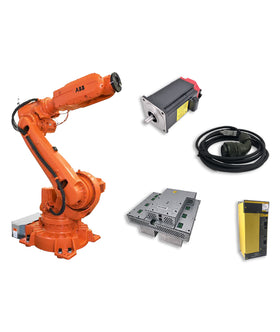

Many robot faults appear to occur only during motion.
The robot may operate normally while stationary but suddenly generate encoder alarms, communication faults, synchronization errors, or unexpected stops during acceleration, deceleration, or high-speed movement.
After a reset, the robot often returns to normal operation, making the problem seem random and difficult to reproduce.
In many cases, the real cause is vibration-induced signal degradation.
Mechanical vibration can affect connectors, cables, shielding systems, and communication interfaces, creating temporary electrical instability that disrupts feedback signals and industrial network communication.
Although the vibration itself may be harmless, the resulting signal disturbances can eventually trigger alarms, servo faults, or safety shutdowns.
Understanding how vibration affects robot communication systems is essential for diagnosing intermittent failures and preventing recurring downtime.
A vibration-induced signal problem occurs when mechanical vibration interferes with the reliable transmission of electrical signals.
These issues are particularly common in systems that depend on:
Unlike permanent hardware failures, vibration-related faults often appear only under specific operating conditions.
Typical symptoms include:
Because the fault disappears when vibration levels decrease, diagnos is can be challenging.
Mechanical vibration is present in almost every robotic application.
Some vibration originates from the robot itself, while other sources come from surrounding equipment and production processes.
Robot-generated vibration may be caused by:
These forces are especially noticeable in high-speed applications where cycle times are aggressively optimized.
The robot may also be exposed to vibration generated by nearby equipment, including:
Even when the robot itself is functioning correctly, external vibration can affect communication and feedback systems.
Certain robot installations are more vulnerable than others.
Examples include:
These conditions can amplify vibration and increase stress on cables and connectors.
Many maintenance teams assume that communication failures are purely electrical problems.
In reality, vibration often creates the conditions that allow intermittent electrical faults to develop.
Electrical connectors rely on stable physical contact between mating surfaces.
Under vibration, connectors may experience microscopic movement that is invisible during inspection.
Over time, this movement can cause:
Because these disturbances may last only milliseconds, they are often difficult to capture during troubleshooting.
One of the most common vibration-related failure mechanisms is fretting corrosion.
This occurs when connector surfaces repeatedly move against each other under vibration.
The process gradually produces:
Initially the connector continues functioning normally. As degradation progresses, intermittent faults begin appearing during robot motion.
Vibration can also affect:
When shielding effectiveness decreases, communication systems become more vulnerable to electrical noise and signal corruption.
Robot cables are designed to withstand bending and torsion, but vibration introduces additional stress that accelerates wear.
Repeated vibration subjects cables to:
Over time, internal copper strands may begin to fracture even though the cable exterior appears undamaged.
One of the most common vibration-related symptoms is a fault that occurs only during certain robot movements.
For example:
These patterns often indicate a developing cable failure.
Cable shielding is critical for protecting communication signals.
Vibration can gradually weaken:
As shielding performance decreases, signal quality becomes less stable.
Encoder communication systems are highly sensitive to vibration-related disturbances.
Encoder feedback depends on:
Even brief interruptions can affect position feedback accuracy.
Vibration-related encoder problems often appear as:
In many cases, the encoder itself is not defective. The actual problem is found in the connector, cable, or communication path.
A common complaint is:
"The robot only faults when it speeds up."
This behavior is often vibration-related.
Acceleration creates the highest mechanical loading on:

As vibration levels increase, marginal connections may temporarily lose signal integrity.
The controller interprets the resulting communication disturbance as a feedback or network fault and triggers an alarm.
This explains why some robots operate normally at slow speed but repeatedly fail during high-speed production.
The DressPack system is one of the most vibration-sensitive areas of a robot.
Continuous motion, torsional loading, and vibration can gradually degrade:
The highest-risk locations are usually found near:
Many intermittent communication failures originate within these heavily stressed cable sections.
Related resources:
Successful diagnos is requires correlating robot motion with fault behavior.
Record:
Faults that consistently occur during specific movements often indicate vibration-related causes.
Look for:
Connector issues are among the most common sources of intermittent communication faults.
Pay particular attention to:
These areas frequently contain hidden mechanical damage.
Useful indicators include:
Increasing error rates often indicate deteriorating signal integrity.
Helpful diagnostic methods include:
Combining mechanical and electrical measurements often reveals faults that are otherwise difficult to detect.
Long-term reliability improvements should address both mechanical and electrical factors.
Best practices include:
High-flex robotic cables provide improved resistance to:
Preventive maintenance should include:
Reliable communication depends on:
The most frequently affected components include:
In most cases, failure occurs when vibration exposes an existing weakness within the signal transmission system.
Vibration-induced signal problems are rarely caused by software or controller failures alone.
Most originate from mechanical vibration affecting connectors, cables, shielding systems, and feedback communication paths.
As vibration gradually degrades signal integrity, intermittent faults begin appearing during motion, acceleration, or high-load operation.
By focusing on cable systems, connector condition, DressPack reliability, and communication quality, maintenance teams can identify root causes earlier and prevent costly production interruptions.
It is a communication or feedback fault caused by mechanical vibration affecting cables, connectors, shielding systems, or electrical interfaces.
Because the fault only appears when vibration reaches certain levels during specific robot movements or production conditions.
Yes. Continuous vibration accelerates conductor fatigue, shield degradation, and internal cable wear.
Acceleration produces the highest mechanical stress on cables, connectors, and DressPack systems, making marginal signal paths more likely to fail.
Absolutely. Vibration can interrupt feedback communication through connector instability, cable fatigue, or shielding degradation.
Key components commonly involved in issues and replacements.
No related parts found. Please check available components in our catalog.


{"one"=>"Seleziona 2 o 3 articoli da confrontare", "other"=>"{{ count }} di 3 elementi selezionati"}
Seleziona il primo elemento da confrontare
Seleziona il secondo elemento da confrontare
Seleziona il terzo elemento da confrontare
Lascia un commento