

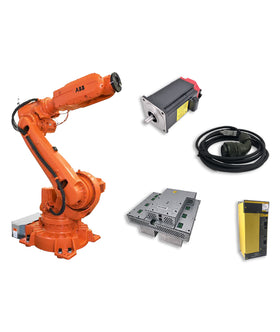

Teach pendant connector pins are small components, but they play a critical role in robot operation. Every command entered on the teach pendant, every safety signal, and every communication message must pass through the connector interface before reaching the robot controller.
When a pin becomes bent, worn, corroded, or partially recessed, the result is often much more serious than a simple connection problem. Communication alarms, intermittent disconnects, deadman switch faults, and unexpected robot stops can all be traced back to damaged connector pins.
Because pin damage often develops gradually, many faults appear intermittently long before a complete failure occurs. Understanding the warning signs can help technicians identify the problem before production is affected.

Pin-related problems rarely appear as a complete loss of communication from the start.
In many cases, operators first notice occasional disconnects, communication alarms that clear themselves, or situations where the teach pendant reconnects after the cable is moved. Some robots may enter teach mode normally but unexpectedly lose communication during operation. Others may generate safety-related alarms without any obvious fault in the controller.
A damaged pin can also affect only one circuit within the connector. Depending on which pin is involved, the symptoms may appear as a communication fault, a deadman switch error, a loss of power to the pendant, or an intermittent emergency stop signal.
Because these symptoms often resemble controller or cable faults, damaged pins are frequently overlooked during troubleshooting.
Most pin damage occurs during normal maintenance and daily operation rather than during a major equipment failure.
Repeated connection and disconnection gradually wear contact surfaces and reduce the mechanical strength of the connector. Over time, the connector no longer fits as securely as it did when new, and electrical contact becomes less consistent.
Improper connector handling is another common cause. When a connector is inserted at an angle or forced into position, individual pins can bend slightly. Even minor deformation can reduce the contact area between the pin and socket. At first the connection may still work, but vibration and movement gradually make the problem worse.
Cable routing can also contribute to pin damage. If the cable constantly pulls against the connector body, mechanical stress is transferred directly into the contact structure. After months or years of operation, pins may loosen, shift position, or lose their ability to maintain reliable contact pressure.
Environmental conditions accelerate the process. Moisture, dust, coolant mist, and chemical contaminants can attack exposed metal surfaces and increase contact resistance, even when no visible corrosion is present.
A connector pin is designed to make consistent contact across a specific surface area. When the pin bends, that contact area becomes smaller and less stable.
At first, the robot may continue operating normally. As vibration and cable movement occur during daily use, the reduced contact area begins to create intermittent electrical connections. Communication signals may be interrupted for only fractions of a second, yet that is often enough to trigger controller alarms or disconnect the teach pendant.
This is why some communication faults seem impossible to reproduce. The connection may appear normal during inspection but fail when the cable is moved or when vibration changes the pressure between mating contacts.
Bent pins can also generate additional heat because electrical resistance increases as the contact area decreases. Over time, this heat accelerates oxidation and further weakens the connection.
Not all pin failures are visible.
Many connectors appear clean on the outside while the contact surfaces inside have already begun to deteriorate.
As oxidation develops, the electrical path becomes less efficient. Resistance increases, signal quality declines, and intermittent communication faults become more common. In environments with constant vibration, microscopic movement between mating contacts can gradually wear protective surface coatings and accelerate corrosion.
This type of degradation often explains situations where a teach pendant works normally for weeks and then suddenly begins disconnecting without any obvious mechanical damage.
Yes.
Each pin inside a teach pendant connector has a specific function. Some carry communication signals, while others transmit power, grounding, or safety-related circuits.
If a communication pin becomes intermittent, the robot may generate communication alarms or lose connection to the teach pendant. If the damaged pin belongs to a safety circuit, operators may see deadman switch faults, emergency stop alarms, or unexpected motion inhibition.
Because a single pin can affect an entire subsystem, even minor damage should not be ignored.
The first step is a careful visual inspection. Bent pins, recessed contacts, discoloration, and signs of overheating often provide immediate clues.
However, many failures cannot be identified visually. A connector may appear normal while the contact pressure inside has already deteriorated. For this reason, technicians should also observe whether faults change when the cable or connector is moved.
If communication errors appear only when the cable is flexed or repositioned, the problem is often related to the connector interface.
Controller alarm history can also help. Repeated communication alarms, random disconnect events, and intermittent safety faults frequently point to connector-related problems, especially when other components have already been ruled out.
The answer depends on the extent of the damage.
Light contamination or minor surface oxidation can sometimes be corrected through proper cleaning procedures. In these situations, the connector structure remains intact and reliable operation may be restored.
Once a pin becomes severely bent, recessed, fractured, or heat damaged, replacement is usually the safer option. Straightening a damaged pin may restore temporary functionality, but repeated bending weakens the metal and increases the risk of future failure.
Special care should be taken when safety circuits are involved. Pins associated with emergency stop circuits, deadman switch channels, or other safety-related functions should generally be replaced rather than repaired whenever significant damage is present.
From a maintenance perspective, replacing a damaged connector assembly is often less expensive than repeated troubleshooting of intermittent faults that continue to disrupt production.
Most pin damage can be avoided through proper connector handling and routine inspection.
Connectors should always be aligned carefully before insertion and should never be forced into place. Cables should be supported properly so that excessive tension is not transferred to the connector body. During maintenance, technicians should inspect connectors for early signs of wear, contamination, or corrosion before communication problems develop.
Protective caps, proper strain relief, and regular cleaning can significantly extend connector life and reduce the likelihood of unexpected failures.
Like many teach pendant problems, connector pin damage is much easier to prevent than to diagnose after intermittent faults begin to appear.
Pin damage is often associated with other teach pendant components and may produce symptoms that resemble different failures.
Related troubleshooting guides include:
The most common causes are improper connector insertion, repeated connection cycles, cable stress, vibration, and environmental contamination.
Yes. Even slight pin deformation can reduce contact quality and lead to intermittent communication faults.
Intermittent disconnects are often caused by unstable connector contacts that lose connection when vibration or cable movement changes contact pressure.
No. Early-stage oxidation and contact wear may not be visible but can still affect communication reliability.
Minor contamination may be repairable, but severely bent, recessed, fractured, or safety-related pins are usually best replaced.
Key components commonly involved in issues and replacements.
No related parts found. Please check available components in our catalog.


{"one"=>"Seleziona 2 o 3 articoli da confrontare", "other"=>"{{ count }} di 3 elementi selezionati"}
Seleziona il primo elemento da confrontare
Seleziona il secondo elemento da confrontare
Seleziona il terzo elemento da confrontare
Lascia un commento