



When a KUKA robot suddenly stops motion and displays KSS15013, the issue is usually related to motor overheating or abnormal servo load conditions rather than an immediate drive failure.
In KRC4 systems, KSS15013 means the controller or KSP drive has detected excessive thermal accumulation or abnormal torque demand on one or more robot axes.
Typical real-world symptoms include:
In production environments, KSS15013 is most commonly related to:
If ignored, thermal overload conditions usually become progressively worse until permanent motor or gearbox damage occurs.
If your KUKA robot suddenly stops with KSS15013:
⚠️ Avoid repeated restart attempts without checking thermal and mechanical conditions first.
If the error appears after long running cycles or heavy-load operation, thermal accumulation or mechanical overload is highly likely.
KUKA KSS15013 indicates a motor temperature overload or abnormal servo load condition detected by the KRC4/KSP drive system.
In KUKA KRC4 architecture:
When KSS15013 is triggered:
In short: the system detects that the motor is under excessive thermal or mechanical stress and stops motion to protect the hardware.
One of the most common real-world causes in production lines.
Yes.
Overloading the robot is one of the most common causes of KSS15013 motor temperature alarms.
When payload exceeds the robot’s rated capacity, servo motors must generate significantly more torque to maintain motion accuracy.
Typical overload-related conditions include:
Long-term overload operation dramatically increases motor heat buildup and gearbox wear.
Causes repeated torque peaks leading to heat buildup.
Yes.
Even when payload remains within specification, poor motion optimization can create excessive servo load conditions.
Typical motion-related causes include:
In many production environments, motion optimization resolves KSS15013 without replacing any hardware.
👉 Thermal buildup occurs even under normal load.
Yes.
Insufficient cooling airflow is a very common indirect cause of KSS15013 overheating alarms.
Typical cooling-related conditions include:
Because cooling efficiency decreases gradually, thermal alarms often become more frequent over time.
Gradual thermal accumulation triggers protection logic.
Increases motor torque demand abnormally.
Yes.
Mechanical friction is often misdiagnosed as electrical overheating.
If the axis experiences abnormal resistance, servo motors must generate additional torque continuously, causing excessive heat buildup.
Typical symptoms include:
Gearbox wear and lubrication problems are common hidden causes of repeated KSS15013 alarms.
KSS15013 is more common in environments with:
Factories operating robots near maximum load limits often experience gradual thermal accumulation long before permanent hardware failure occurs.
A KRC4 palletizing robot repeatedly triggered KSS15013 after several hours of continuous production.
Initial troubleshooting focused on replacing the servo motor, but the overheating condition continued intermittently.
The actual root cause was later identified as excessive acceleration settings combined with restricted cabinet airflow caused by clogged ventilation filters.
After reducing acceleration parameters and restoring proper cooling airflow, the robot operated normally without further thermal overload alarms.
This is why cooling and motion optimization should always be verified before replacing expensive motor hardware.
| Component | Recommended Replacement Trigger | Diagnostic Condition | Engineering Notes |
| Servo Motor Assembly (with integrated thermal sensor) | Replace if repeated overheating occurs under normal load | - Motor temperature rises abnormally under standard cycle - Thermal alarm triggered without overload condition |
Indicates internal winding degradation or embedded thermal sensor drift |
| Motor Cooling Fan Unit | Required if airflow or thermal dissipation is insufficient | - Reduced airflow at motor housing - Thermal buildup localized around motor body - Fan speed irregular or stopped |
First-level thermal failure point; always verify airflow before replacing motor |
| Gearbox / Mechanical Transmission Unit | Necessary when torque resistance is mechanically induced | - Temperature rises with mechanical noise - Backlash or stiff axis movement - Overload occurs only during motion under load |
Mechanical friction often misdiagnosed as electrical overheating |
| KUKA KSP Servo Drive Module | Replace if current regulation or thermal detection is unstable | - False thermal alarms on multiple axes - Current spikes without mechanical cause - Drive derating or shutdown under normal load |
Suggests internal current sensing or thermal model failure in drive stage |
| Check Item | Why It Matters |
| Motor model and thermal sensor specification | Mismatch leads to incorrect thermal readings or false alarms |
| Robot payload configuration | Incorrect payload amplifies thermal load misinterpretation |
| Gearbox reduction ratio | Directly affects torque, heat generation, and load profile |
| KSP drive version and firmware | Determines thermal model calculation and protection logic |
KSS15013 is often misunderstood as a “motor failure alarm”, but in field diagnostics it is primarily a system load imbalance indicator.
Go to:
SmartHMI → Diagnostics → Drive → Motor Load Monitoring
Check:
Key diagnostic logic:
In real industrial environments, the most common root causes are:
To permanently resolve the issue:
In most real cases, the final fix is:
motion optimization or thermal/cooling correction rather than immediate hardware replacement
In real industrial maintenance environments, engineers usually inspect or replace components in this order:
Cooling and load optimization problems are statistically far more common than catastrophic motor failure.
KSS15013 often returns because the underlying thermal or mechanical stress condition was never fully eliminated.
In many KRC4 systems, the robot may operate normally after cooling down but later overheat again during production.
The most common recurring causes include:
In real production environments, intermittent overheating usually becomes more severe over time before permanent hardware damage occurs.
⚠️ Technical Note: Following errors are commonly associated with excessive servo load, thermal accumulation, or abnormal motor torque conditions:
KSS15013 is strongly linked to motor overload or thermal accumulation. It often appears when the robot runs with high payload, aggressive acceleration, or insufficient cooling over long cycles.
This usually happens when heat builds up gradually in the motor or gearbox during continuous operation. Once the thermal threshold is reached, the KRC4 system shuts down the axis for protection.
Typical symptoms include:
The affected axis is immediately disabled, motion is stopped, and the controller enters a protective state to prevent motor or gearbox damage.
Check motor temperature, cooling fan operation, and manually test axis movement (power off). If resistance or abnormal heat is found, it is likely a mechanical or cooling-related issue rather than a drive failure.
No. Resetting without resolving overload or cooling issues may lead to repeated shutdowns and potential long-term motor or gearbox damage.
Explore the Full Guide: Industrial Robot Fault Codes Library → KUKA Error Codes
Explore the complete guide for troubleshooting, repair strategies, and component replacement across industrial robot systems.
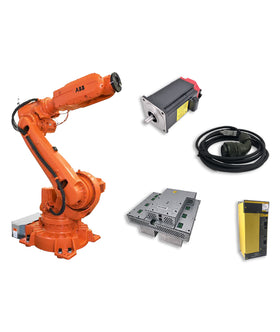
Key components commonly involved in kuka error troubleshooting issues and replacements.


{"one"=>"Seleziona 2 o 3 articoli da confrontare", "other"=>"{{ count }} di 3 elementi selezionati"}
Seleziona il primo elemento da confrontare
Seleziona il secondo elemento da confrontare
Seleziona il terzo elemento da confrontare
Lascia un commento