
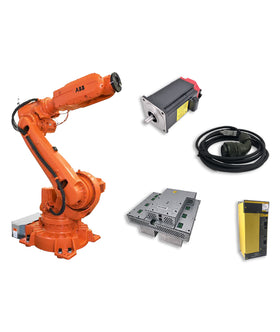
Kawasaki industrial robots are fundamental to high-demand applications, including arc welding, spot welding, material handling, palletizing, and painting. To maintain stable production and minimize costly downtime, having a clear overview of Kawasaki robot spare parts, compatible components, and replacement guidance is essential for maintenance engineers and procurement teams.
This index organizes the most common Kawasaki spare parts categories, real-world component types, and service considerations, helping users quickly identify the correct replacement parts.
Why Kawasaki Spare Parts Management Matters
Reliable spare parts planningensures:
- Continuous Robot Uptime: Quick replacement prevents extended production halts.
- Accurate Motion & Positioning: Maintaining original specifications ensures precision.
- System Stability: Stable controller communication and power management.
- Compliance: Adherence to industrial safety requirements.
Main Categories of Kawasaki Robot Spare Parts
| Category | Typical Components | Common Failure Symptoms |
|---|---|---|
| Controller Boards | Main CPU, I/O Modules, Safety Modules | Boot errors, Servo alarms, Communication loss. |
| Servo Drives | Single-axis amps, Multi-axis units | Overcurrent, Overheating, Encoder loss. |
| Servo Motors | AC Servo Motors, Integrated Encoders | Position drift, Abnormal noise, Overheating. |
| Teach Pendants | HMI units, Cables, Keypads, LCDs | Broken display, Unresponsive keys, Cable breaks. |
| Power & Batteries | Power modules, Memory batteries | System reset, Controller won't turn on. |
| Thermal Management | Cooling fans, Air filters | Controller overheating, Drive thermal trips. |

Detailed Component Breakdown
1. Controller Boards & CPU Modules
Kawasaki controllers such as E-series, F-series, and D-series rely on internal control boards to manage:
- Motion processing
- I/O communication
- Safety logic
- Network interfaces
Typical replaceable components include:
- Main CPU boards
- I/O interface boards
- Communication boards
- Safety control modules
Controller board failure may cause:
- Boot errors
- Servo alarms across all axes
- Loss of fieldbus or PLC communication
2. Servo Drives & Amplifiers
Servo drives regulate axis speed, torque, and positioning accuracy.
Common service scenarios:
- Axis not moving or vibrating
- Overcurrent or overheating alarms
- Encoder feedback loss
Typical spare parts include:
- Single-axis servo amplifiers
- Multi-axis servo drive units
- Drive cooling modules
3. Servo Motors & Encoders
Kawasaki robots depend on high-precision AC servo motors with integrated encoders for smooth motion control.
Frequent replacement reasons:
- Encoder failure or position drift
- Bearing wear or abnormal noise
- Motor overheating
Maintaining correct motorCdrive compatibility is critical when replacing components.
4. Teach Pendants & Cables
The Kawasaki teach pendant is the primary human-machine interface for:
- Manual jogging
- Program teaching
- Alarm monitoring
- System setup
High-wear spare parts include:
- Teach pendant units
- Pendant cables
- Membrane keypads and overlays
- LCD or touch screen modules
- Emergency stop and enable switches
Physical damage, cable breaks, or display failure are the most common replacement triggers.
5. Power Supply Units & Batteries
Stable electrical supply is essential for controller reliability.
Key replaceable items:
- Main controller power supply modules
- Backup batteries for memory retention
- Internal DC power boards
Failure symptoms include:
- Controller not powering on
- Memory loss after shutdown
- Random system resets
6. Cooling Fans, Filters & Cabinet Components
Thermal management protects:
- Servo drives
- Power supplies
- Control boards
Routine maintenance parts:
- Cabinet cooling fans
- Air filters
- Heat dissipation components
Overheating is one of the leading causes of controller and drive failure, making preventive replacement important.
How to Identify the Correct Kawasaki Spare Part
To ensure compatibility:
- Check the original part number on the component label.
- Confirm the robot model and controller generation.
- Verify electrical ratings, connectors, and firmware compatibility.
- Cross-reference with a trusted spare parts supplier or service manual.
Accurate identification prevents installation errors and unexpected downtime.
Repair vs Replacement Strategy
Component-Level Repair
Best when:
- Damage is limited to a single board or module
- Parts are still supported
- Downtime must be minimized
Full Unit Replacement
Recommended when:
- Multiple failures occur simultaneously
- Components are obsolete
- Long-term reliability is required
Related Robot Spare Parts Indexes
To build a complete maintenance reference, see also:
- Robot Servo Drives Index
- Robot Servo Motors & Encoders Index
- Robot Teach Pendant Cable & Connector Index
- Robot Power Supply Units Index
- Robot Communication Boards Index
These pages together form a comprehensive industrial robot spare parts knowledge hub.
Compare Spare Parts for Other Robot Brands
- Universal Robots Part Number Index
- Panasonic Robot Spare Parts Index
- Staubli Robot Spare Parts Index
- Kawasaki Robot Spare Parts Index
Compare Other Robot Collections Spare Parts
FAQ - Kawasaki Robot Spare Parts
Q1: Which Kawasaki spare parts fail most often?
A: Servo drives, teach pendant cables, cooling fans, and backup batteries are among the most frequently replaced components.
Q2: Can spare parts be shared across different Kawasaki robot series?
A: Not always. Compatibility depends on controller generation, voltage rating, and firmware, so part numbers must match.
Q3: Are refurbished Kawasaki parts reliable?
A: Yes, when professionally tested for electrical safety, functionality, and communication stability.
Q4: How should critical spare parts be stocked?
A: Facilities with continuous production should keep servo drives, teach pendant cables, fans, and batteries in local inventory to reduce downtime risk.
Reference Notes
This section provides supplementary reference links related to Kawasaki robot system architecture, controller-level hardware classification, and component identification structures.
Referenced materials are intended to support index navigation and structural orientation within the Kawasaki industrial ecosystem only. They are informational in nature and do not replace official Kawasaki Robotics technical documentation, system manuals, or software release notes.
👉 View related Kawasaki & Industrial hardware reference articles: