

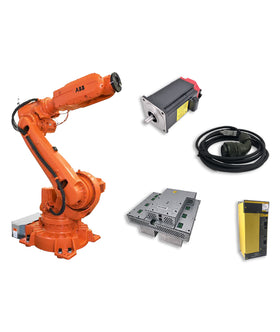

Collaborative robots—better known as cobots—are transforming workplaces by enabling humans and machines to work side by side. Unlike traditional industrial robots locked behind safety cages, cobots are built with advanced force sensors, speed controls, and collision detection. This makes them safe for shared spaces without sacrificing efficiency.
They’re lightweight, easy to deploy, and quick to program—sometimes with just a hand-guiding motion—making them perfect for small-batch or high-mix production. While cobots take care of repetitive tasks like assembly or material handling, human workers can focus on creative and strategic work.
From electronics manufacturing to healthcare and logistics, cobots are a cornerstone of Industry 4.0, helping businesses achieve agile automation with rapid ROI—often within 6 to 12 months.
A cobot is a collaborative robot designed to work directly with people in the same workspace. Instead of being fast, powerful, and fenced off like traditional industrial robots, cobots are built with safety-first engineering—featuring force-limiting systems, responsive sensors, and intuitive interfaces.
They’re flexible and lightweight, making them ideal for tasks like assembly, packaging, or quality inspection. Many cobots can sense human presence and adjust their movements to avoid collisions, reducing workplace injury risks. Best of all, their plug-and-play nature allows even small and medium-sized businesses to integrate automation without the need for specialist programmers.
Cobots aren’t one-size-fits-all. Different types are suited to different needs:
Payload-Centric Cobots – Designed for specific weight capacities, from delicate 5 kg models for electronics assembly to heavy-duty units handling 20 kg or more in manufacturing.
Mobile Cobots – Mounted on AMRs (autonomous mobile robots) or AGVs (automated guided vehicles) to move around dynamic spaces like warehouses or hospitals.
Exoskeleton Cobots – Wearable devices that reduce physical strain for workers in heavy lifting or repetitive tasks.
Dual-Arm Cobots – Mimicking human arms, they excel at complex tasks like precision assembly.
Sensor-Driven Cobots – Equipped with advanced vision systems, force-torque sensors, or LiDAR for adaptive interaction.
AI-Powered Cobots – Using machine learning to improve performance over time, learning from human demonstrations or adjusting tasks automatically.
Programming a cobot is designed to be as user-friendly as possible:
Hand-Guiding (Teach-by-Demonstration) – Physically moving the robot arm to “teach” it a task.
Graphical Interfaces – Drag-and-drop programming on a tablet or PC, no coding needed.
Script-Based Programming – For advanced users, languages like URScript or KRL allow fine-tuning.
AI and Machine Learning – Enabling cobots to adapt and optimize based on real-world use.
Voice Commands & NLP – Instructing cobots verbally for instant changes.
Cloud Programming – Remote updates and task deployment across multiple locations.

| Feature | Traditional Robots | Cobots |
|---|---|---|
| Safety | Require cages, operate at high speed | Safe for direct human interaction |
| Flexibility | Fixed installations | Quick redeployment |
| Programming | Complex, specialized skills needed | Intuitive, minimal training |
| Ideal For | Large-scale, repetitive production | Small-batch, varied tasks |
Yes—safety is the defining feature of cobots. With speed limits, force sensors, and ISO/TS 15066 compliance, they’re built for close human collaboration. They automatically slow or stop if they detect contact, ensuring both productivity and safety.
Whether it’s in assembly, quality inspection, or logistics, cobots are enabling a new era where humans and robots complement each other’s strengths, driving both efficiency and job satisfaction.
Yes. Cobots are specifically designed for safe human-robot interaction. They feature built-in force sensors, speed limitations (often under 1 m/s), and collision detection. Most models comply with ISO/TS 15066 safety standards, allowing them to operate without safety cages in shared workspaces.
No. Cobots are meant to complement human skills, not replace them. They take over repetitive or physically demanding tasks—like pick-and-place or packaging—while humans focus on creative, problem-solving, and decision-making work. In many cases, cobots create new job opportunities in robot programming and maintenance.
Basic cobot operation can be learned in as little as 1–3 days, thanks to intuitive interfaces and hand-guiding programming. Most cobots do not require advanced coding skills, making them accessible to non-technical staff.
Cobots are popular in manufacturing (electronics, automotive, metalworking), logistics, healthcare, and even food production. Their flexibility allows them to handle diverse applications, from assembly and quality inspection to material handling and laboratory assistance.
Cobot prices vary by brand, payload capacity, and features. Entry-level models can start around $20,000–$30,000, while advanced AI-powered or dual-arm cobots can exceed $60,000. Many businesses see a return on investment within 6–12 months due to labor savings and improved productivity.
Explore the Full Guide: Industrial Robot Knowledge Hub → Industrial Robot Types & Applications Cluster
Explore foundational knowledge and practical insights to better understand industrial robot systems and components.
Key components commonly involved in robot applications issues and replacements.
No related parts found. Please check available components in our catalog.


{"one"=>"Select 2 or 3 items to compare", "other"=>"{{ count }} of 3 items selected"}
Leave a comment on this topic