



Field insight:
The Yaskawa A.860 following error is closely related to A.850, but it occurs during active motion rather than at the final stopping position.
In real-world applications, th is alarm usually indicates that the servo system cannot respond fast enough to changing motion demands.
The Yaskawa A.860 alarm occurs when the actual motor position continuously lags behind the commanded position during movement.
In simple terms:
The robot cannot keep up with the motion command in real time, so the system stops to prevent instability or loss of control.
This is the key difference between:
Before performing deep diagnostics:
If the alarm disappears at lower speed, the issue is usually related to dynamic load, tuning, or torque limitations.
In some cases, unstable feedback may also trigger position-related faults.
If positioning accuracy is also affected, reviewing Yaskawa A.850 position error troubleshooting can help isolate the root cause.
Unlike static positioning faults, A.860 troubleshooting focuseson real-time motion performance.
If the alarm disappears after reducing motion demand, the system is dynamically overloaded.
If overload conditions are present, reviewing Yaskawa A.720 overload alarm troubleshooting may help identify mechanical stress issues
Proper tuning is often enough to resolve mild following instability.
Mechanical resistance is one of the most overlooked causes of following errors.
Signal delay or feedback instability can prevent the servo system from tracking motion correctly.
Inspect components such as Yaskawa motor cables and encoder cables to ensure stable signal transmission.
If torque response remains insufficient even after tuning, evaluating compatible Yaskawa servo motors may be necessary to restore stable motion tracking.
|
Symptom |
Likely Cause |
|
Lag during motion |
Torque or tuning issue |
|
Jerky movement |
Mechanical or tuning |
|
Error during acceleration |
Parameter issue |
|
Continuous deviation |
Following failure |
Once the root cause is confirmed, the issue is usually related to:
Servo Motors
If torque or response cannot meet demand, selecting from your Yaskawa servo motors range ensures stable tracking performance.
Motor Cables
Signal delay or instability can worsen following errors. Inspect or replace Yaskawa motor cables if needed.
Servo Drive
If tuning cannot stabilize motion, the drive may need evaluation.
In long-term production environments, repeated A.860 alarms often indicate performance degradation rather than temporary tuning issues.
Understanding these Yaskawa Alarm Codes can help identify the true root cause.
Understanding related alarms can help isolate root causes faster:
These alarms are often interconnected in high-speed robotic applications.
A.850 refers to final position mismatch, while A.860 indicates continuous tracking failure during motion.
Yes. In many cases, adjusting gain and motion parameters can improve tracking stability.
Yes. Excessive load can reduce available torque and prevent the motor from following motion commands accurately.
Yes. Feedback delay or unstable encoder signals can create motion tracking errors.
Because acceleration requires peak torque and rapid servo response. If the system cannot react quickly enough, following deviation increases beyond allowable limits.
Explore the Full Guide: Industrial Robot Fault Codes Library → Yaskawa Alarm Codes
Explore the complete guide for troubleshooting, repair strategies, and component replacement across industrial robot systems.
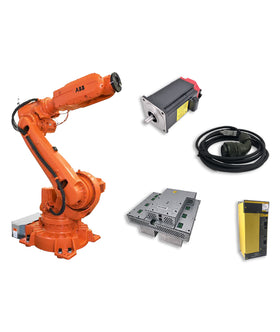
Key components commonly involved in yaskawa alarm troubleshooting issues and replacements.


{"one"=>"Seleziona 2 o 3 articoli da confrontare", "other"=>"{{ count }} di 3 elementi selezionati"}
Seleziona il primo elemento da confrontare
Seleziona il secondo elemento da confrontare
Seleziona il terzo elemento da confrontare
Lascia un commento