



When a Universal Robots Teach Pendant freezes, stops responding, or fails to boot, many technicians immediately assume the pendant itself has failed.
In actual field maintenance, that assumption is often incorrect.
The Teach Pendant is primarily an HMI (Human-Machine Interface). It provides display, touch input, and operator interaction — but it does not perform robot motion control, safety execution, or runtime processing.
Those functions are handled by the controller system, including:
In many real-world service cases, a “dead pendant” is actually caused by controller-side, storage, communication, or power-related faults.
From an engineering perspective, the system is split into three layers:
Teach Pendant
It functions more like a remote terminal than an independent control computer.
Controller
Storage System
This distinction matters because storage degradation is one of the most common causes of startup-related failures.
If the robot shows:
The root cause is often controller-side rather than a failed pendant.
Typical causes include:
In production environments, Teach Pendant issues usually appear in repeatable patterns.
Typical symptoms include:
The timing and repeatability of the fault are usually more valuable than the symptom itself.
Intermittent faults often point to communication, cable, or grounding issues rather than display hardware failure.
Always start with power verification.
Common causes include:
If the pendant is completely unresponsive, confirm stable power delivery before moving to software or hardware diagnostics.
Teach Pendant communication runs through the controller cabinet interface, not a standalone network.
Key components include:
Even minor oxidation or contamination on HARTING connector pins can cause unstable communication, especially in:
Cable-related intermittent faults are extremely common in long-term production environments.
System startup depends on internal storage:
A frozen startup screen is usually not a touchscreen failure.
In most cases, the controller never completed boot initialization.
True pendant-side hardware issues are less common than assumed.
Possible causes:
Environmental influence:
EMI-related problems are very common in industrial environments and are frequently mistaken for software instability.
In welding-heavy environments, EMI should always be considered early in the diagnostic process.
Before focusing on the pendant:
Inspect:
Do not overlook minor connector oxidation.
Check for:
Inspect:
This is often the fastest way to confirm the fault source.
Recommended tests:
This immediately separates:
Common incorrect conclusions in the field:
| Symptom | Real Root Cause |
| Frozen UR logo | SD / CFast corruption |
| No display | power or controller issue |
| No connection | cable / HARTING / switch fault |
| Random freeze | EMI or grounding issue |
Most replacements are unnecessary.
Experienced technicians typically follow a simple rule:
Verify the controller before replacing the pendant.
Because the Teach Pendant is mainly an interface device, startup failures usually originate elsewhere unless hardware damage is obvious.
Advanced troubleshooting may include:
Ask this first:
“Does the controller recognize the Teach Pendant?”
Interpretation:
This single check eliminates most false replacement cases.
In many cases, the issue is caused by corrupted SD card storage (CB3) or failing CFast storage (e-Series), not the pendant itself.
Yes.
Internal wire breaks, damaged shielding, or HARTING connector failures can interrupt both power and communication.
Common causes include:
In some configurations, yes.
However, programming, recovery, and maintenance access may be limited without a functional pendant.
Explore the Full Guide: Industrial Robot Teach Pendant Center → Teach Pendant Not Working
Explore the complete guide for troubleshooting, repair strategies, and component replacement across industrial robot systems.
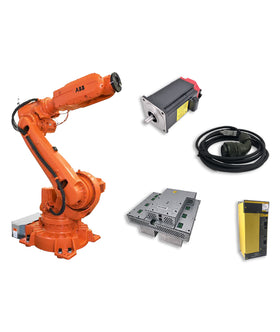
Key components commonly involved in teach pendant not working issues and replacements.


{"one"=>"Seleziona 2 o 3 articoli da confrontare", "other"=>"{{ count }} di 3 elementi selezionati"}
Seleziona il primo elemento da confrontare
Seleziona il secondo elemento da confrontare
Seleziona il terzo elemento da confrontare
Lascia un commento