



A System Communication Timeout on a KUKA robot is not usually caused by the controller itself.
In most production environments, the problem starts with unstable communication somewhere in the robot system — especially involving:
KUKA controllers such as KRC4 and KRC5 rely on continuous real-time communication between motion control, servo drives, and resolver feedback systems.
Even very small signal interruptions can break synchronization and stop the robot immediately.
In many cases, the fault appears intermittently at first:
This guide explains how KUKA communication timeout faults usually develop, what symptoms matter most during diagnos is, and why cable-related signal problems are one of the most common causes.
KUKA robots constantly exchange real-time data between:
A timeout fault occurs when expected communication data is not received within the required timing cycle.
This may involve:
Unlike ordinary industrial networks, KUKA robot systems operate with extremely strict timing requirements.
Even a brief signal interruption can trigger a communication timeout and stop robot motion.
Many KUKA timeout alarms become worse while the robot is moving.
Typical symptoms include:
This is important because true controller failures are usually stable and repeatable.
If the problem changes with robot motion, the issue is often related to signal transmission instability.
In many KUKA systems, the alarm only appears when the robot reaches certain positions.
Typical signs include:
These symptoms commonly point toward:
rather than a failed controller.
A System Communication Timeout is rarely caused by a single failed component.
In most KUKA robots, the problem develops gradually across multiple communication layers, especially in systems exposed to continuous motion, vibration, and cable stress.
In real production environments, unstable signal transmission often begins at the physical cable layer before spreading into RDC communication faults, KSB synchronization issues, and unstable resolver feedback.
In many KUKA maintenance environments, intermittent timeout faults are eventually traced back to cable degradation.
The KUKA cable system includes:
Because these cables move continuously during robot operation, they experience:
Over time, this can lead to:
One important detail:
KUKA robot cables may still look normal externally while internal signal quality is already deteriorating.
As cable degradation worsens, communication timing becomes unstable and timeout alarms begin appearing more frequently.
One major difference between KUKA and many other robot brands is the RDC (Resolver Digital Converter) system.
The RDC is located in the robot base and is responsible for:
The communication path between the controller and RDC is highly sensitive to signal quality.
If the RDC communication cable develops problems such as:
the controller may temporarily lose resolver feedback data.
This can result in:
In many field cases, RDC-related faults appear intermittently before becoming permanent failures.
KRC4 and newer KUKA systems use the KUKA System Bus (KSB), which is based on EtherCAT communication.
KSB communication requires highly stable timing and signal integrity.
The system is sensitive to:
As cable quality deteriorates, the system may experience:
Once communication timing becomes unstable, timeout alarms can spread quickly across the entire robot system.
When cable quality or RDC communication becomes unstable, resolver feedback quality is often affected as well.
Typical symptoms include:
In many KUKA robots, resolver instability is not the original root cause.
Instead, it is often a secondary effect caused by deteriorating signal transmission somewhere within the cable or RDC communication path.
KUKA System Communication Timeout must be analyzed across three interconnected layers:
Resolver → RDC → Controller
Real-time synchronization of motion commands
Dress Pack, RDC cable, and internal harness
Failure in the transmission layer will propagate upward and trigger timeout faults across the entire system.
Focus on:
Check for:
Run the robot slowly through its full motion range.
Verify:
Position-dependent behavior strongly suggests cable or RDC communication instability.
Inspect:
Even short interruptions in RDC communication can trigger timeout faults.
Monitor:
Many intermittent KUKA timeout alarms are related to poor electrical continuity.
Check for:
If cable-related issues are suspected or confirmed, expand inspection to:
In many KUKA field cases, when faults affect multiple layers simultaneously, technicians begin to reassess the overall robot cable system condition, especially in high-flex Dress Pack and RDC signal routing paths.
KUKA Robot Cables is typically evaluated during this stage as part of system-level fault isolation.
Once signal instability is confirmed, the most effective repair is usually restoring the integrity of the KUKA Robot Cables system.
Typical repairs include:
In real KUKA maintenance environments, this resolves most intermittent timeout faults without replacing the controller or servo drives.
In KUKA maintenance environments:
If faults correlate with motion, bending, or base-level communication loss, always prioritize:
Cable system → RDC communication → KSB synchronization
before replacing high-cost components.
Usually not. In most cases, the fault is related to cable degradation, RDC communication instability, or feedback signal interruption.
KUKA robots use RDC-based resolver feedback and KSB / EtherCAT communication, both of which are highly sensitive to signal quality and synchronization timing.
Yes. If the RDC communication path fails, the controller may lose axis position feedback immediately and trigger a critical timeout fault.
Usually not. Cable condition, RDC communication integrity, grounding, and shielding should be checked before replacing expensive hardware.
Explore the Full Guide: Repair & Troubleshooting Cluster → System communication imeout
Explore the complete guide for troubleshooting, repair strategies, and component replacement across industrial robot systems.
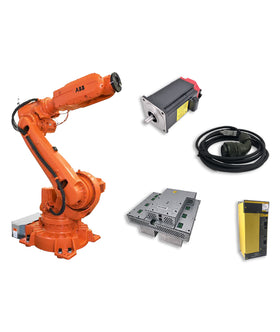
Key components commonly involved in system communication imeout issues and replacements.


{"one"=>"Seleziona 2 o 3 articoli da confrontare", "other"=>"{{ count }} di 3 elementi selezionati"}
Seleziona il primo elemento da confrontare
Seleziona il secondo elemento da confrontare
Seleziona il terzo elemento da confrontare
Lascia un commento