
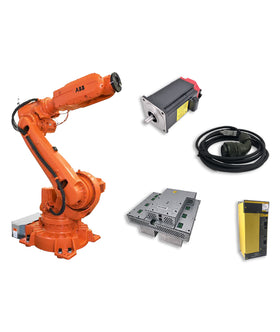
Diagnose Encoder Cable, RDC & Mastering Loss Failures in KRC4 / KRC5 Systems
When a KUKA robot in KRC4 or KRC5 systems loses position, common symptoms include:
- “Mastering required” after restart
- Axis reference loss or invalid mastering state
- TCP deviation during production cycles
- Position drift under repetitive motion
In industrial environments, these symptoms are often misinterpreted as mastering or calibration issues.
However, in most real cases, the root cause is instability in the encoder feedback chain, especially around the RDC system and encoder cable transmission.
What “Robot Loses Position” Means in KUKA Systems
KUKA robots do not store position as a fixed internal value.
Instead, position is continuously reconstructed from encoder feedback via the RDC system.
When this chain becomes unstable, the system may show:
- Mastering required after reboot
- Axis offset from taught positions
- TCP drift during operation
- Reference inconsistency between cycles
- Position deviation under load
Key interpretation:
Mastering loss is usually a symptom, not the root cause
Core Feedback Architecture (KRC4 / KRC5)
Encoder → Encoder Cable → RDC → KCB / Drive System → Controller
The RDC (Resolver Digital Converter) is the central processing node that translates raw feedback signals into axis position data.
If any part becomes unstable:
- Position reconstruction becomes inconsistent
- Axis reference cannot be validated
- Mastering state becomes invalid
- Motion accuracy degrades progressively
Most Common Root Cause: Encoder Cable Degradation
Encoder cables are statistically the highest failure-risk component in KUKA feedback systems.
Typical failure mechanisms:
- Continuous torsional stress (A4–A6)
- Repetitive flex cycles
- Internal conductor micro-fractures
- Shielding degradation over time
- Tight bend radius fatigue
- Oil/coolant ingress
- EMI and grounding instability
Field reality:
Cables often appear visually normal while already failing intermittently under motion load.
Why Encoder Cable Issues Cause Mastering Loss
KUKA systems require stable encoder feedback during every initialization and motion cycle.
When signal integrity is interrupted:
- Axis reconstruction becomes unstable
- Mastering reference cannot be verified
- False “Mastering required” states appear
- TCP deviation accumulates during production
Critical insight:
Re-mastering only resets reference — it does not fix feedback instability
If mastering loss repeats after restart, the issue is upstream in the feedback chain.
Common KUKA Position Loss Failure Sources
1. Encoder Cable Fatigue (Primary Cause)
Most frequent in wrist axes (A4–A6)
Symptoms:
- Drift increases with runtime
- Motion-dependent deviation
- Repeated mastering loss
- Instability during acceleration/deceleration
2. RDC Communication Instability
RDC converts analog resolver signals into digital position data.
Failure behavior:
- Intermittent axis desynchronization
- Position reconstruction errors under vibration
- Multi-axis inconsistency
- Temporary signal loss during operation
Key indicator:
Multi-axis mastering issues often point to RDC or shared signal path instability
3. Connector & Shielding Degradation
Small physical defects can create large system-level errors:
- Connector oxidation
- Loose locking under vibration
- Grounding instability
- EMI noise intrusion
Even slight resistance changes can destabilize RDC synchronization.
4. Servo Encoder Degradation (Less Frequent)
- Encoder resolution instability
- Signal jitter under load
- Internal wear over time
KUKA Position Loss Diagnostic Workflow
Step 1 — Static vs Dynamic Behavior Check
Check:
- Stable at idle
- Drift during motion
- Error increases over cycles
Interpretation:
Motion-dependent drift = encoder feedback instability
Step 2 — Cable Flex Test
During jogging:
- Gently move encoder cable harness
- Observe axis behavior
If position changes:
→ internal cable fatigue is highly likely
Step 3 — Monitor Mastering Behavior
Check:
- Repeated “Mastering required”
- Loss after restart
- Reference instability during cycles
Key insight:
Frequent mastering requests = unstable feedback loop
Step 4 — RDC Communication Check
Inspect:
- Multi-axis synchronization errors
- Position reset during vibration
- Signal interruptions under load
If multiple axes are affected:
→ RDC or shared feedback path is primary suspect
Step 5 — Isolation Strategy (Field Standard)
| Result |
Interpretation |
| Fault follows cable |
Cable failure confirmed |
| Fault remains |
RDC or encoder issue |
| Fault intermittent |
Progressive cable degradation |
Motion-Dependent Drift Pattern (Critical Signal)
Typical progression:
- Accurate after mastering
- Drift increases during production
- Error accumulates over cycles
- Mastering repeatedly required
Interpretation:
Progressive drift = feedback degradation, not calibration issue
High-Risk Areas
Wrist Axes (A4–A6)
- Highest torsional load
- Continuous direction changes
- Maximum cable fatigue risk
Internal Harness Routing
- Tight bend geometry
- Hidden stress accumulation
- Long-term conductor fatigue
Harsh Environments
- Oil mist
- Metal dust
- EMI interference
- Coolant exposure
Why Motor Replacement Is Often Misleading
In most real KUKA cases:
- Motor is mechanically healthy
- Encoder signal path is unstable
- RDC or cable is the actual failure point
Outcome of misdiagnos is:
- High cost repair
- No permanent fix
- Recurrent mastering loss
Preventive Maintenance Recommendations
- Use high-flex encoder cables on dynamic axes
- Avoid tight bend radius at wrist joints
- Inspect shielding integrity regularly
- Monitor mastering frequency trends
- Replace aging feedback cables proactively
- Verify RDC stability during service cycles
FAQ
Why does KUKA keep showing “Mastering required”?
Because encoder feedback synchronization is unstable, often due to cable or RDC signal degradation.
Can encoder cables really cause position loss?
Yes. Signal instability leads directly to incorrect axis reconstruction.
RDC failure vs cable failure?
- Cable: intermittent, motion-sensitive
- RDC: system-level, multi-axis failure
Cable issues are more common.
Should motor or cable be replaced first?
Always start with encoder cable and RDC communication checks.
Conclusion
When a KUKA robot loses position, the issue is rarely software, mastering, or servo tuning.
In most industrial cases, the root cause lies in the feedback chain:
- Encoder cable degradation
- RDC communication instability
- Mastering synchronization failure
- Signal integrity breakdown
A structured diagnos is starting from the feedback system enables:
- Faster fault isolation
- Lower maintenance cost
- Reduced unnecessary motor replacement
- Higher long-term stability
Lascia un commento