



On KUKA robots (KRC4 / KRC5), the Emergency Stop is part of the ESC (Electronic Safety Circuit) — a dual-channel safety system that monitors:
Important:
This is not a single button system. It’s a complete safety loop.
So when you see:
It usually means:
Something in the safety chain is still open — not necessarily the E-stop itself.
Symptoms:
Possible causes:
Symptoms:
Typical scenario:
Symptoms:
Common causes:
Symptoms:
KUKA-specific note:
ESC is a redundant dual-channel safety system, and mismatch usually indicates channel imbalance.
This is the most common issue in production environments.
Why:
Signs:
If moving the cable affects the fault → replace it.
The X11 connector is critical in KUKA safety systems.
Common problems:
Even if both channels have continuity, signal mismatch can still trigger ESC fault
Over time:
Signs:
After:
Internal PCB connectors inside smartPAD may loosen
Result:
Check:
If any device is active → ESC will not close
Includes:
Only consider after eliminating:
On newer KUKA systems using SafeOperation, safety behavior is partially defined by software configuration.
Even if hardware safety circuits are intact, incorrect SafeOperation settings, such as:
may prevent the robot from exiting an emergency stop state.
This is typically seen in systems with:
Tip: When checking the KUKA X11 safety interface, it is important to verify not only continuity but also channel symmetry.
A small discrepancy between Channel A and Channel B (even if both are electrically closed) can trigger an ESC fault.
Ensure all safety devices are released before attempting reset.
Reset the controller fault once the safety chain is confirmed closed.
After releasing the emergency stop and restoring the safety chain, perform a full acknowledgment on the smartPAD (“All Acknowledge”).
Ensure all drives are in a ready state (green status).
If “General Motion Enable” is missing, it indicates that the safety chain is closed, but the motion control logic has not yet been reinitialized.
KUKA ESC uses dual-channel safety architecture:
That’s why:
In reality, it’s usually a degrading cable or connector.
Replace components if:
If production is stopped and diagnos is is unclear:
Fastest fix path:
These solve most real-world ESC issues
Most commonly due to an open ESC safety chain, meaning one safety channel is still interrupted (X11 wiring, gate switch, or pendant cable issue).
No. ESC safety circuits are hardware-based and cannot be bypassed without disabling safety compliance, which is not allowed.
Usually caused by:
ESC (Electronic Safety Circuit) is KUKA’s dual-channel safety system that monitors emergency stop, safety gates, and external safety devices.
Explore the Full Guide: Repair & Troubleshooting Cluster → Emergency Stop Not Working
Explore the complete guide for troubleshooting, repair strategies, and component replacement across industrial robot systems.
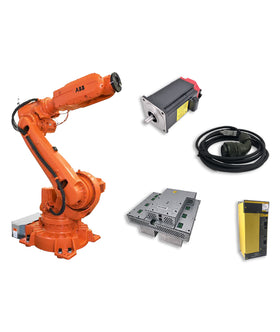
Key components commonly involved in emergency stop not working issues and replacements.


{"one"=>"Seleziona 2 o 3 articoli da confrontare", "other"=>"{{ count }} di 3 elementi selezionati"}
Seleziona il primo elemento da confrontare
Seleziona il secondo elemento da confrontare
Seleziona il terzo elemento da confrontare
Lascia un commento