

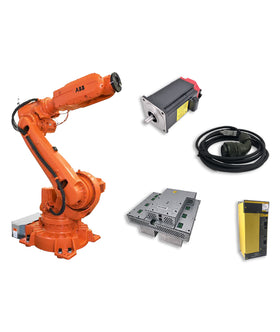

Industrial cleaning robot maintenance has evolved from a routine equipment service task into a critical reliability engineering function for warehouses, factories, and logistics facilities.
In modern industrial environments, autonomous cleaning robots operate continuously alongside forklifts, material handling systems, and production equipment. Their performance directly affects floor cleanliness, workplace safety, navigation stability, and operational uptime. As a result, maintenance is no longer simply about fixing equipment when problems occur—it is about preserving system reliability under continuous operational load.
Unlike commercial environments, industrial facilities generate constant contamination through forklift traffic, pallet movement, packaging debr is, airborne dust, oil residue, and manufacturing by-products. These contaminants affect multiple robot subsystems simultaneously, including sensors, navigation systems, brushes, vacuum airflow components, drive wheels, and battery systems.
Because performance degradation often occurs gradually, the first signs of poor maintenance are rarely complete failures. Instead, facilities typically experience navigation drift, reduced cleaning coverage, lower battery runtime, increased docking frequency, and declining operational efficiency long before a robot stops working entirely.
This guide explains how industrial cleaning robot maintenance supports long-term operational reliability, which components require the most attention, how preventive maintenance programs reduce downtime, and how maintenance strategy directly influences uptime, cleaning performance, and total cost of ownership (TCO).
Industrial cleaning robot maintenance is no longer a simple equipment servicing task. In modern warehouses, factories, and logistics facilities, autonomous cleaning robots operate as part of daily operations, often running across multiple shifts and interacting with dynamic environments filled with forklifts, pallets, dust, and debr is.
Unlike traditional cleaning equipment that is only used periodically, autonomous cleaning robots rely on a combination of navigation systems, sensors, batteries, drive components, and cleaning mechanisms to perform consistently. When any of these subsystems begin to degrade, the impact is rarely immediate. Instead, performance gradually declines through reduced cleaning coverage, navigation drift, increased charging frequency, and unexpected downtime.
For this reason, maintenance is fundamentally a reliability strategy rather than a repair activity.
A well-maintained robot can deliver:
In contrast, neglected maintenance often results in performance degradation long before a complete failure occurs.
Industrial cleaning robots rarely stop working suddenly.
Most operational problems begin as small inefficiencies that accumulate over time.
| Maintenance Issue | Operational Impact |
| Dirty LiDAR or cameras | Navigation drift and localization errors |
| Worn brushes | Reduced cleaning effectiveness |
| Clogged filters | Lower suction performance |
| Wheel contamination | Odometry and tracking inaccuracies |
| Battery degradation | Shorter runtime and more charging cycles |
| Docking misalignment | Failed charging and interrupted schedules |
In many facilities, these issues remain unnoticed because the robot continues operating. However, cleaning quality, route accuracy, and operational reliability gradually decline.
This phenomenon is often referred to as performance drift, where the system remains functional but no longer performs at its intended level.
Understanding where failures originate helps facilities build effective maintenance programs.
Autonomous cleaning robots depend on sensors such as:
Industrial environments expose these systems to:
Over time, sensor contamination reduces environmental perception accuracy and can lead to:
In high-traffic warehouses, sensor inspection is often one of the most important maintenance tasks.
Related topic:
→ Cleaning Robot Navigation Problems
Brushes and squeegees are wear components that operate under continuous friction.
Common causes of degradation include:
As wear increases:
Regular inspection helps maintain cleaning quality and prevents excessive motor load.
Dust and debr is gradually reduce airflow efficiency.
Typical consequences include:
Facilities operating in dusty environments may require more frequent filter inspection than manufacturers initially recommend.
Battery health directly affects operational uptime.
Common industrial stress factors include:
As batteries age:
Battery performance should be monitored as a long-term reliability metric rather than only a replacement item.
Related topic:
→ Cleaning Robot Battery Maintenance
Docking systems are critical for autonomous operation.
Common issues include:
Docking failures often create cascading operational issues because robots cannot recharge or resume scheduled cleaning cycles.
Related topic:
→ Cleaning Robot Docking Problems
A structured maintenance schedule helps prevent unexpected downtime.
Daily inspections focus on immediate operational reliability.
Recommended tasks:
Daily inspections typically require only a few minutes but prevent many operational issues.
Weekly inspections focus on performance consistency.
Recommended tasks:
These inspections help identify wear before performance degradation becomes visible.
Monthly maintenance focuses on long-term system health.
Recommended tasks:
For fleet deployments, monthly reviews should also include utilization analysis and workload balancing.
Industrial facilities increasingly favor preventive maintenance because reactive repairs create operational uncertainty.
| Preventive Maintenance | Reactive Repair |
| Scheduled inspections | Repair after failure |
| Predictable downtime | Unexpected downtime |
| Lower repair costs | Higher emergency costs |
| Consistent cleaning performance | Variable performance |
| Longer component lifespan | Accelerated wear |
Reactive maintenance may appear less expensive initially, but unplanned downtime often creates significantly higher operational costs over time.
The goal is not simply to repair robots—it is to prevent performance degradation from affecting operations.
As facilities expand, maintenance becomes a fleet management challenge rather than an individual robot task.
Common fleet-level considerations include:
Robots should be serviced on staggered schedules to avoid simultaneous downtime.
Uneven charging patterns can cause premature battery aging across the fleet.
Workloads should be distributed evenly to prevent accelerated wear on individual units.
Modern fleet management platforms allow operators to monitor:
This enables predictive maintenance planning and reduces unexpected failures.
Maintenance has a direct impact on the lifetime economics of autonomous cleaning systems.
| Cost Factor | Poor Maintenance | Proper Maintenance |
| Battery replacement | More frequent | Less frequent |
| Emergency repairs | Higher | Lower |
| Downtime | Increased | Reduced |
| Cleaning consistency | Variable | Stable |
| Equipment lifespan | Shorter | Longer |
Many facilities focus heavily on purchase price when evaluating cleaning robots. However, long-term maintenance practices often have a greater influence on total ownership costs than the initial equipment investment.
A maintenance checklist helps standardize reliability across shifts and operators.
A structured checklist transforms maintenance from reactive troubleshooting into a repeatable operational process.
Most facilities should perform daily inspections, weekly component checks, and monthly preventive maintenance reviews. High-dust or high-runtime environments may require more frequent servicing.
Sensors, brushes, filters, wheels, docking systems, and batteries are typically the highest-maintenance components in industrial cleaning robots.
Yes. Dirty sensors, wheel contamination, and mapping inconsistencies can reduce localization accuracy and increase navigation drift.
Yes. Preventive maintenance reduces downtime, extends component lifespan, improves uptime, and lowers emergency repair expenses over the robot's lifecycle.
Industrial cleaning robot maintenance is not simply about keeping equipment operational. It is a reliability strategy that protects cleaning performance, navigation accuracy, fleet uptime, and long-term operational efficiency.
As warehouses and factories become increasingly automated, autonomous cleaning systems are evolving into critical infrastructure components. Their effectiveness depends not only on hardware quality but also on disciplined preventive maintenance programs.
Facilities that implement structured maintenance schedules, monitor performance trends, and address degradation before failures occur typically achieve lower operating costs, higher uptime, and more predictable cleaning performance over the lifetime of the system.
Key components commonly involved in issues and replacements.
No related parts found. Please check available components in our catalog.


{"one"=>"Seleziona 2 o 3 articoli da confrontare", "other"=>"{{ count }} di 3 elementi selezionati"}
Seleziona il primo elemento da confrontare
Seleziona il secondo elemento da confrontare
Seleziona il terzo elemento da confrontare
Lascia un commento