Quick Fix for FANUC SV043
If SV043 (Excess Error) appears, try these immediate actions:
- Power cycle the robot controller
- Inspect servo amplifier, motor, and encoder connections
- Reset the alarm and test axis movement at low speed
- Avoid full-speed operation until the root cause is resolved
These steps can temporarily clear excess motion or feedback errors.
What is FANUC SV043 Excess Error?
FANUC Alarm SV043 (Excess Error) occurs when a servo axis deviates beyond allowable limits from its commanded position or velocity.
Excess errors are safety mechanisms to:
- Prevent mechanical damage
- Maintain accurate axis positioning
- Protect servo amplifiers and motors
When this alarm occurs, the robot stops immediately to avoid potential collisions or axis misalignment.
What Does SV043 Mean?
SV043 indicates that the actual axis motion exceeds the programmed or expected motion range.
This can result in:
- Axis stalling or unexpected stopping
- Loss of path accuracy
- Risk of mechanical stress or component damage
Common Causes of FANUC SV043
Encoder or Pulse Coder Signal Issues
Incorrect feedback signals can trigger excess errors.
Common issues include:
1. Damaged or broken encoder cables
2. Loose or improperly connected terminals
3. Signal interference or electrical noise
Inspecting and securing cables restores accurate feedback and motion control.
Servo Amplifier Malfunction
Amplifier issues can cause overdrive or incorrect position control.
Common issues include:
1. Internal circuit failures
2. Component degradation over time
3. Parameter misconfiguration affecting servo loop
Mechanical or Load Problems
Unexpected loads or friction can cause axes to exceed limits.
- Excessive payload or inertia
- Gear backlash or worn mechanical components
- Physical obstruction along the motion path
Electrical Noise or Interference
External electrical interference can corrupt feedback signals.
- Nearby high-power devices
- Improper grounding
- Encoder or amplifier cables routed too close to drives or motors
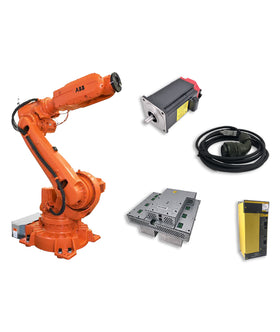
Recommended Parts for SV043 Repair
The following components are commonly required when resolving SV043 alarms:
-
Encoder Cables
→ Replace if feedback signals are unstable or interrupted
-
FANUC Servo Amplifiers
→ Replace if amplifier cannot maintain position control
-
Servo Motors with Encoders
→ Replace if motion or feedback is inconsistent
Browse available FANUC spare parts at inrobots.shop for reliable replacements with fast global shipping.
How to Troubleshoot FANUC SV043
Step 1: Power Cycle the Controller
- Turn off the system completely
- Restart and check if the alarm persists
Step 2: Inspect Encoder and Servo Cables
- Check for physical damage
- Ensure connectors are secure and properly seated
Step 3: Reseat Connectors
- Disconnect and reconnect motor, encoder, and amplifier connectors
- Ensure proper alignment and contact
Step 4: Identify Affected Axis or Amplifier
- Determine which axis triggers the alarm
- Focus troubleshooting on that specific amplifier or motor
Step 5: Check Servo Amplifier
- Inspect amplifier LEDs and feedback indicators
- Confirm proper signal reception
Step 6: Evaluate Servo Motor and Mechanics
- Test motor motion and encoder feedback
- Inspect for mechanical friction, backlash, or obstructions
Step 7: Check Electrical Environment
- Ensure proper grounding
- Reduce interference sources near cables
Pro Diagnostic Tip
Swap Encoder or Servo Cables Between Axes
- Disconnect the encoder or servo cables from the affected axis.
- Connect them to another axis and observe how the alarm behaves.
Interpret Results:
-
Alarm moves with the cable → The issue is likely the encoder or servo cable from the Cable Collection.
-
Alarm stays on the same axis → The problem is likely the servo drive, amplifier, or motor.
Why Servo Drive & Cable Collections Are Key:
-
Encoder and servo cables transmit vital motion and feedback signals. Damaged or loose cables often trigger SV043 alarms.
-
Servo drives process commands from the controller to the motor. Failures can cause axes to exceed motion limits, triggering Excess Errors.
-
Servo motors provide position and motion feedback. Faulty motors or feedback can cause the system to incorrectly interpret axis motion.
Next Steps:
- Replace any faulty cables from the Cable Collection.
- Repair or replace defective servo drives or amplifiers from the Servo Drive collection.
- Replace motors if feedback or motion signals are inconsistent.
- Check for mechanical issues (friction, backlash, obstructions) and correct them.
- Ensure connectors are clean and secure, and verify grounding/shielding.
How to Fix FANUC SV043
Proven Fix Methods
- Replace damaged or faulty encoder cables
- Replace defective servo amplifiers
- Repair or replace affected servo motors
- Correct mechanical issues (backlash, friction, obstructions)
- Clean and secure connectors
- Improve grounding and shielding
Important Note
- SV043 indicates excessive axis deviation:
- Ignoring this alarm can lead to mechanical damage, axis misalignment, or system shutdowns.
Preventing Excess Errors
- Inspect encoder and servo cables regularly
- Maintain proper grounding and shielding
- Monitor mechanical wear and load limits
- Avoid sudden or excessive speed changes
- Perform scheduled maintenance checks
Related FANUC Alarm Codes
These alarms are closely related to servo feedback, position control, and motion accuracy.
Conclusion
- FANUC Alarm SV043 – Excess Error indicates that a servo axis exceeded allowable motion limits.
- By inspecting cables, amplifiers, motors, and mechanical components, engineers can restore safe and precise robot operation.
FAQ
Q1: What causes SV043?
Common causes include encoder cable faults, servo amplifier issues, motor feedback errors, or mechanical problems.
Q2: Can I reset SV043 and continue running?
Only if the issue is temporary. Persistent alarms require immediate troubleshooting.
Q3: Is SV043 critical?
Yes, as it affects axis motion, position accuracy, and safety.
Q4: How do I fix excess errors?
Inspect cables, reseat connectors, repair or replace amplifiers or motors, and correct mechanical issues.




Lascia un commento