
Salta il contenuto

ABB Robot Loses Position

Diagnose Encoder Cable, SMB & Rev Counter Synchronization Failures

When an ABB robot begins to lose position accuracy, it is often misdiagnosed as a calibration issue, mechanical backlash, or servo tuning instability.

In real industrial maintenance, most position loss cases originate from instability in the encoder feedback chain, not mechanical wear or motion control parameters.

In ABB systems such as IRC5, accuracy depends on continuous synchronization between:

Encoder → Encoder Cable → SMB → Controller

If this chain is disrupted, the robot gradually loses position consistency and enters a desynchronized state.

What “Robot Loses Position” Means in ABB Systems

ABB robots do not operate on a fixed position model.

Instead, position is continuously reconstructed from live encoder feedback.

When synchronization becomes unstable, the system may show:

  • Axis offset after restart
  • Gradual path deviation during production
  • Drift under repetitive motion
  • “Update Rev Counter” requests
  • Inconsistent mastering results
  • Temporary recovery after reboot

Key interpretation:

Position loss = feedback desynchronization, not motion calculation error

Core Feedback Architecture (ABB IRC5)

Motor Encoder → Encoder Cable → SMB → RobotWare Controller

The SMB (Serial Measurement Board) is the synchronization layer that aligns physical feedback with controller position data.

If any part becomes unstable:

  • Position reconstruction becomes inconsistent
  • Axis reference slowly diverges
  • Rev counter values desynchronize
  • Drift accumulates over cycles

Most Common Root Cause: Encoder Cable Degradation

Encoder cables are the highest-risk component in ABB position accuracy systems.

Typical failure mechanisms:

  • Continuous torsional stress (A4–A6 axes)
  • Internal conductor micro-fractures
  • Shielding degradation
  • Tight bend radius fatigue
  • Oil/coolant ingress
  • EMI interference
  • Connector oxidation or loosening

Field reality:

Cable often appears normal externally while already producing intermittent signal loss under motion.

Why Encoder Cable Causes Position Drift

ABB position tracking depends on real-time encoder synchronization.

When signal becomes unstable:

  • Position updates become inconsistent
  • Axis references slowly diverge
  • Rev counter values desynchronize
  • Temporary correction masks long-term drift

Key result:

Drift is cumulative feedback error, not a sudden mechanical shift

SMB (Serial Measurement Board) Role in Position Loss

SMB is responsible for distributing and synchronizing encoder feedback.

When SMB instability occurs:

  • “Update Rev Counter” appears repeatedly
  • Multi-axis synchronization issues occur
  • Position resets after power cycle
  • Startup reference becomes inconsistent

Critical interpretation:

“Update Rev Counter” = loss of encoder–controller synchronization, not a calibration request

Resolver-Based Systems

Some ABB configurations use resolver feedback instead of full digital encoders.

These systems are sensitive to:

  • EMI interference
  • Ground instability
  • Shield degradation
  • Connector resistance changes

Even small disturbances can cause long-term position drift.

Diagnostic Workflow (Field Method)

Step 1 — Identify Drift Behavior Type

Check:

  • Stable at idle
  • Drift occurs during motion
  • Error increases with cycle count

Interpretation:

Motion-dependent drift = encoder feedback instability

Step 2 — Encoder Cable Flex Test

During jogging:

  • Gently move encoder cable
  • Observe axis stability

If position changes:

→ internal conductor fatigue is highly likely

Step 3 — Monitor Rev Counter Behavior

Check for:

  • Repeated “Update Rev Counter” prompts
  • Loss of reference after restart
  • Inconsistent axis recovery

Key insight:

Frequent rev counter updates = feedback synchronization failure

Step 4 — SMB Stability Check

Inspect:

  • SMB battery condition
  • Connector vibration stability
  • Multi-axis synchronization behavior
  • Signal continuity under load

If multiple axes are affected:

→ SMB or shared feedback path should be prioritized

Step 5 — Swap Test (Isolation Method)

Result Diagnos is
Fault follows cable Cable failure confirmed
Fault remains SMB or encoder issue
Fault intermittent Progressive cable degradation

High-Risk Areas

Wrist Axes (A4–A6)

  • High-speed repetitive motion
  • Continuous torsional stress
  • Highest cable fatigue probability

Dress Pack / External Routing

  • Continuous flex cycles
  • Mechanical tension stress
  • Protective sleeve wear

Harsh Industrial Environments

  • Oil mist exposure
  • Metal dust contamination
  • High EMI environments
  • Coolant spray zones

Why Motor Replacement Is Often Incorrect

In most ABB position loss cases:

  • Motor is mechanically healthy
  • Encoder path is unstable
  • SMB or cable is the real failure point

Misdiagnos is outcome:

  • High cost
  • No improvement
  • Recurrent drift after repair

Motion-Dependent Drift Pattern (Key Field Signal)

One of the most reliable indicators:

  • Robot is accurate at startup
  • Drift increases over time
  • Error grows with cycle count
  • Accuracy varies with motion load

Interpretation:

Progressive drift = cumulative encoder feedback degradation

Preventive Maintenance Recommendations

  • Use high-flex encoder cables on dynamic axes
  • Avoid tight bend routing near wrist joints
  • Inspect shielding integrity during maintenance cycles
  • Monitor early-stage drift trends
  • Replace aging feedback cables proactively
  • Verify SMB battery health regularly

FAQ

1. Why does “Update Rev Counter” keep appearing?
It indicates loss of synchronization between encoder feedback and controller model.

2. Can encoder cables really cause position drift?
Yes. Signal instability causes cumulative position reconstruction errors.

3. SMB failure vs cable failure?
Cable = intermittent, motion-related
SMB = multi-axis or system-level synchronization loss

4. Should motor or cable be replaced first?
Always start with encoder cable and SMB inspection.

Conclusion

When an ABB robot loses position, the issue is rarely mechanical or related to servo tuning.

In most real industrial cases, the root cause is:

  • Encoder cable degradation
  • SMB synchronization instability
  • Rev counter desynchronization
  • Resolver signal disturbance

A structured diagnos is starting from the feedback chain enables:

  • Faster fault isolation
  • Lower maintenance cost
  • Reduced unnecessary motor replacement
  • Improved long-term system stability

Explore the Full Guide: Repair & Troubleshooting Cluster  →  ABB Robot Loses Position

Explore the complete guide for troubleshooting, repair strategies, and component replacement across industrial robot systems.

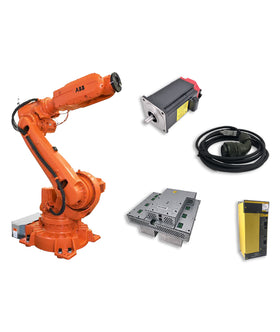
🔧 Recommended Parts for ABB Robot Loses Position

Key components commonly involved in abb robot loses position issues and replacements.

📘 Related Resources for ABB Robot Loses Position
  • No related articles found in this topic.
Articolo precedente UR Joint Overload Error – Symptoms & Diagnostic Guide

Lascia un commento

* Campi obbligatori

Blog posts

Confronta Prodotti

{"one"=>"Seleziona 2 o 3 articoli da confrontare", "other"=>"{{ count }} di 3 elementi selezionati"}

Seleziona il primo elemento da confrontare

Seleziona il secondo elemento da confrontare

Seleziona il terzo elemento da confrontare

Confrontare