

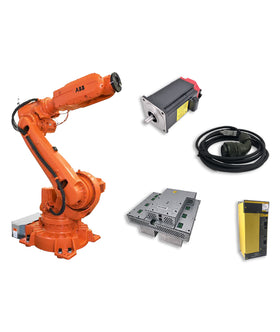

An industrial vacuum robot is an autonomous floor-cleaning system designed to operate in continuously active industrial environments where dust generation is a byproduct of logistics and production flow.
In facility-scale operations, an industrial vacuum robot is not a standalone cleaning device, but a mobile particulate capture node within a larger environmental control system that stabilizes floor conditions under continuous mechanical stress.
From an operational perspective, it directly contributes to:
Unlike conventional cleaning tools, it operates under non-static contamination conditions, where dust is continuously regenerated by material flow, forklift traffic, and packaging movement.
Industrial floors are governed by a continuous contamination cycle rather than a fixed dirt accumulation model.
This loop creates a condition where:
Cleaning is always reacting to re-distributed contamination rather than stable accumulation.
This is the primary reason manual cleaning systems fail to maintain consistent surface conditions.
Industrial dust is not a hygiene variable—it is a production stability variable.
The critical constraint is not cleaning capability, but cleaning timing conflict with production continuity.
In a high-throughput logistics warehouse, contamination behavior is directly coupled with operational density.
Typical environment characteristics:
Dust distribution is not uniform—it forms dynamic contamination gradients that shift based on traffic density.
This leads to a core contradiction:
The same operational activity that generates efficiency also continuously invalidates cleaning coverage.
The transition from manual cleaning to autonomous systems is driven by structural operational constraints rather than technological preference.
An autonomous cleaning system introduces a different operational model:
This transforms cleaning from a reactive maintenance task into a system-level operational layer.
An industrial vacuum robot consists of three integrated subsystems operating under continuous industrial load conditions.
Typical industrial configuration operates within:
Purpose:
Prevent re-emission of fine particles into operational airspace
This enables operation under non-static warehouse geometry, where floor layouts change frequently.
Modern industrial vacuum robots operate using adaptive environmental logic rather than fixed-route navigation.
Instead of “following a path,” the system continuously evaluates:
Where contamination is most likely to regenerate next
This makes cleaning behavior probabilistic rather than deterministic.
Industrial vacuum robots are deployed in environments characterized by continuous material flow and contamination regeneration.
Across all environments, the common requirement is:
Continuous floor stability under uninterrupted operational flow
Industrial deployment introduces predictable performance degradation mechanisms.
From a system perspective, maintenance is not corrective—it is predictive stabilization of performance curves.
The introduction of industrial vacuum robots represents a structural shift in facility management:
From manual, event-based cleaning → to continuous, system-integrated environmental control
In advanced industrial environments, these systems function as:
This reframes cleaning from a support function into a core component of operational reliability engineering.
An industrial vacuum robot is used for continuous removal of dust, debr is, and fine particulate matter in warehouses, factories, and logistics facilities. It operates autonomously to maintain stable floor conditions in high-traffic industrial environments.
Unlike commercial units, an industrial vacuum robot is designed for high-load environments with continuous dust generation, larger floor areas, and forklift traffic. It typically features stronger suction capacity, industrial-grade filtration, and autonomous navigation optimized for dynamic layouts.
Warehouses generate continuous dust through forklift movement, packaging abrasion, and material handling. Industrial vacuum robots help maintain floor stability, reduce slip risks, and minimize operational interruptions caused by contamination buildup.
No. They reduce the frequency and intensity of manual cleaning but do not fully replace it. Manual cleaning is still required for edge cases, deep cleaning, and maintenance in hard-to-reach areas.
Key components commonly involved in issues and replacements.
No related parts found. Please check available components in our catalog.


{"one"=>"Seleziona 2 o 3 articoli da confrontare", "other"=>"{{ count }} di 3 elementi selezionati"}
Seleziona il primo elemento da confrontare
Seleziona il secondo elemento da confrontare
Seleziona il terzo elemento da confrontare
Lascia un commento