


Most KUKA industrial robots use resolver-based feedback systems rather than traditional digital encoders. These resolvers generate high-frequency analog signals that are processed through the RDC (Resolver Digital Converter) and transmitted to the KRC controller.
Encoder signal loss occurs when stable feedback from one or more robot axes is interrupted or distorted within this signal chain.
This typically results in axis faults, motion interruption, or drive system shutdown.
Common symptoms include:
Note: Most KUKA robots utilize resolvers for feedback. The signal cable (RDW cable or resolver cable) transmits high-frequency analog signals that are highly sensitive to electromagnetic interference (EMI) and cable degradation.
Signal cable failure is the most common root cause of encoder signal loss in KUKA systems.
Typical failure modes include:
Because resolver signals are analog and high-frequency, even minor cable degradation can cause unstable feedback.
KUKA encoder feedback is transmitted through RDW (data) cables connecting the robot arm and controller system.
In compact models such as the KUKA Agilus series, power and feedback signals are integrated into a hybrid cable. In these systems, encoder signal loss may originate from combined power-data cable degradation rather than a separate signal line.
Signal cable issues in this layer often appear as:
Resolver signals are converted into digital feedback through the RDC module before reaching the KRC controller.
Faults in this conversion chain may include:
Although RDC errors appear as system-level faults, they are often triggered by unstable signal input from degraded cables.
KUKA robots rely on a layered communication system:
Faults in this architecture can lead to multi-axis encoder signal loss.
Typical issues include:
Encoder feedback is ultimately processed through KRC controller and servo drive systems.
Possible issues include:
Determine whether the issue is:
Intermittent faults strongly indicate cable or connector degradation.
Focus on high-stress areas:
Signal degradation is most frequently caused by internal arm cable fatigue.
Inspect system-level diagnostics:
Communication instability may indicate deeper signal chain issues.
Check resolver signal processing:
RDC errors are often secondary effects of unstable signal transmission.
If possible, swap RDW or signal cables between axes.
If the fault follows the cable, signal cable degradation is confirmed.
KUKA robots rely on resolver-based analog feedback systems that depend heavily on stable RDW signal transmission and RDC processing.
These signal cables are exposed to:
As a result, signal cables are among the most failure-prone components in the encoder feedback chain.
| Symptom | Likely Cause |
| Intermittent encoder loss | Signal cable degradation |
| Axis not ready at startup | KCB/KSB communication issue |
| Single axis feedback error | RDC or resolver issue |
| Multi-axis failure | Controller or bus communication fault |
Stable resolver feedback depends on reliable RDW signal transmission and EMI-resistant cable design.
Key requirements include:
The most common cause is signal cable degradation inside the robot arm due to continuous torsional stress and mechanical fatigue.
Most KUKA robots use resolvers instead of digital encoders. These analog signals are processed through RDC modules for controller feedback.
RDW cable (data cable) transmits resolver feedback between the robot arm and controller system.
Yes. Failures in KCB or KSB communication layers can result in multi-axis encoder signal loss across the system.
A cable substitution test or motion-dependent fault variation test is the most effective method to confirm signal cable degradation.
Explore the Full Guide: Repair & Troubleshooting Cluster → Encoder Signal Loss in Industrial Robots
Explore the complete guide for troubleshooting, repair strategies, and component replacement across industrial robot systems.
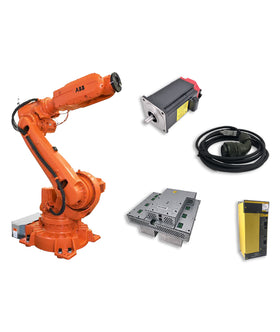
Key components commonly involved in encoder signal loss in industrial robots issues and replacements.


{"one"=>"Seleccione 2 o 3 artículos para comparar", "other"=>"{{ count }} de 3 artículos seleccionados"}
Seleccione el primer artículo para comparar
Seleccione el segundo artículo para comparar
Seleccione el tercer elemento para comparar
Dejar un comentario