


Error Code: KSS15019
Category: Servo Drive / Motion Stability
Severity: High
System: KRC4 / KSP Drive System
Impact: Unexpected robot stop, interrupted motion cycle, intermittent drive shutdown
If the robot randomly stops during operation or intermittently loses motion control, try these checks first:
⚠️ Always disconnect main power before touching servo drive wiring or motor cables.
👉 If the robot runs normally after reboot but stops again later during production, the issue is usually related to progressive drive instability, cable degradation, thermal stress, or DC bus fluctuation rather than a permanent hard failure.
KUKA KSS15019 indicates an intermittent robot motion stop condition caused by unstable servo drive operation or temporary drive fault behavior.
In KUKA KRC4 architecture:
When KSS15019 is triggered:
As a result:
👉 In short: the robot experiences unstable drive behavior that intermittently interrupts safe motion control.
Before complete motion interruption occurs, the robot often shows early warning signs:
👉 In real production environments, intermittent servo faults almost always worsen gradually before permanent failure occurs.
Internal KSP electronics degrade over time due to thermal cycling and long-term operation.
Typical conditions include:
👉 One of the most common root causes in older KRC4 systems..
Robot motion cables experience continuous bending stress.
Common failure points:
👉 The fault often appears only while the robot is moving.
Servo drives are highly temperature-sensitive.
Common thermal causes:
👉 Thermal instability frequently causes intermittent drive shutdown behavior.
Servo systems require stable voltage during acceleration and load transitions.
Potential causes:
👉 Even short voltage instability can temporarily reset drive modules.
Mechanical stress increases servo current demand.
Typical issues include:
👉 Drive protection may trigger intermittently under high torque demand.
KRC4, RDC, and KSP modules rely on stable synchronization timing.
Possible issues:
👉 Motion interruption may occur without permanent hardware failure.
| Component | Recommended Replacement Trigger | Diagnostic Condition | Engineering Notes |
| KUKA KSP Servo Drive Module | Replace when intermittent drive shutdown repeats on same axis | - Same axis repeatedly drops out during motion - Drive resets without external command - Fault disappears after cooldown or restart |
Indicates internal power stage instability or protection circuit triggering under load |
| Encoder /Resolver Cable Assembly | Critical in intermittent motion stop conditions | - Random motion interruption during travel - Feedback signal loss correlated with vibration - Fault clears after cable movement or reseating |
EMI or partial conductor degradation leads to unstable feedback loop under motion load |
| Motor Power Cable Assembly | Required when load-related power interruption is suspected | - Fault occurs only under high load - Voltage drop or heating observed on cable path - Intermittent axis shutdown during acceleration |
High-resistance or internal short causes unstable current delivery under dynamic load |
| Cabinet Cooling Fan & Airflow Components | Necessary when thermal instability is detected | - Drive shutdown correlates with temperature rise - Poor cabinet ventilation or airflow blockage - Thermal alarms preceding motion stop |
Insufficient cooling leads to protective shutdown of drive modules under sustained load |
| Check Item | Why It Matters |
| Drive firmware compatibility | Affects protection logic and shutdown thresholds |
| Motor and axis configuration | Incorrect mapping can mimic shutdown faults |
| Cable shielding quality | EMI directly influences intermittent motion faults |
| DC bus voltage stability | Voltage dips often trigger protective drive shutdown |
Check:
👉 Runtime-related failure strongly suggests thermal instability.
Observe KSP LEDs during operation.
Look for:
Check all motion-related cabling carefully.
Inspect for:
👉 Many intermittent faults only appear while cables are flexing during motion.
Inspect:
Measure cabinet temperature during long production cycles.
Measure:
Also inspect:
Temporarily:
Observe whether intermittent shutdown disappears.
👉 If lower load stabilizes operation, mechanical stress or drive thermal overload is likely involved.
KSS15019 is rarely a “single hard failure.”
Experienced engineers treat it as a progressive instability warning that usually worsens over time.
Go to:
SmartHMI → Diagnostics → Drive → Event History & Current Monitoring
Check:
👉 Key diagnostic logic:
👉 In real industrial environments, the most common root causes are:
To permanently resolve the issue:
👉 In most real cases, the final fix is: drive replacement or cable replacement after intermittent degradation is confirmed
To reduce future intermittent motion faults:
⚠️ Technical Note: Following errors are commonly associated with intermittent servo instability, drive reset behavior, thermal drift, or communication degradation:
This is a typical symptom of intermittent servo instability. The reboot temporarily clears the fault condition, but the underlying issue — usually thermal stress, cable degradation, or drive instability — remains.
This usually indicates heat-related instability inside the KSP drive, cabinet cooling system, or power stage electronics. Thermal buildup gradually pushes the system beyond stable operating limits.
Yes. Intermittent encoder signal loss during motion can briefly destabilize servo synchronization, forcing the controller to stop motion immediately for safety.
When multiple axes fail unpredictably, the root cause is often cabinet-level instability such as:
rather than a single motor failure.
In many cases, the actual root cause is missed because the problem is intermittent.
Commonly overlooked issues include:
Explore the Full Guide: Industrial Robot Fault Codes Library → KUKA Error Codes
Explore the complete guide for troubleshooting, repair strategies, and component replacement across industrial robot systems.
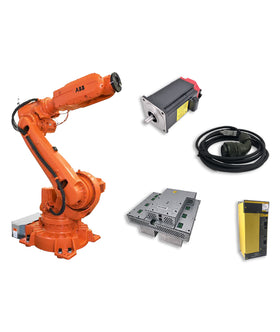
Key components commonly involved in kuka error troubleshooting issues and replacements.


{"one"=>"Seleccione 2 o 3 artículos para comparar", "other"=>"{{ count }} de 3 artículos seleccionados"}
Seleccione el primer artículo para comparar
Seleccione el segundo artículo para comparar
Seleccione el tercer elemento para comparar
Dejar un comentario