
Zu Inhalt springen

Yaskawa Teach Pendant Black Screen: Causes, Diagnos is & Repair Guide

When Your Yaskawa Teach Pendant Screen Goes Black

If your Yaskawa teach pendant screen suddenly goes black, you lose visibility and control over the robot interface—often without warning.

Even when the controller is still running, a black screen prevents you from:

  • Monitoring robot status
  • Interacting with jobs and programs
  • Resetting alarms or resuming production

In many cases, this issue is isolated to the pendant—not the entire robot system.

For a broader overview across all brands, see:
Teach Pendant Black Screen (General Guide)

What Does “Black Screen” Mean on a Yaskawa Pendant?

A Yaskawa teach pendant black screen refers to a condition where the device powers on (or appears powered), but the display shows no usable image.

This is different from:

  • A completely dead pendant(no power at all) → see: Teach Pendant Not Working
  • A frozen interface→ see: Touchscreen Not Responding

In Yaskawa (Motoman) systems, the issue usually originates from:

  • Display backlight or LCD failure
  • Pendant cable damage
  • Power instability
  • Communication interruption (controller ↔ pendant)
  • Internal hardware faults

Quick Diagnos is (Fast On-Site Check)

Use these indicators to narrow down the problem in seconds:

Symptom Likely Cause
Screen completely black, no light Power or backlight failure
Dim glow, no UI LCD signal issue
Works intermittently Cable or connector fault
Black after drop/impact Internal hardware damage
Controller runs normally Pendant-side issue

Field data shows 70%+ of cases are cable or backlight-related, not controller failure.

Common Causes of Yaskawa Pendant Black Screen

1. Power Supply Instability

A weak or unstable 24V supply can prevent proper display startup.

Typical triggers:

  • Loose power connectors
  • Internal PSU degradation
  • Voltage drop under load

💡 Tip: Measure voltage directly at the pendant connector to confirm stable input.

2. Damaged Pendant Cable (Most Common Cause)

The teach pendant cable is a high-flex failure point.

Common reasons:

  • Repeated bending near connector
  • Oil/coolant exposure
  • Internal wire break (not visible externally)

This is the #1 real-world cause.

For deeper cable-related failures, see:
Teach Pendant Cable Failure Guide

3. LCD / Backlight Failure

If the backlight fails, the screen appears black even though the system is active.

Quick test:

  • Shine a flashlight at the screen
  • If faint graphics appear → backlight failure confirmed

4. Communication Loss (Controller ↔ Pendant)

When communication is interrupted:

  • No UI loads
  • Controller may still be running
  • Pendant appears “dead”

This is often mistaken for a full system failure.

5. Internal Pendant Hardware Failure

Less common but critical:

  • PCB damage
  • Connector board failure
  • Liquid ingress / corrosion

Usually requires repair or replacement.

Step-by-Step Troubleshooting

Step 1 — Check Controller Status

  • Is the controller powered normally?
  • Any active alarms?

If YES → issue is likely pendant-only.

Step 2 — Observe Power & Boot Behavior

  • Any LED activity?
  • Does the logo flash briefly?

💡 If logo appears then disappears:
→ Power is OK → likely display or system loading issue

Step 3 — Check Cable Integrity

  • Re-seat connectors
  • Inspect bending areas
  • Gently move cable while observing screen

Flicker = internal cable break

Step 4 — Perform Flashlight Test

  • Shine light at screen angle

Results:

  • Visible UI → backlight failure
  • No UI → signal or hardware issue

Step 5 — Swap Test (Fastest Isolation)

  • Use a known-good pendant
  • Or test on another controller

This quickly confirms whether the issue is hardware-related.

Pro Diagnostic Insight

Black Screen ≠ Full System Failure

In many Yaskawa cases:

  • Robot logic is still running
  • Only the display (HMI layer) is affected

Always separate:

  • Control system (controller)
  • Display system (pendant)

This avoids unnecessaryfullfull replacements.

Repair vs Replacement Guide

Repair Recommended When:

  • Cable damage confirmed
  • Backlight failure only
  • Intermittent display issues
  • No PCB damage

Replacement Recommended When:

  • PCB burn or corrosion
  • Liquid ingress
  • Multiple failures
  • Repeated breakdown after repair

Failure Rate Insights (Field Data)

Typical breakdown of causes:

  • ~45%→ Cable failure
  • ~25%→ LCD/backlight
  • ~20%→ Power/connection
  • ~10%→ Internal hardware

This is one of the most repairable pendant issues, despite frequent misdiagnos is.

Where This Happens Most

Yaskawa systems are widely used in:

  • Automotive welding
  • Packaging automation
  • CNC robot integration
  • High-duty production lines

Common stress factors:

  • Constant vibration
  • Frequent handling
  • Cable torsion

Mechanical wear dominates over electronic failure.

Related Diagnostic Guides (Internal Links)

For deeper troubleshooting across brands and scenarios:

  • → Teach Pendant Black Screen (General)
  • → FANUC Teach Pendant Black Screen
  • → ABB FlexPendant Black Screen
  • → KUKA smartPAD Black Screen
  • → Teach Pendant Not Working (Full Guide)

Final Technical Summary

A Yaskawa teach pendant black screen is rarely caused by controller failure.

In most cases, the root cause is:

  • Cable degradation
  • Backlight or LCD failure
  • Power instability

A structured diagnostic approach can:

  • Reduce downtime
  • Avoid unnecessary replacement
  • Improve repair success rate

FAQ

1. Why is the screen black but the robot still running?

This usually indicates a display or communication issue, not a controller failure.

2. How to tell cable vs screen issue?

Use flashlight test:

  • Visible UI → screen/backlight
  • No UI → cable or signal

Cable failure is statistically most common.

3. Can power issues cause this?

Yes. Unstable 24V supply can prevent proper startup.

4. Should I restart the controller?

You can—but it will NOT fix hardware issues like cable or LCD failure.

5. Do I needfullfull replacement?

Not always. Many cases are solved by:

  • Cable replacement
  • Backlight repair
  • Connector fixes

6. Can environment cause this?

Yes. Heat, vibration, coolant, and bending stress all increase failure risk.

Explore the Full Guide: Industrial Robot Teach Pendant Center  →  Teach Pendant Black Screen

Explore the complete guide for troubleshooting, repair strategies, and component replacement across industrial robot systems.

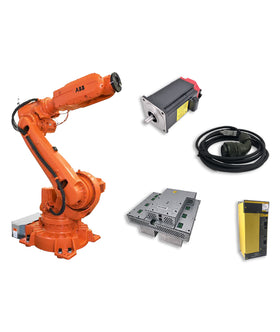
🔧 Recommended Parts for Teach Pendant Black Screen

Key components commonly involved in teach pendant black screen issues and replacements.

📘 Related Resources for Teach Pendant Black Screen
Vorheriger Artikel Yaskawa Teach Pendant Dead / NoDisplay: Causes, Diagnosis & Fix Guide
Nächster Artikel ABB Teach Pendant Cable Failure: Symptoms, Diagnosis & Replacement Guide

Einen Kommentar hinterlassen

* Erforderliche Felder

Blog posts

Produkte vergleichen

{"one"=>"Wählen Sie 2 oder 3 Artikel zum Vergleichen aus", "other"=>"{{ count }} von 3 Elementen ausgewählt"}

Wählen Sie das erste zu vergleichende Element aus

Wählen Sie das zweite zu vergleichende Element aus

Wählen Sie das dritte Element zum Vergleichen aus

Vergleichen