



When a KUKA robot suddenly stops motion and displays KSS15015, the issue is usually related to servo instability, oscillation, or mechanical response mismatch rather than a simple controller fault.
In KRC4 systems, KSS15015 means the robot can no longer maintain stable axis positioning within the allowed servo control tolerance.
Typical real-world symptoms include:
In production environments, KSS15015 is most commonly related to:
If ignored, the instability often becomes progressively worse until trajectory accuracy and production reliability are seriously affected.
If your KUKA robot suddenly stops with KSS15015:
⚠️ Always confirm mechanical safety before re-running motion.
If the error appears during fast movement or direction changes, servo instability or mechanical backlash is highly likely.
KUKA KSS15015 indicates an axis position deviation and motion instability condition where the servo system cannot maintain stable trajectory control within the allowable tolerance.
In KUKA KRC4 motion architecture:
When KSS15015 is triggered:
👉 In short: the robot motion becomes unstable, and accurate trajectory control can no longer be guaranteed.
KSS15015 is most commonly caused by instability between the mechanical system and the servo control loop.
Although servo electronics can contribute to the problem, most real factory cases involve:
This is why experienced KUKA engineers usually inspect the mechanical system and motion dynamics before replacing expensive servo components.
Unlike catastrophic servo failure, KSS15015 often begins as intermittent instability during demanding motion cycles.
The robot may operate normally for hours before suddenly developing oscillation or deviation problems during:
This usually happens because:
This is why many engineers initially mistake KSS15015 for a random software or encoder issue even though the root cause is often mechanical instability.
KSS15015 frequently appears during high-speed motion because servo systems experience maximum dynamic stress during acceleration and directional changes.
During aggressive motion:
If the servo loop cannot stabilize axis motion quickly enough, KSS15015 is triggered.
This is why many robots operate normally at low speed but fail during production-speed movement.
One of the most common real-world causes in long-term operation systems.
Yes.
Gearbox backlash is one of the most common causes of KSS15015 in older KUKA robots.
As gearbox wear increases:
Typical symptoms include:
Mechanical backlash is frequently misdiagnosed as a servo drive problem.
Leads to unstable position correction loops.
Yes.
Stable encoder feedback is critical for accurate servo damping and position correction.
If encoder signals become unstable:
Typical causes include:
Encoder instability often causes intermittent motion oscillation rather than immediate axis shutdown.
Servo system cannot stabilize position fast enough.
Yes.
Poor motion tuning is one of the most overlooked causes of servo instability.
Typical programming-related causes include:
When motion demand exceeds the system’s physical response capability, oscillation and instability occur.
Many KSS15015 cases are solved through motion tuning rather than hardware replacement.
Causes oscillation or overshoot in position control.
Yes.
Payload mismatch significantly affects servo stability.
When inertia becomes too high:
Incorrect payload configuration is especially common after tooling modifications.
External forces disturb servo stability loop.
KSS15015 is more common in:
Factories prioritizing maximum production speed often experience motion instability long before total hardware failure occurs.
A KRC4 welding robot repeatedly triggered KSS15015 during fast directional transitions.
Initial troubleshooting focused on replacing encoder cables and servo drives, but the instability continued intermittently.
The actual root cause was later identified as excessive gearbox backlash combined with overly aggressive acceleration settings.
After gearbox servicing and motion profile optimization, the robot returned to stable operation without further position instability alarms.
This is why motion tuning and mechanical inspection should always be prioritized before replacing electronics.
| Component | Recommended Replacement Trigger | Diagnostic Condition | Engineering Notes |
| Servo Motor with Encoder Assembly | Replace if position instability persists on a single axis | - Axis exhibits continuous micro-oscillation - Position cannot stabilize at target point - Instability persists after parameter reset |
Indicates internal feedback loop degradation or encoder noise affecting closed-loop damping |
| Gearbox / Transmission Unit | Required when mechanical backlash or vibration is detected | - Mechanical vibration during low-speed positioning - Backlash-induced oscillation after direction change - Noise increases under cyclic motion |
Mechanical resonance is a major contributor to low-frequency instability |
| Encoder / Resolver Cable Assembly | Critical for intermittent instability or jitter issues | - Random jitter during motion hold - Signal fluctuation under cable movement - Instability disappears after reseating connector |
EMI or partial shielding failure introduces high-frequency feedback noise |
| KUKA KSP Servo Drive Module | Replace if torque response instability is confirmed | - Torque output oscillates under constant command - Multi-axis small vibration appears simultaneously - Drive current fluctuates abnormally |
Indicates instability in current loop regulation or control timing mismatch |
| Check Item | Why It Matters |
| Axis mechanical configuration | Determines natural frequency and vibration susceptibility |
| Payload and inertia settings | Incorrect inertia tuning amplifies oscillation behavior |
| Encoder resolution and feedback type | Impacts noise sensitivity and control precision |
| KSP firmware and system version | Affects damping algorithm and torque loop stability |
KSS15015 is often misdiagnosed as a pure encoder or drive fault, but in field practice it is mainly a servo stability issue caused by interaction between mechanical system and control loop.
Go to:
SmartHMI → Diagnostics → Drive → Position Stability Monitoring
Check:
Key diagnostic logic:
In real industrial environments, the most common causes are:
To permanently resolve the issue:
In most real cases, the final fix is:
rather than controller replacement.
In real industrial maintenance environments, engineers usually inspect or replace components in this order:
Motion instability is statistically far more likely to originate from mechanical dynamics than complete electronic failure.
KSS15015 often returns because the underlying servo instability was never fully corrected.
The most common recurring causes include:
In real production environments, intermittent instability usually becomes progressively worse over time.
⚠️ Technical Note: Following errors are commonly associated with servo loop instability, motion deviation, mechanical backlash, or encoder feedback fluctuation:
KSS15015 often shows up during acceleration or fast direction changes when the servo system cannot keep position stability. It usually points to motion instability rather than a single hardware failure.
A small vibration or overshoot before the fault is often a sign of servo loop instability. The system detects increasing position deviation and stops the axis before it becomes unsafe.
This pattern usually indicates motion parameter issues or mechanical wear. At low speed the system can compensate, but at high dynamics the deviation exceeds limits.
Yes. Mechanical backlash or joint wear can create delayed response, which looks like a servo deviation fault even if electronics are normal.
This usually happens when the root cause (load, motion profile, or mechanical resistance) is still present. Restart only clears the alarm, not the underlying instability.
This usually indicates intermittent instability caused by:
Restarting only clears the alarm temporarily.
KSS15015 is most commonly seen on:
Explore the Full Guide: Industrial Robot Fault Codes Library → KUKA Error Codes
Explore the complete guide for troubleshooting, repair strategies, and component replacement across industrial robot systems.
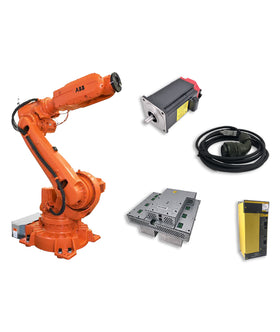
Key components commonly involved in kuka error troubleshooting issues and replacements.


{"one"=>"Wählen Sie 2 oder 3 Artikel zum Vergleichen aus", "other"=>"{{ count }} von 3 Elementen ausgewählt"}
Wählen Sie das erste zu vergleichende Element aus
Wählen Sie das zweite zu vergleichende Element aus
Wählen Sie das dritte Element zum Vergleichen aus
Einen Kommentar hinterlassen