
Zu Inhalt springen

KUKA KSS00100 Start Not Possible (Generic) – Causes, Diagnostics & How to Fix

Error Code Overview

  • Error Code: KSS00100
  • Category: Operational Interlock / Motion Control / Sequence Logic
  • Severity: Medium
  • System: KRC Interpreter / Safety Controller / PLC Interface
  • Impact: Robot start command is blocked; no motion can begin

Quick Fix for KUKA KSS00100

If KUKA KSS00100 Start Not Possible appears:

  • Verify all emergency stop circuits are reset.
  • Confirm drives are enabled and ready.
  • Check the operating mode selector is set correctly.
  • Ensure the enabling switch (deadman) is pressed if required.
  • Review PLC or external auto start signals for missing handshake.
  • Confirm no other active faults are blocking program execution.

What is KUKA KSS00100 Start Not Possible

KUKA KSS00100 Start Not Possible means the controller has received a start command, but one or more required start conditions have not been satisfied.

KUKA robots will block motion whenever startup interlocks are incomplete. These interlocks include:

  • safety approval,
  • drive enable,
  • operating mode validation,
  • program readiness,
  • external start conditions.

If any condition is missing, the robot refuses to execute motion and displays KSS00100.

Common Causes of KUKA KSS00100

Emergency Stop or Safety Circuit Active

The most common cause is an active safety input.

Typical triggers include:

  • pressed emergency stop button,
  • open safety gate,
  • failed safety relay,
  • tripped light curtain.

Any safety interruption will prevent robot startup.

Drives Not Enabled

If servo drives are not ON, the robot cannot move.

This may happen due to:

  • missing drive enable signal,
  • servo fault,
  • safety acknowledgment failure.

Often accompanied by KSS00006 Drives Not Enabled.

Incorrect Operating Mode

If the controller is in the wrong mode, start may be blocked.

Examples:

  • T1/T2 instead of AUT
  • AUT instead of EXT
  • manual mode without deadman held

PLC / External Auto Handshake Failure

In automatic systems, KUKA requires proper PLC handshake before start.

Common issues:

  • missing EXT_START signal,
  • CELL_READY not high,
  • DRIVES_ON signal absent,
  • handshake sequence timing error.

Program Pointer or Interpreter Issue

Startup may fail if:

  • no valid program is selected,
  • interpreter is stopped,
  • pointer is lost or corrupted,
  • previous routine did not reset properly.

Mastering or Calibration Block

If mastering is lost, startup may be blocked by safety logic.

Often paired with:

  • KSS00008 Mastering Required

Recommended Replacement Parts

Component Description Recommended SKU / Type
SmartPad Cable Fixes intermittent enabling switch signal issues KRC4 SmartPad Cable / 10m
KUKA Mastering Set Used to resolve "Mastering Required" startup blocks EMD (Electronic Mastering Device)
Safety Interface Board Used when safety signals are unstable or failing KRC4 SIB / SIB Extended
CCU8 Board Manages internal safety and drive enable logic KRC4 CCU8 Module

How to Troubleshoot KUKA KSS00100

Step 1 – Check Safety Status

  • emergency stop released,
  • safety gates closed,
  • no safety relay faults.

Step 2 – Verify Drive Enable

  • drives are ON,
  • no servo faults exist,
  • enabling chain is complete.

Step 3 – Confirm Operating Mode

  • T1/T2 for teaching
  • AUT for local automatic
  • EXT for PLC-controlled operation

Step 4 – Inspect PLC Handshake Signals

  • EXT_START active
  • DRIVES_ON received
  • CELL_READY high
  • PERI_RDY confirmed

Step 5 – Check Program Status

  • valid program selected
  • pointer initialized
  • interpreter ready

Pro Diagnostic Tip for KUKA KSS00100

Use Display → Inputs/Outputs Monitor in SmartHMI to trace:

  • start signals,
  • safety inputs,
  • PLC handshake bits,
  • drive enable chain.

KSS00100 is often caused by a single missing signal in the startup chain.

How to Fix KUKA KSS00100

  • Reset safety devices and emergency stops.
  • Restore drive enable status.
  • Correct operating mode selection.
  • Repair PLC handshake or start logic.
  • Reinitialize interpreter or program pointer.
  • Re-master the robot if calibration is lost.

Need help with KSS00100? Contact our engineers for fast diagnosis and proven solutions.

How to Prevent KUKA KSS00100

  • inspect safety circuits regularly,
  • test PLC handshake logic during maintenance,
  • maintain SmartPad and enabling switch hardware,
  • verify mastering after maintenance work,
  • keep startup logic documented for troubleshooting.

Related KUKA Errors

FAQ

What does the KSS00100 error mean?

The KSS00100 Start Not Possible (Generic) error indicates that the robot cannot start due to system-related issues, such as safety violations, hardware malfunctions, or configuration errors.

How can I fix the KSS00100 error?

To resolve this error, check for active emergency stops, verify the robot’s configuration settings, inspect hardware components, and ensure proper communication with external systems.

Can I continue using the robot with the KSS00100 error?

No, the robot will not be able to start with this error. It’s necessary to address the underlying issue before the robot can begin operation.

How do I prevent the KSS00100 error in the future?

Prevent the KSS00100 error by regularly checking safety systems, ensuring the robot is properly configured, and performing routine maintenance on hardware components.


Explore the Full Guide: Industrial Robot Fault Codes Library  →  KUKA Error Codes

Explore the complete guide for troubleshooting, repair strategies, and component replacement across industrial robot systems.

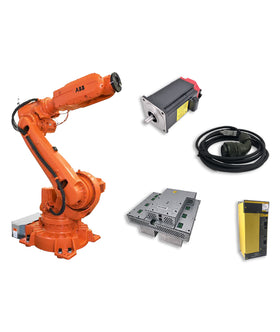
🔧 Recommended Parts for KUKA Error Troubleshooting

Key components commonly involved in kuka error troubleshooting issues and replacements.

Vorheriger Artikel UR Joint Overload Error – Symptoms & Diagnostic Guide

Einen Kommentar hinterlassen

* Erforderliche Felder

Blog posts

Produkte vergleichen

{"one"=>"Wählen Sie 2 oder 3 Artikel zum Vergleichen aus", "other"=>"{{ count }} von 3 Elementen ausgewählt"}

Wählen Sie das erste zu vergleichende Element aus

Wählen Sie das zweite zu vergleichende Element aus

Wählen Sie das dritte Element zum Vergleichen aus

Vergleichen