



If your FANUC teach pendant is not working, showing a black screen, or triggering communication alarms, the issue may not be the pendant itself—it is often a cable failure.
In FANUC robot systems using iPendant and R-30i / R-30iB controllers, the teach pendant cable is constantly exposed to bending, twisting, and industrial environments. Over time, this makes it one of the most common failure points.
This guide will help you:

Cable failures in FANUC systems often appear as unstable or misleading faults.
Watch for these signs:
These are strong indicators of a teach pendant cable failure—not an iPendant hardware issue
Cable failures can sometimes trigger alarms that appear unrelated.
Examples include:
If alarms appear inconsistently and change when the cable moves, the cable is likely the root cause.
Repeated bending leads to internal conductor breakage
Common near pendant or controller connectors
Cable may look intact externally
But signal transmission becomes unstable
Oil, dust, heat, and vibration degrade insulation and shielding
Loose or worn connectors cause intermittent signal loss
Often mistaken for controller or alarm issues
Follow this step-by-step process:
Move or bend the cable slightly
YES → Cable failure highly likely
Check for:
Replace with a known good cable
If issue disappears → cable confirmed faulty
Before replacing:
| Situation | Recommendation |
| Minor connector issue | Try repair |
| Internal wire damage | Replace |
| Intermittent failure | Replace |
| Production-critical system | Replace immediately |
In most FANUC applications, replacement is the most reliable solution.
Replace the cable immediately if:
Delaying replacement can lead to unexpected robot stoppage.
Once confirmed, replacing the FANUC Teach Pendant Cable is the most effective solution.
What to look for:
To fully diagnose your issue, also check:
If the pendant disconnects randomly, works when the cable is moved, or shows intermittent black screen issues, the cable is likely damaged internally.
Yes. A faulty cable can disrupt communication between the iPendant and controller, sometimes triggering SRVO or communication-related alarms.
This usually indicates internal wire breakage.
Moving the cable temporarily restores signal transmission.
This is a strong sign that replacement is needed.
Minor connector issues may be repairable, but internal wire damage is difficult to fix reliably.
Replacement is generally recommended.
No. Cable types may vary depending on:
Always choose a compatible replacement.
You may experience:
Especially risky during operation.
Replacing the cable with a high-quality, high-flex industrial cable is the most reliable solution.
Explore the Full Guide: Industrial Robot Teach Pendant Center → Teach Pendant Cable Failure
Explore the complete guide for troubleshooting, repair strategies, and component replacement across industrial robot systems.
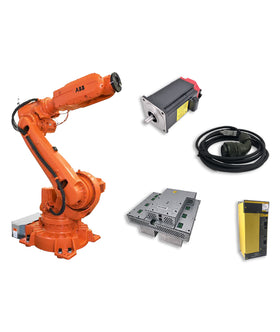
Key components commonly involved in teach pendant cable failure issues and replacements.


{"one"=>"Wählen Sie 2 oder 3 Artikel zum Vergleichen aus", "other"=>"{{ count }} von 3 Elementen ausgewählt"}
Wählen Sie das erste zu vergleichende Element aus
Wählen Sie das zweite zu vergleichende Element aus
Wählen Sie das dritte Element zum Vergleichen aus
Einen Kommentar hinterlassen