


The industrial cleaning robot deployment process in warehouses and factories is no longer a simple installation task. In modern logistics and manufacturing environments, industrial cleaning robot deployment must operate as a cyber-physical integration system where autonomous cleaning behavior interacts with dynamic floor conditions, forklift traffic, and operational constraints in real time.
Unlike controlled indoor automation systems, industrial environments introduce continuous variability in illumination (<50–100 lux in low-visibility corridors), surface contamination layers (dust, oil film, metal debr is), and wireless network instability across large-scale facilities. These variables make industrial cleaning robot deployment a system-level engineering problem rather than a standalone equipment rollout.
Industrial cleaning robot deployment is fundamentally constrained by unstable physical environments where spatial and operational conditions continuously change.
In warehouse and factory settings, key environmental variables include:
From a systems perspective, the environment behaves as a non-stationary navigation field, meaning that mapping accuracy and route stability degrade over time without continuous recalibration.
This makes industrial cleaning robot deployment dependent on real-time environmental adaptation rather than static route execution.
Once industrial cleaning robot deployment is introduced into a production or logistics facility, the operational impact propagates across multiple performance layers.
Cleaning routes intersect with forklift corridors and picking zones, introducing micro-stoppages in high-density traffic areas. Even sub-second navigation hesitation can accumulate into measurable flow inefficiency in peak operations.
Facilities transition from variable manual cleaning labor to:
This shifts cost from labor variability to system reliability and infrastructure maintenance.
Floor contamination (oil films, dust layers) increases slip probability in high-traffic zones. Stabilizing floor condition through autonomous cleaning reduces safety variance and improves operational predictability.
In this context, industrial cleaning robot deployment directly influences OEE stability through reduction of environmental-induced micro-disruptions.
In warehouse environments, industrial cleaning robot deployment operates under continuous logistics pressure and dynamically changing spatial configurations.
Typical conditions include:
In manufacturing environments, additional complexity emerges:
These environments behave as multi-zone dynamic systems, where contamination intensity and traffic density are not uniform but spatially distributed and time-dependent.
Industrial cleaning robot deployment can be modeled as an autonomous control system operating through continuous feedback loops between environment perception, navigation execution, and operational optimization.
The system constructs spatial models using SLAM-based navigation. However, in industrial environments, map fidelity degrades due to frequent layout changes and moving obstacles, requiring continuous re-localization.
Robots execute cleaning paths while dynamically adjusting to obstacles, congestion zones, and route interruptions caused by forklift traffic or temporary blockages.
Operational data (coverage rate, cleaning completion time, obstacle frequency) is fed back into scheduling and routing logic, enabling adaptive optimization across zones.
From a control theory perspective, industrial cleaning robot deployment operates as a closed-loop adaptive system under external disturbance conditions.
Industrial cleaning robot deployment introduces systemic failure modes that emerge from interactions between spatial infrastructure, navigation systems, and real-time operational constraints.
Changes in rack positioning, pallet relocation, and temporary staging zones introduce inconsistencies in SLAM-based localization, resulting in gradual positional divergence over time.
Static environmental maps degrade rapidly in warehouses where spatial configurations change on daily or weekly cycles, reducing navigation reliability and route stability.
High-density forklift movement and corridor blockage events create localized congestion zones, which can trigger routing deadlocks and reduce cleaning throughput efficiency.
Dust particles, oil vapor, and reflective floor surfaces reduce sensor fidelity, affecting obstacle detection and environmental perception accuracy.
Wi-Fi AP handover delays and network congestion in large facilities introduce short communication latency windows that affect real-time fleet synchronization and task allocation.
Successful industrial cleaning robot deployment requires integration into existing industrial systems rather than standalone operation.
Typical integration layers include:
Deployment typically evolves through a phased lifecycle:
At scale, industrial cleaning robot deployment becomes part of the facility’s operational infrastructure layer rather than a discrete automation tool.
Deployment duration depends on facility complexity, typically ranging from initial mapping to stable operational behavior over several days to several weeks.
Yes. However, deployment requires dynamic obstacle modeling and traffic-aware navigation logic to prevent congestion-induced routing inefficiencies.
The most common failure mode is environmental drift, where frequent layout changes invalidate previously generated maps.
Properly designed systems operate in zone-based scheduling modes, allowing cleaning to occur alongside active logistics operations with minimal disruption.
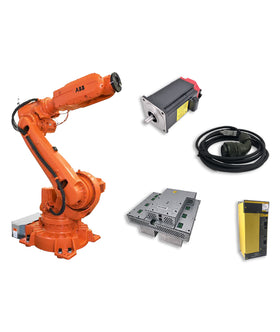
Key components commonly involved in issues and replacements.
No related parts found. Please check available components in our catalog.


{"one"=>"Wählen Sie 2 oder 3 Artikel zum Vergleichen aus", "other"=>"{{ count }} von 3 Elementen ausgewählt"}
Wählen Sie das erste zu vergleichende Element aus
Wählen Sie das zweite zu vergleichende Element aus
Wählen Sie das dritte Element zum Vergleichen aus
Einen Kommentar hinterlassen