Introduction
In today's rapidly advancing industrial environment, the demand for reliable, clear, and durable visual interfaces is more critical than ever. Whether it’s on the factory floor, in transportation systems, or embedded within medical equipment, industrial LCD displays act as the vital link between complex machines and human operators.
Unlike consumer displays designed for casual use, industrial-grade LCDs are purpose-built to thrive in harsh, high-demand environments. These displays must endure extreme temperatures, vibrations, dust, moisture, and continuous operation—conditions that would quickly degrade a standard monitor. As the backbone of many Industry 4.0 applications, they ensure that real-time data and system statuses are communicated effectively and accurately.
This comprehensive guide explores what makes industrial LCDs unique, examines the key technologies involved, highlights their widespread applications, and discusses both the challenges and the solutions that define their value in modern industry.
Part 01 What's an Industrial LCD Display?
An industrial LCD display is a specialized type of liquid crystal display engineered for performance in environments where consumer-grade screens would fail. These environments may involve:
-
Temperature extremes (e.g., -30°C to +80°C)
-
High humidity or exposure to water
-
Constant vibration or mechanical shock
-
Exposure to dirt, oil, or corrosive substances
-
Bright ambient lighting or direct sunlight
Industrial LCD Displays with Rugged Design
To meet these challenges, industrial LCDs incorporate a number of rugged design elements:
-
Durability: Built with reinforced housing, ruggedized materials, and often toughened glass (e.g., chemically strengthened or Gorilla Glass) to resist scratches and impacts.
-
Wide Temperature Tolerance: Components are selected for extended temperature ranges, often using heaters or cooling modules where needed.
-
Environmental Protection: Displays may be sealed to meet IP65, IP67, or even higher ratings, ensuring resistance to dust and water ingress.
-
High Readability: Equipped with anti-glare coatings, high-brightness panels (often 1000+ nits), and wide viewing angles for optimal readability in challenging conditions.
-
Long Lifecycle Support: Industrial display manufacturers offer long-term availability (10+ years) and revision control to maintain compatibility with OEM systems over time.
These features make industrial LCDs a mission-critical component in many industries where uptime, clarity, and ruggedness are non-negotiable.
Part 02 What Are the Key Types of Industrial LCD Technologies?
Industrial LCDs aren’t one-size-fits-all—they come in various configurations, technologies, and feature sets to suit different needs. Let’s explore the main categories:
1. Display Panel Technologies
-
TFT LCDs (Thin-Film Transistor): These are the standard display panels for industrial applications, offering fast refresh rates, stable image rendering, and sharp visuals.
-
IPS Panels (In-Plane Switching): These offer superior color accuracy, contrast consistency, and 170°+ viewing angles, making them ideal for collaborative or large-screen applications.
Transflective LCDs: Designed to reflect ambient light, these displays reduce reliance on backlighting and remain visible even under direct sunlight, making them ideal for outdoor use or handheld equipment.High Brightness Displays: Typically ranging from 1000 to 3000 nits, these displays excel in environments with intense ambient light, like control towers, vehicle dashboards, or outdoor kiosks.
2. Touchscreen Options
-
Resistive Touch Screens: Use pressure-based input, making them operable with gloves, styluses, or any pointing device. Ideal for environments requiring hygiene (e.g., medical), or when operators wear PPE.
-
Capacitive (PCAP) Touch Screens: The same technology used in smartphones. Offers multi-touch gestures, high responsiveness, and excellent image clarity. Modern variants can even support glove operation and water rejection.
3. Backlight Technologies
-
LED Backlighting: Most modern industrial displays have transitioned from CCFL to LED. Benefits include lower power usage, longer life, higher brightness, and eco-friendliness (no mercury).
-
Advanced LEDs: Mini-LED and Micro-LED backlights offer even better brightness control and longer service life, with enhanced contrast and local dimming, suitable for next-generation industrial applications.
Part 03 What Are the Primary Applications of Industrial LCD Displays?
Industrial LCDs are integrated into a wide range of sectors, serving both display and control functions. Key industries include:
● Manufacturing & Automation
Industrial LCDs are often embedded in:
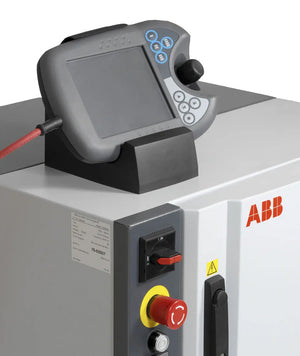
Operators rely on these screens to monitor machine health, production metrics, alarms, and operational feedback in real time. Industrial LCDs for HMI have played pivotal roles in enhancing operational efficiency, safety, and productivity.
● Medical & Healthcare
In clinical environments, industrial LCDs are found in:
-
Patient monitoring equipment
-
Diagnostic machines (e.g., ultrasound, MRI)
-
Operating room displays
These applications require high resolution, color accuracy, electromagnetic compatibility (EMC), and hygiene-compatible touch interfaces.
● Transportation
From public transit to aerospace, LCDs are used in:
These displays must endure constant motion, temperature fluctuations, and varying light conditions.
● Outdoor Signage & Kiosks
In urban environments and outdoor locations, rugged displays power:
● Energy and Utilities
In the energy sector, LCDs are used for:
-
Control rooms in power plants
-
Wind and solar farm monitoring
-
Pipeline and grid management systems
These require real-time monitoring, reliable uptime, and secure data visualization.
● Military and Defense
Displays in military vehicles, field equipment, and command centers must meet MIL-STD standards for shock, vibration, and EMI shielding.
Part 04 What Challenges Do Industrial LCD Displays Face, and How Are They Solved?
Industrial environments present unique obstacles. Below are the common challenges and the solutions that manufacturers implement:
Moisture, oil, or dust
| Challenge |
Engineering Solution |
| Extreme heat or cold |
Use of industrial-grade components, heating elements, or cooling fans |
| Sunlight readability |
Transflective displays, optical bonding, high-brightness panels |
| Physical damage (impacts, scratches) |
Hardened glass, anti-shatter film, chemically strengthened cover lenses |
| IP65/IP67 enclosures, conformal coating of PCBs |
| Obsolescence risk |
Long-term product support (5–10 years), form/fit/function compatibility |
| Interface compatibility |
Flexible I/O options (HDMI, VGA, DVI, LVDS, eDP, DisplayPort) |
| Vibration and shock |
Use of dampers, rugged mounts, conformal internal support frames |
A standout solution is optical bonding, which involves fusing the cover glass directly to the LCD panel using a transparent adhesive. This not only reduces internal reflections but also improves mechanical durability and prevents moisture and dust ingress.
Part 05 Cost Comparison — Industrial vs. Consumer Displays
While an industrial LCD may cost 2–5 times more than a consumer-grade display, it’s crucial to consider Total Cost of Ownership (TCO).
| Factor |
Consumer LCD |
Industrial LCD |
| Lifespan |
20,000–30,000 hours |
50,000–100,000 hours |
| Ruggedness |
Not rated |
IP-rated, vibration/shock resistant |
| Operating temps |
0–40°C |
-30°C to +85°C |
| Support availability |
Short lifecycle |
Long-term availability, repairable |
| Downtime cost |
High |
Minimal |
Thus, the higher upfront investment is offset by lower replacement frequency, less downtime, and greater reliability—especially in mission-critical systems.
Part 06 Can Industrial LCD Displays Be Customized for Specific Needs?
One of the most valuable advantages of industrial LCDs is their customizability. Manufacturers often provide tailored options to fit exact requirements, such as:
-
Display size and aspect ratio (from 3.5" handheld to 65"+ panels)
-
Touchscreen technology (resistive, PCAP, IR, or no-touch)
-
Mounting options (panel mount, VESA, flush, open frame)
-
Cover glass type (anti-glare, privacy film, anti-fingerprint coating)
-
Interface ports (RS232, USB, CANbus, HDMI, VGA, etc.)
-
Custom brightness settings, dimmable backlights, or night vision compatibility
This makes industrial LCDs suitable for OEM integration, retrofits, or specialized environments like underwater systems, cleanrooms, or mobile assets.
Conclusion
Industrial LCD displays are not just screens—they are the front line of industrial communication. Their resilience, customizability, and visual performance make them indispensable for ensuring safe and efficient operations in the world’s most demanding industries.
As industrial automation, IoT, and edge computing continue to expand, the importance of high-quality, ruggedized visual interfaces will only grow. Industrial LCD displays will remain at the heart of this transformation—enabling smarter, safer, and more efficient control of the machines that power our world.
FAQs about Industrial LCD Displays
1. How long do industrial LCDs last?
Most are rated for 50,000 to 100,000 hours, often with LED backlights that can be replaced to extend lifespan further.
2. Can I use a regular desktop monitor in an industrial setting?
No. Consumer monitors are not designed for harsh environments and will likely fail quickly under industrial stress.
3. What is the benefit of optical bonding?
Optical bonding improves sunlight readability, eliminates internal reflection, and strengthens the screen against shock and moisture—essential for outdoor or mobile applications.
4. Are industrial displays energy-efficient?
Yes. Modern LED-backlit industrial LCDs are optimized for energy savings, often with automatic brightness controls and advanced power management.
5. Can I request a custom LCD design?
Absolutely. Most suppliers support customization for dimensions, interfaces, touch functionality, brightness, and more—tailored to your use case.



Leave a comment on this topic