
In today's fast-paced manufacturing world, industrial robotic arms are essential tools for boosting productivity, enhancing safety, and reducing costs. From automotive lines to electronics assembly, robotic arms are reshaping how industries operate. This article explores how robotic arms work, their main components, types, and key applications across sectors.
A robotic arm is a programmable mechanical device designed to perform tasks with speed, precision, and repeatability. Typically consisting of joints, actuators, and an end effector, robotic arms are capable of handling repetitive or heavy-duty work that would be unsafe or inefficient for human workers.
Driven by electric motors, pneumatics, or hydraulics, robotic arms are widely used in manufacturing, material handling, machining, and automated assembly lines.
Robotic arms function by mimicking the movement of a human arm. Most industrial robotic arms feature six joints or axes, providing multiple degrees of freedom. These joints are controlled by motors—often stepper motors or servo motors—that receive instructions from a central controller.
The controller processes programmed commands, guiding the movement of each joint with precision. Sensors provide feedback to ensure safe and accurate positioning, while the end effector performs the actual task such as gripping or welding.
Understanding the components helps in choosing the right model for your needs:
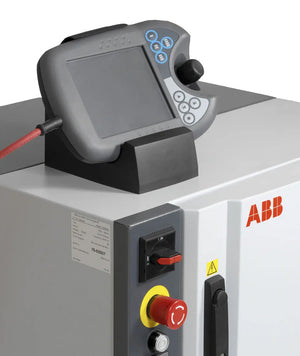
The brain of the robotic arm. It stores the programmed instructions and coordinates all movements.
Includes joints like the shoulder, elbow, and wrist, enabling complex, multi-directional movements.
The tool attached to the arm's end—grippers, suction cups, welding torches, or screwdrivers—that interacts with objects.
Motors or hydraulic systems that power the joints, enabling movement with speed and torque as needed.
Provide critical data about position, force, and surroundings, helping avoid collisions and ensure operational safety.
Different tasks require different arm designs. Below are the main types:
Move along the X, Y, and Z axes using linear actuators. Ideal for pick-and-place tasks, CNC operations, and 3D printing.
"Selective Compliance Assembly Robot Arm" is perfect for assembly tasks, offering vertical rigidity and horizontal flexibility.
Feature multiple rotary joints (like a human arm). Common in automotive and metal industries due to their high flexibility.
Work safely alongside humans with built-in force-limiting sensors. Ideal for tasks requiring human-robot interaction.
Use a combination of rotary and linear joints, operating within a spherical workspace. Useful for welding and die casting.
Robotic arms enhance operational efficiency and safety across numerous industries. Here are the most common applications:
Automated stacking of products reduces injury risks and improves consistency in packaging processes.
Transporting and sorting materials accurately in warehouses or production lines.
Equipped with vision systems, robotic arms can inspect products in real time, minimizing waste and quality issues.
Used in fast-paced logistics and manufacturing, they quickly identify and move items, increasing throughput.
Increased Productivity: Robots work 24/7 without fatigue.
Improved Safety: Remove humans from dangerous environments.
Enhanced Precision: Ideal for delicate or intricate tasks.
Cost Savings: Long-term ROI through labor reduction and efficiency.
Looking for a wide selection of robotic arms and accessories?
Visit inrobots.shop to browse robotic arms from trusted brands like ABB, KUKA, FANUC, and Yaskawa Motoman. We provide solutions across various payloads and workspaces with global delivery and prompt support.
Q1: What is the purpose of end effectors in robotic arms?
A: End effectors perform the hands-on work—gripping, lifting, welding, etc.—based on task requirements.
Q2: Can robotic arms operate in hazardous environments?
A: Yes. They're ideal for dangerous tasks like welding, chemical handling, and extreme temperatures.
Q3: Are robotic arms customizable?
A: Absolutely. From payload capacity to end effectors, most robotic arms can be tailored to suit specific applications.


{"one"=>"Select 2 or 3 items to compare", "other"=>"{{ count }} of 3 items selected"}
Leave a comment on this topic