



Field Insight
In real-world applications, the Yaskawa A.810 encoder error is rarely random.
It almost always indicates unstable or lost position feedback, typically caused by:
Unlike overload or torque alarms, A.810 is fundamentally a feedback communication problem.
.What Does Yaskawa A.810 Encoder Error Mean?
The Yaskawa A.810 alarm occurs when the controller can no longer correctly read or trust encoder feedback signals.
In simple terms:
The system loses accurate motor position data and stops operation to prevent uncontrolled movement or positioning errors.
This is what differentiates A.810 from related alarms:
In some applications, unstable encoder feedback may also trigger:
Before deep troubleshooting, try th is:
If reconnecting or moving the cable temporarily clears the alarm, the issue is very likely signal-related.
In field diagnostics, A.810 is most commonly a physical layer issue rather than a drive logic fault.
Encoder cables operate under constant motion and flexing.
Common failure modes include:
In most real-world cases, the encoder cable is the root cause of A.810 alarms.
Even minor contact instability can interrupt high-speed encoder communication.
When encoder failure occurs, position feedback becomes unstable or disappears completely.
Compared with cables and encoders, servo drive failure is much less common.
Electrical interference can distort encoder signals and create intermittent feedback loss.
A.810 troubleshooting should always start from the signal path (cables and connections) before replacing major components.
Inspect:
Cable-related issues are the fastest and most common fix.
Inspect Yaskawa motor cables to verify signal stability and eliminate wiring problems.
Poor connector contact frequently causes intermittent A.810 alarms.
Result:
Check:
If encoder failure is confirmed, replacing the motor with a compatible unit from your Yaskawa servo motors range is typically the most reliable solution.
If cables and encoder are confirmed normal, the servo drive may require inspection.
|
Symptom |
Likely Cause |
|
Alarm at powerON |
Cable or encoder failure |
|
Intermittent alarm |
Cable or connection issue |
|
Position loss |
Encoder malfunction |
|
Alarm persists after cable replacement |
Motor or drive issue |
Once the failure point is confirmed, replacing the affected component restores feedback stability.
If encoder signals are unstable or lost, motor replacement is typically required. Using the correct model from your Yaskawa servo motors range ensures accurate position feedback and system stability.
Encoder signals rely heavilyon cable integrity. Damaged or aging cables are a leading cause of A.810 alarms. Inspect or replace faulty Yaskawa motor cables to restore stable communication.
If both motor and cables are verified, the issue may lie in the drive’s feedback processing circuit.
Most A.810 alarms are resolved without replacing the motor.
Encoder failures inside the motor are generally not reliable to repair in the field.
Understanding Yaskawa Alarm Codes can help isolate feedback-related problems more efficiently:
These alarms are frequently connected to unstable encoder feedback or signal loss.
Encoder cable damage due to repeated flexing is the most common cause.
Sometimes. Loose connectors may cause temporary faults, but internal cable damage requires replacement.
If the alarm changes or disappears when the cable is moved or swapped.
Rarely. Most cases are cable or encoder-related.
Start with the encoder cable. It is the most cost-effective and likely cause.
Explore the Full Guide: Industrial Robot Fault Codes Library → Yaskawa Alarm Codes
Explore the complete guide for troubleshooting, repair strategies, and component replacement across industrial robot systems.
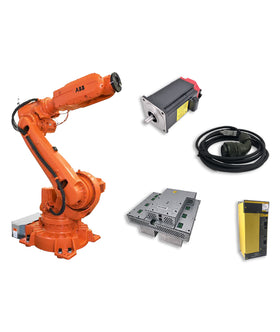
Key components commonly involved in yaskawa alarm troubleshooting issues and replacements.


{"one"=>"Select 2 or 3 items to compare", "other"=>"{{ count }} of 3 items selected"}
Leave a comment on this topic