

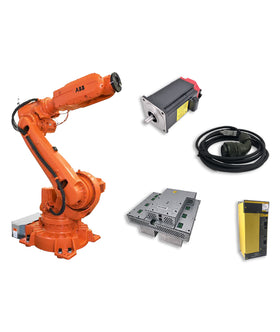


In today’s fast-paced world of automation and robotics, precision and reliability are everything. At the heart of these systems are servo cables—the arteries of motion control. These specialized cables transmit both power and control signals, ensuring that motors, drives, and controllers communicate seamlessly.
But what makes servo cables different from standard industrial cables? And how do you choose the right type for your robotic or CNC system? This guide explores their importance, essential features, types, and how to select the best servo motor cable for your application.
Servo cables are designed specifically for servo motors and drives, providing a stable connection between the control system and moving parts. Unlike generic cables, they are built to:
For applications requiring extra length or flexibility, a servo extension cable can be used to extend the reach of a motor without sacrificing signal quality.

Robotic systems demand cables that move constantly without breaking down. Look for flexible servo cables rated for millions of bending cycles with a small bend radius. This ensures smoother operation and extended cable life.
Noise and interference can ruin precision. High-quality shielded servo cables use braided copper and foil shields to block EMI and maintain signal integrity—even in environments packed with motors, welders, and high-voltage equipment.
Industrial settings expose cables to oil, heat, and mechanical stress. Jackets made of TPE or polyurethane (PUR) offer superior abrasion resistance, chemical resistance, and long-term reliability.
Servo cables must match the motor, encoder, and drive connectors exactly. Many feature molded connectors, strain relief, and secure locking systems to prevent disconnection during high-vibration operations.
Long runs can cause signal loss and voltage drop. For best performance, choose the correct gauge and pair design based on your servo system’s power and signal requirements. In systems like FANUC servo motor cables, precise length selection ensures consistent machine performance.

3.Types of Servo Cables
Supply energy from the drive to the motor. Typically feature thicker conductors and insulation. (For example, FANUC servo motor power cables are engineered to handle high currents reliably in demanding CNC environments.)

Transmit encoder or feedback data for accurate positioning. Require strong shielding to avoid noise.
Carry both power and signal in one assembly, reducing space and simplifying installation.
When selecting a cable, consider these factors:
With the rise of Industry 4.0, AI robotics, and smart factories, servo cables will continue to evolve. Expect next-gen designs with:
A servo extension cable is used to extend the reach of an existing servo motor cable without compromising signal integrity or power delivery. They are especially useful for large machines or robotic setups where the standard cable length is insufficient.
When selecting a servo motor cable, consider factors like flexibility, bending radius, shielding against EMI, voltage rating, and compatibility with your robot or CNC system. Using the correct cable ensures precise motion control and longer service life.
FANUC servo motor cables are designed specifically for FANUC drives and motors. While some cables may fit mechanically, using non-compatible cables can risk signal loss, reduced performance, or equipment damage. Always check compatibility before replacement.
FANUC servo motor cables typically carry signal and encoder feedback data, while FANUC servo motor power cables are designed to carry high current from the drive to the motor. Using the correct type is critical for safety and precise motion control.
Use a certified servo extension cable that matches the original cable’s specifications in terms of gauge, shielding, and flexibility. Avoid makeshift solutions, as improper extensions can cause signal interference, power loss, or motor errors.
Servo cables are more than just wiring—they are the arteries of motion control systems. From flexibility and EMI shielding to durability in harsh environments, the right cable ensures maximum uptime and performance.
Whether you need power, signal, or hybrid servo cables, choosing the correct specification for your robotic or CNC system is critical. At inRobots.shop, we provide a wide range of servo cables, robot adapter cables, and industrial automation components to keep your systems running at peak efficiency.
Explore the Full Guide: Industrial Robot Spare Parts → Industrial Robot Cable Guide
Explore foundational knowledge and practical insights to better understand industrial robot systems and components.
Key components commonly involved in robot cables issues and replacements.


{"one"=>"Select 2 or 3 items to compare", "other"=>"{{ count }} of 3 items selected"}
Leave a comment on this topic