

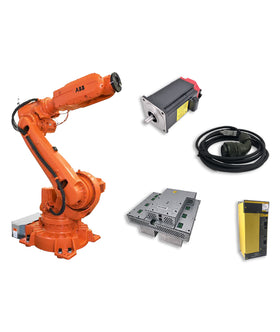
In the world of industrial automation, precision, reliability, and speed are everything. But behind every high-performing robot lies something often overlooked - its cables. These hidden lifelines are what make motion, communication, and control possible. And as automation becomes more advanced, the need for custom cables is growing rapidly.
Let’s explore why these specialized cables are shaping the future of robotics and why choosing the right cable partner can make all the difference.
1.What Are Custom Robotic Cables?
Custom robotic cables are specifically engineered to handle the demanding conditions of robotic applications - from constant flexing to exposure to heat, oil, and electromagnetic interference.
Unlike standard cables, which are mass-produced for general use, custom cables are tailored for specific robotic systems and movements. They can be optimized for power, signal, encoder, or hybrid connections — similar to our servo cables and signal cables that ensure seamless communication between robot controllers, actuators, and sensors.
Key Features of Custom Cables:
- High-flexibility and torsion resistance
- Superior shielding against EMI and noise
- High-temperature and chemical resistance
- Compatibility with robotic arms, controllers, and servo systems
These cables aren’t just built - they’re engineered for precision.

2.Why Customization Matters in Industrial Robotics
Robots move in complex, repetitive patterns that push standard cables to their limits. Bending, twisting, and constant motion can quickly wear out off-the-shelf cables - leading to downtime, data loss, and costly repairs. That’s where customization becomes critical. Custom Robotic Cables are Designed Based on: (h3)
- Motion profile: tight bend radius and continuous flex cycles
- Environmental conditions: resistance to heat, oil, or vibration
- Electrical requirements: tailored shielding, voltage, and current capacities
- Connector compatibility: integration with any robotic brand or system
From clean rooms to welding cells, custom cabling ensures consistent performance even in the harshest environments. For robots working in high-heat environments, thermal cables can also be integrated for added protection.

3.Key Benefits of Custom Cables for Robots
- Durability and Longevity: Built to handle millions of flex cycles without signal loss or wear.
- Improved Performance: Maintains stable data and power transmission under demanding motion.
- Simplified Integration : Pre-cut lengths and matched connectors save time and reduce wiring errors.
- Enhanced Safety : Fire-resistant and oil-proof materials keep systems running safely.
In short: better connectivity, less downtime, and more productivity. Need better connectivity solutions? Explore our robot adapter cables designed for harsh conditions.

4.Custom vs. Standard Cables: What’s the Difference?
|
Feature |
Standard Cable |
Custom Robotic Cable |
|---|---|---|
|
Flexibility |
Limited |
High, designed for motion |
|
Lifespan |
Short under movement |
Millions of flex cycles |
|
EMI Protection |
Basic |
Advanced multi-layer shielding |
|
Application Fit |
Generic |
Tailored for robot design |
|
Cost Efficiency |
Low upfront |
Higher ROI long-term |
Choosing custom robotic cables is an investment that pays off through reduced maintenance, fewer replacements, and higher uptime.
5.Applications Across Industries
Custom robotic cables play a vital role in industries where precision and reliability are non-negotiable:
- Automotive manufacturing: robotic welding, painting, and assembly lines
- Electronics assembly: micro-movement robots for circuit production
- Food and beverage: hygienic, flexible cable designs for washdown systems
- Aerospace and defense: high-temperature, vibration-resistant cable systems
- Logistics and warehousing: AGVs and robotic arms requiring uninterrupted power and signal transmission
Wherever robots move, custom cables keep them moving efficiently. From industrial inspection robots to automated assembly systems, custom cables keep operations moving smoothly.
6.Future Trends in Custom Cable Design
The future of cabling is smart, sustainable, and scalable:
- Smart cabling systems with embedded sensors for predictive maintenance.
- Lightweight and miniaturized designs for collaborative robots (cobots).
- Eco-friendly materials and recyclable insulation for greener factories.
- Advanced shielding technology to support faster data transmission in Industry 4.0 environments.
As robots evolve, so will the cables that power them.
7.Choosing the Right Industrial Custom Cable Partner
Selecting the right supplier is as important as choosing the right cable. Look for partners who:
- Understand robotic applications and environmental demands
- Offer complete design customization and testing
- Provide fast delivery and global after-sales support
inRobots.shop delivers high-quality custom robotic cables and industrial wiring solutions trusted by engineers and factories worldwide. Whether you need power, signal, or hybrid cables, inRobots ensures reliability, precision, and long-term value.
Conclusion
As industrial automation grows more complex, the demand for custom robotic cables continues to rise. They’re not just accessories - they’re critical components ensuring robots move, think, and perform at their best.
For engineers and manufacturers seeking reliability and performance, custom cabling isn’t just an upgrade - it’s the future of automation.
FAQs about Custom Cables
1. What makes a cable “robotic-grade”?
Robotic-grade cables are built for continuous motion, featuring flexible conductors, reinforced insulation, and high torsion resistance.
2. Are custom robotic cables worth the investment?
Yes. While slightly costlier upfront, they drastically reduce downtime, maintenance, and replacement costs.
3. Can I replace standard cables with custom ones in my existing robot setup?
Absolutely. Custom cables can be tailored to match your existing connectors and routing for a seamless upgrade.
4. How long do robotic cables last in continuous motion systems?
High-quality robotic cables can withstand millions of flex cycles, depending on movement speed, angle, and environment.


Leave a comment on this topic