

Finding replacement parts for an industrial robot can become difficult when the original manufacturer has discontinued a product, a controller series is no longer supported, or the required part is no longer available through regular distribution channels.
This is a common challenge for factories operating older ABB, FANUC, KUKA, and Yaskawa robot systems. Even when the robot is still mechanically sound and capable of performing its production tasks, a failed Teach Pendant, circuit board, servo drive, or connection cable can create an unexpected maintenance problem.
When a standard replacement is unavailable, purchasing teams need to look beyond ordinary catalog searches.
The key is not simply finding a part with a similar appearance or part number. It is identifying a component with verified compatibility, a suitable condition, and a reliable supply source.
This guide explains how to source discontinued and hard-to-find industrial robot spare parts, evaluate alternative options, and prepare the information needed to locate the correct component.
Several factors can make a robot spare part difficult to source.
Industrial robot manufacturers periodically discontinue older components as product generations change.
A replacement part may no longer appear in the current catalog, even though many factories continue operating the corresponding robot systems.
This is particularly relevant for older controller generations, Teach Pendant models, electronic boards, and interface components.
A robot system may remain in production use long after its original controller or peripheral components have become obsolete.
Maintenance teams may still need parts for systems such as older FANUC, ABB, KUKA, or Yaskawa controllers.
The challenge is that the available supply of original replacement components can become increasingly limited over time.
Some components are not widely distributed through standard industrial supply networks.
This can include:
Teach Pendant assemblies and internal repair parts
Robot communication and extension cables
Servo drives and power modules
Main boards and circuit boards
Encoder components
LCD displays and touch panels
Connectors and specialized cable assemblies
A part may still exist in the secondary market, but locating a supplier with the correct model and condition can take time.
Sometimes the component is difficult to identify because the original part number is missing, damaged, or inaccessible.
A maintenance team may only have a product photo, a machine model, or an old purchasing record.
Without sufficient identification information, suppliers may struggle to confirm whether a proposed replacement is correct.
The original part number is usually the most effective starting point when sourcing a discontinued robot component.
Before searching for alternatives, collect all available identification information.
Check:
Original manufacturer part number
Product label or nameplate
Hardware revision
Serial number, if available
Robot model
Controller model
Connector or interface identification
For example, when sourcing a FANUC circuit board or an ABB Teach Pendant component, the exact part number can help narrow the search much faster than searching only by product category.
However, do not assume that two similar part numbers represent interchangeable components.
A different suffix, revision, or product generation may indicate a meaningful difference in hardware, firmware, electrical characteristics, or application compatibility.
If the original part number is unavailable, use clear product photos and the robot or controller model to begin identification.
When a component has been discontinued, searching only the manufacturer's current product catalog may not be sufficient.
Consider several sourcing channels.
The original manufacturer should be the first place to check for official replacement availability, approved successor parts, or technical compatibility information.
Even if a part is no longer listed in the current catalog, the manufacturer or its authorized service network may be able to confirm whether an approved replacement exists.
Authorized distributors may have remaining stock, access to regional inventory, or information about official replacement products.
Availability varies by product generation and distribution region.
Independent suppliers can be useful when the required component is no longer available through regular distribution channels.
Some specialize in discontinued automation components, legacy robot systems, and hard-to-find industrial parts.
When evaluating an independent supplier, ask about:
Exact part number and revision
Product condition
Available inspection or test information
Return and warranty terms
Actual stock availability
Shipping arrangements
Do not rely on a supplier's product title alone. Confirm the physical identification and technical details before placing an order.
Industrial surplus inventory, equipment decommissioning, and secondary-market suppliers may provide access to components that are no longer manufactured.
These channels can be useful for older robot systems, but product condition and traceability require careful evaluation.
A component listed as available is not necessarily tested, complete, or ready for installation.
When the original component cannot be sourced, an alternative may be worth investigating.
However, there is an important difference between an officially superseded part and a component that simply looks similar.
An approved supersession is a replacement relationship confirmed by the manufacturer or supported by reliable manufacturer documentation.
This is generally the strongest basis for selecting an alternative.
Before ordering, verify whether the replacement applies to the exact robot model, controller, hardware revision, and intended application.
In some cases, a supplier may identify an alternative based on technical specifications and documented application compatibility.
Ask what evidence supports the compatibility claim.
Depending on the component, relevant information may include:
Electrical specifications
Communication protocol
Connector configuration and pinout
Hardware and firmware revision
Mechanical dimensions and mounting
Controller compatibility
Manufacturer documentation or validated application records
A similar appearance or matching connector does not establish full compatibility.
Used or refurbished parts may be practical options when new original stock is unavailable.
Before purchasing, clarify:
Whether the item is used, refurbished, or tested
Whether the product has visible damage
Whether all connectors and accessories are included
What inspection or testing was performed
Whether a warranty or return policy applies
The right choice depends on the component's function, availability, risk, and the operating requirements of the robot system.
Some component categories can become particularly challenging when supporting older robot systems.

Older Teach Pendant models may become difficult to source as robot controller generations change.
If a complete pendant is unavailable, it may be worth investigating whether the faulty component can be replaced separately.
Potential repair parts include:
Connectors and internal accessories
Before selecting a repair component, confirm the exact pendant model and hardware revision.
Specialized robot cables can be difficult to replace because their electrical and mechanical specifications must match the application.
Examples include:
Teach Pendant cables
Motor power cables
Signal and communication cables
External-axis cables
Cable harnesses and extension assemblies
Cable length, connector type, pinout, shielding, and flexibility may all affect compatibility.
A cable with a similar connector may still have a different wiring configuration or electrical function.
Discontinued PCB assemblies, control boards, and power modules can be challenging to source because revisions and system configurations matter.
A replacement should be checked against the original part number, board revision, controller generation, and application.
Do not assume that a board from a visually similar robot system can be installed without further verification.
Older servo drives and motors may have limited replacement availability.
Important identification details include the complete model number, rated specifications, connector arrangement, feedback system, and compatible drive or controller configuration.
A physically similar motor or drive is not necessarily a suitable replacement.
Encoder components may be difficult to identify when labels are missing or the original system documentation is incomplete.
Resolution, signal type, electrical interface, mechanical configuration, and application compatibility should be checked before ordering.
Sourcing an obsolete component often involves more uncertainty than buying a current catalog product.
Use the following checks before confirming an order.
| Check | What to Verify |
|---|---|
| Part number | Exact original number and suffix |
| Revision | Hardware or product revision |
| Compatibility | Robot and controller model |
| Condition | New, surplus, refurbished, or used |
| Identification | Label, photos, connectors, and markings |
| Documentation | Manufacturer or supplier compatibility evidence |
| Testing | What inspection or testing was actually performed |
| Warranty | Return conditions and warranty coverage |
Pay particular attention to product condition.
The terms below should not be treated as interchangeable:
New: Unused product represented as new. Confirm whether it is current production or older stock.
New Surplus: Unused inventory remaining from previous purchasing or distribution.
Refurbished: Previously used equipment that has undergone refurbishment. Ask what work was completed.
Used: Previously installed or operated equipment. Its history and condition may vary.
Tested: A description of an inspection or test process, not a universal quality grade. Ask what was tested and under what conditions.
A clear understanding of the product's condition is essential before comparing prices.

If the original part number is incomplete or the product is no longer listed in a catalog, providing additional information can make the sourcing process more efficient.
Prepare the following details:
1. Original Part Number
Send the complete part number from the product label, packaging, or previous purchasing record.
2. Robot and Controller Model
Include the robot model and controller generation. This is especially important for Teach Pendants, electronic boards, and communication components.
3. Product Photos
Provide clear photos showing:
Front and rear of the component
Product label and part number
Connectors and pin configurations
Revision markings
Any visible damage
4. Required Quantity
Specify the number of units required and whether the request is urgent.
5. Acceptable Product Condition
Indicate whether you require new stock only or can consider new surplus, refurbished, or used tested components.
6. Alternative Requirements
If the original part is discontinued, clarify whether you are open to manufacturer-approved superseded parts or verified alternatives.
7. Delivery Destination
Provide the destination country or region so the supplier can assess shipping arrangements.
Even if some information is unavailable, start with the part number and product photos. Additional details can be confirmed during the sourcing process.
Waiting until a component fails can make an obsolete-parts problem much more difficult.
For factories operating older robot systems, it is worth identifying critical spare parts before an unexpected failure occurs.
Consider these practical steps:
Identify components that could stop production if they fail.
Record the exact part numbers and revisions.
Check whether official replacements are still available.
Identify possible repair components for expensive assemblies.
Confirm potential alternative sources before an emergency.
Keep product identification photos and purchasing records.
This approach helps maintenance and purchasing teams make more informed decisions when a replacement is needed.
It can also reduce the pressure to purchase an unverified component simply because it appears to be the only available option.
Finding an obsolete robot spare part often requires more than a standard catalog search.
InRobots supports industrial robot spare parts sourcing for maintenance teams, purchasing departments, and industrial automation buyers.
Our sourcing focus includes components for major robot brands such as ABB, FANUC, KUKA, and Yaskawa.
You can send us your original part number, robot model, or product photos to start an inquiry.
We can help review the available identification information and check potential sourcing options for products such as:
Teach Pendants and Teach Pendant repair parts
Robot cables and Teach Pendant cables
Circuit boards and electronic modules
Servo drives and motors
LCD displays, touch panels, and keypad components
Other industrial robot spare parts
If the original component is discontinued or difficult to locate, include any available revision details and let us know whether you can consider alternative product conditions.
Need help finding a discontinued robot spare part?
Contact InRobots for a Spare Parts Quote
Send us the part number, robot model, and product photos. Our team can review your inquiry and help identify possible sourcing options.
Yes, sometimes. Remaining inventory may be available through independent suppliers, surplus stockholders, or secondary markets. Manufacturer-approved replacement parts may also exist. Availability depends on the specific part number and product generation.
No. Some discontinued components remain available as unused original stock or new surplus inventory. Others may only be available as refurbished or used products. Always confirm the condition before ordering.
Possibly, but the replacement must be verified. A newer model number or higher revision does not automatically mean it is compatible. Check manufacturer documentation, approved supersession information, and the relevant robot or controller configuration.
Provide the robot model, controller model, product photos, label details, and connector images. These details may help narrow down the component identification. Do not guess a part number based only on appearance.
It depends on the component, refurbishment process, testing performed, and warranty terms. Ask the supplier what was inspected or replaced and whether functional testing was completed.
Yes. Not every available or sourceable component is necessarily listed online. You can submit the original part number, product photos, and application details to ask about sourcing options.
An obsolete part has been discontinued or is no longer supported through its original product lifecycle. A hard-to-find part may still be manufactured or available, but it has limited distribution, low availability, or incomplete catalog information.
Need help sourcing an obsolete or hard-to-find industrial robot component?
Submit Your Spare Parts Inquiry to InRobots
Providing the original part number and clear product photos is the best place to start.
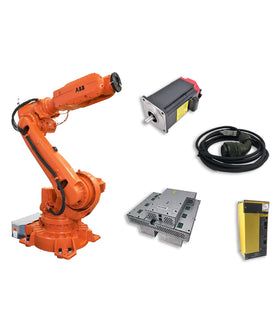
Key components commonly involved in issues and replacements.
No related parts found. Please check available components in our catalog.


{"one"=>"Select 2 or 3 items to compare", "other"=>"{{ count }} of 3 items selected"}
Leave a comment on this topic