

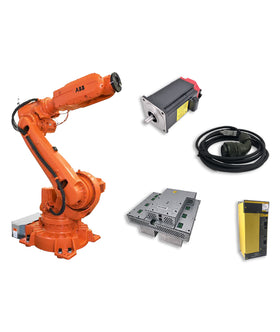
Yaskawa industrial automation systems use structured part numbering conventions to identify components across robots, controllers, servo drives, and interface hardware.
This index page provides a system-level reference for understanding how Yaskawa part numbers are organized, grouped, and interpreted within Yaskawa robot and motion control systems.
Rather than listing individual products or commercial SKUs, this page focuses on part number structure, classification logic, and architectural context, serving as a neutral reference for identification and orientation.
Core Reference: Part Number Structure & Classification Logic
Yaskawa part numbers are designed to reflect component role, system association, and architectural grouping.
Although formats vary across product lines, part numbers generally align with functional domains and controller or motion platforms, not with universal interchangeability.
| Classification Layer | Typical Scope | Identification Role |
|---|---|---|
| Functional Domain | Control, motion, power, interface | Defines the system role of the component |
| Product Family | Robot, controller, drive system | Indicates the target platform or environment |
| Series Identifier | Platform-specific | Groups components within a shared architecture |
| Variant / Revision | Configuration-specific | Differentiates versions or adaptations |
This abstraction reflects how Yaskawa structures part identification at a system level.
1. Functional Domains
Yaskawa part numbers are first associated with broad functional domains within industrial robot and motion control systems.
Common domains include:
- Robot motion and mechanical subsystems
- Controller and CPU-related hardware
- Servo drives and power electronics
- Operator interfaces and peripheral components
Domain-level classification provides the initial context for interpreting any part number.

"To ensure your robot system maintains its original operational context, it is vital to use parts that meet exact series specifications. You can [browse our verified collection of Yaskawa JZNC modules and teach pendant accessories] to find the specific hardware required for your controller's mechanical and electronic subsystems:"
2. Product Families & Controller Platforms
Within each functional domain, part numbers are linked to specific product families or controller platforms.
At an index level, this linkage indicates:
- System environment and intended use
- Architectural compatibility boundaries
- Platform-specific integration constraints
Product family association is essential for orientation but does not imply interchangeability.
3. Series-Level Identification
Series identifiers within Yaskawa part numbers group components sharing common electrical, mechanical, or interface architectures.
Series-level grouping helps clarify:
- Component lineage within a platform
- Shared design characteristics
- Generational evolution across systems
This level of abstraction supports long-term reference without exposing individual variants.
4. Variant & Revision Context
Suffixes or extensions in Yaskawa part numbers typically represent revisions, configurations, or region-specific differences.
- Hardware or firmware revision differences
- Optional configurations or regional adaptations
- Lifecycle or production tracking indicators
However, suffix information alone is insufficient to determine compatibility or replacement suitability.
5. Identification & Classification Scope
When interpreting Yaskawa part numbers, the following principles apply:
- Part numbers encode classification context, not guaranteed compatibility
- Platform and functional alignment must be confirmed before variant comparison
- Similar numbering patterns may appear across different generations or controller familie
This index clarifies how Yaskawa part numbers are structured and grouped, not how to perform part substitution.
Frequently Asked Questions
Q: Do Yaskawa part numbers guarantee compatibility?
A: No. They provide identification context but must be evaluated within the correct system architecture.
Q: Can similar part number formats indicate interchangeable parts?
A: Not necessarily. Similar formats may exist across different platforms or generations. (e.g., NX100 vs. DX200).
Q: Why are part numbers indexed by structure rather than by product lists?
A: Structural indexing reflects Yaskawas system-based design philosophy and supports scalable reference use.
Related Yaskawa Index Pages
Compare Spare Parts Across Robot Brands
- ABB Part Number Index
- Fanuc Part Number Index
- Kuka Part Number Index
- Yaskawa Part Number Index
- Mitsubishi Part Number Index
Compare Controller Spare-Parts Platforms
Reference Notes
This section provides supplementary reference links related to Yaskawa hardware coding logic, Motoman controller platform classification, and system-level component identification structures.