



Instead of guessing, you can jump directly into detailed solutions based on real-world issues:
Related guide: Yaskawa A.750 Alarm Codes
Yaskawa servo systems continuously monitor electrical signals, motion accuracy, and load conditions. When abnormal behavior is detected, the system generates alarm codes to protect the servo drive, motor, and mechanical components from damage.
This page serves as a central troubleshooting hub to help you:
Whether you're dealing with an A.710 overcurrent alarm or a persistent encoder fault, this guide helps you move from symptom → root cause → solution.
Quick Diagnosis Logic:
Electrical alarms are commonly associated with the servo drive power stage, although external components should always be checked first.
The Yaskawa A.710 overcurrent alarm occurs when current spikes exceed safe limits, often during sudden stops or collisions.
Common causes include:
For detailed diagnosis, see the Yaskawa A.710 overcurrent troubleshooting guide .
The Yaskawa A.750 power supply error indicates unstable or abnormal input power conditions.
If external voltage instability is ruled out, the issue often points to internal drive circuitry degradation.
Common causes include:
See the Yaskawa A.820 regenerative error troubleshooting guide .
The Yaskawa A.840 overvoltage alarm is commonly triggered during high-speed deceleration.
Typical causes include:
Unlike electrical faults, these alarms are usually caused by external mechanical conditions rather than internal electronics.
The Yaskawa A.720 overload alarm indicates that the motor is operating beyond its continuous torque capacity.
Typical causes include:
The Yaskawa A.850 position error occurs when the system cannot accurately reach the commanded position.
The Yaskawa A.860 following error indicates that actual motion cannot keep up with commanded motion.
These alarms affect signal integrity and synchronization, making them critical for motion accuracy.
The Yaskawa A.810 encoder error is commonly caused by encoder cable degradation rather than encoder failure.
Typical cable-related issues include:
The Yaskawa A.830 encoder communication error occurs when encoder signals cannot be transmitted reliably.
These errors indicate communication instability between the controller and servo drive.
The Yaskawa A.790 overheat alarm occurs when system temperature exceeds safe operating limits.
The Yaskawa A.7A0 heat sink overheat indicates excessive internal heat accumulation inside the drive.
If you do not know the exact alarm code, match your symptom:
| Symptom | Likely Alarm |
| Robot stops instantly | A.710 / A.750 |
| Cannot handle load | A.720 |
| Position inaccurate | A.850 |
| Motion lag | A.860 |
| Encoder signal unstable | A.810 / A.830 |
| Speed instability | A.840 |
| Overheating shutdown | A.790 |
| Stops during deceleration | A.820 |
In practical applications, alarms are commonly triggered by:
When multiple alarms appear together, they often originate from one underlying failure point rather than multiple unrelated problems.
If the alarm remains after isolation, the fault is likely inside the servo drive.
| Scenario | Likely Cause |
| At startup | Electrical or drive issue |
| During motion | Load or feedback issue |
Most Yaskawa robot alarms can be traced back to a few critical components.
Typical failures include:
Common motor failures include:
Cable failures are one of the most overlooked causes of intermittent alarms.
Replacing encoder or signal cables often resolves intermittent faults quickly.
Decision Tip: If multiple unrelated alarms continue after isolation testing, replacing the servo drive resolves the issue in most cases.
Practical rule: If alarms persist after isolation testing, replacing the servo drive is usually more reliable than repeated repair attempts.
Yes — alarm codes indicate symptoms, not exact failure points.
Multiple alarms often originate from a single failing component, especially:
No — even temporary alarms indicate abnormal system stress.
Use a structured process: Isolate → identify → replace the faulty component.
Explore the Full Guide: Industrial Robot Knowledge Hub → Industrial Robot Fault Codes Library
Explore the complete guide for troubleshooting, repair strategies, and component replacement across industrial robot systems.
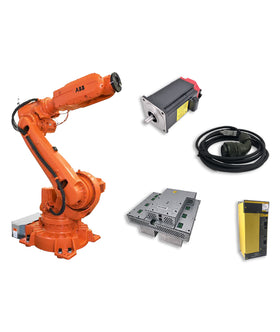
Key components commonly involved in yaskawa alarm repair issues and replacements.


{"one"=>"比較する2つまたは3つのアイテムを選択します", "other"=>"選択された3つのアイテムの{{ count }}"}
コメントを残す