



When a Universal Robots system refuses to move without showing an active alarm, the first assumption is usually:
Field diagnos is says otherwise in most cases.
The controller is often running normally.
The robot simply never reachesfullfull motion authorization state.
This is why a UR robot can:
while still refusing any physical movement.
In real production environments, this condition is usually tied to:
Unlike major controller faults, these conditions often produce:
One of the most common troubleshooting mistakes:
“No error means the robot is healthy.”
Not true on UR systems.
Controller operation and motion authorization are two separate layers.
A robot only becomes movable after all validation layers complete successfully:
If any layer remains incomplete, the robot may stay stationary without showing a critical fault.
The PolyScope bottom status bar often shows exactly where motion authorization stopped.
| PolyScope Status | Technical Meaning |
| Power Off | Servo bus not energized |
| Starting | Servo initialization active |
| Braking | Brake release incomplete |
| Recovery | Safety recovery still active |
| NormalFullFull motion authorization complete |
If system remains stuck at:
motion authorization is usually blocked internally.
Typical field behavior:
Usually not controller failure.
Usually incomplete motion authorization.
The visible alarm may disappear while the internal safety state machine still blocks motion.
Typical causes:
Robot appears “ready”, but motion remains locked internally.
Verify stable 24V safety supply first.
Recommended safety supply range:
23.5V to 24.5V
Intermittent voltage instability can silently block motion authorization without triggering major alarms.
Very common in:
UR robots use electrically released joint brakes.
If one brake fails to release correctly, global motion authorization may be denied.
Freedrive is one of the fastest field-level checks.
It helps separate:
| Freedrive Behavior | Diagnostic Meaning |
| Joints rigid | Brake not released |
| Robot loose/heavy | Brakes released correctly |
| Some joints loose, others locked | Single-joint brake issue |
| Freedrive unavailable | Safety or servo layer blocked |
If robot stays rigid during Freedrive, inspect:
before replacing controller hardware.
UR systems may reject motion commands when operation modes become inconsistent.
Very common after:
Robot appears operational but ignores motion commands.
On e-Series teach pendants using 3PE switch, motion is only allowed when the switch remains in middle position.
| Switch Position | Motion Behavior |
| Released | Motion blocked |
| Middle position | Motion enabled |
| Fully squeezed | Safety stop behavior |
Very common during commissioning or maintenance testing.
UR robots continuously calculate:
If payload or CoG values become inaccurate, the controller may silently reject motion authorization.
No major alarm required.
Very common after:
Minor synchronization failures can block motion without fatal alarm.
Check grounding integrity carefully.
Recommended ground voltage difference:
below 1V
Ground noise above this level may disrupt:
Many motion-blocking conditions appear only as informational entries.
Not critical alarms.
Look for:
No active alarm does not mean no abnormal condition exists.
Check whether system remains at:
This often reveals a blocked motion layer immediately.
Inspect:
Use Freedrive to verify:
Confirm:
Focus on:
Gray log entries usually matter more than expected.
These mistakes commonly create repeated downtime and long troubleshooting cycles.
When a UR robot refuses to move without an active alarm, the problem is usually not random.
In most production environments, the controller itself is operational while the motion state machine remains blocked somewhere between:
Fast diagnos is comes from identifying which layer failed to authorize motion.
Not from blind hardware replacement.
Usually incomplete servo initialization or brake-release authorization failure.
Freedrive requires:
If either layer fails, the robot may remain rigid without major fault messages.
Yes.
Incorrect payload or Center of Gravity values can block motion authorization.
Many UR motion-blocking conditions appear only as:
not critical alarms.
Explore the Full Guide: Industrial Robot Knowledge Hub → Repair & Troubleshooting Cluster
Explore the complete guide for troubleshooting, repair strategies, and component replacement across industrial robot systems.
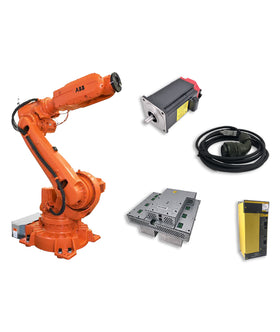
Key components commonly involved in issues and replacements.


{"one"=>"比較する2つまたは3つのアイテムを選択します", "other"=>"選択された3つのアイテムの{{ count }}"}
コメントを残す