

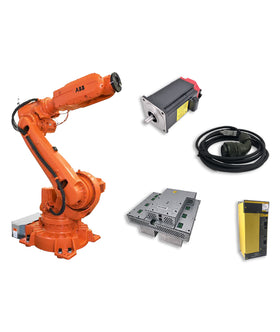


When a Universal Robots system randomly loses communication during operation, the first assumption is usually:
“Bad Ethernet cable.”
In real production environments, the problem is often more complex.
Many intermittent communication failures are not caused by standard network hardware. The instability frequently originates somewhere inside the robot controller communication architecture itself.
Possible fault areas include:
A system may run normally for hours — then suddenly disconnect again without warning.
Communication instability can appear in several different ways depending on which layer is affected.
If communication failure occurs mainly during robot motion, welding, or acceleration, the issue is usually deeper than a standard Ethernet fault.
UR robots rely on several communication layers operating simultaneously.
| Communication Layer | Function |
| Main Controller Board | Coordinates robot operation |
| Safety Control Board (SCB) | Handles safety synchronization |
| Internal Communication Bus | Links joints, pendant, safety modules |
| Ethernet Network | PLC, HMI, Dashboard communication |
| Joint Communication Chain | Real-time servo communication |
| Power Distribution System | Stabilizes controller voltage |
| Linux Real-Time System | Maintains motion synchronization |
If instability appears in any one of these layers, communication loss may appear randomly.
Visible symptoms are often not the real failure source.
If communication failure occurs mainly during robot motion, welding, or acceleration, the issue is usually deeper than a standard Ethernet fault.
One of the most overlooked failure sources.
The instability may exist entirely inside the controller communication structure.
| Diagnostic Indicator | Possible Meaning |
| Pendant + Ethernet fail together | Controller communication instability |
| Multiple timeout alarms | Internal bus synchronization issue |
| Failure worse after warm-up | Thermal hardware degradation |
| Reboot temporarily restores operation | Hardware sync instability |
Very common in industrial automation environments.
Especially near:
In many cases, Ethernet hardware itself is fully functional.
The actual problem is unstable grounding reference between systems.
Verify:
One commonly missed inspection point:
Poor grounding can create:
External industrial Ethernet failures still happen frequently.
Typical causes
Instability often becomes worse during:
| Environment | Communication Risk |
| Robotic welding cell | Very High |
| Poor grounding facility | High |
| Long cable routing near power lines | High |
| Consumer-grade switch | High |
| High-servo production lines | Medium to High |
The Teach Pendant is directly tied into controller communication.
A failing pendant cable can trigger:
| Symptom | Likely Cause |
| Freeze during movement | Internal cable break |
| Random disconnects | Connector instability |
| Intermittent touch response | Partial signal failure |
| Reboot temporarily restores operation | Communication reset only |
UR robots rely on synchronized communication between controller and joint modules.
If one joint communication path becomes unstable:
If communication loss appears only during specific movement or axis rotation, suspect:
before replacing network hardware.
UR controllers operate on Linux-based real-time architecture.
Low-level synchronization logs help determine whether failure comes from:
If communication loss is intermittent, inspect:
| Log Message | Possible Meaning |
| Ethernet link down | Physical cable or EMI interruption |
| Real-time sync error | CPU timing instability |
| Watchdog timeout | Internal process interruption |
| NIC reset detected | Controller network instability |
Field observation
If repeated synchronization errors appear without physical disconnect, the root cause is usually controller instability — not Ethernet hardware.
Different UR generations use different communication structures.
CB3 systems rely more heavily on older internal communication layers.
Common aging problems:
Especially common in high-duty production environments.
e-Series uses tighter synchronization between motherboard and SCB.
Advantages:
But also more sensitive to:
In some factories, welding interference or poor grounding briefly interrupts SCB synchronization even when Ethernet appears healthy.
Usually affects:
Robot motion may continue normally.
Usually includes:
Usually controller-level instability.
| Failure Pattern | Most Likely Direction |
| During acceleration | Harness fatigue or servo EMI |
| During welding | Grounding or shielding issue |
| After long runtime | Thermal instability |
| Random regardless of motion | Mainboard or SCB issue |
| Only under high CPU load | Real-time synchronization instability |
Focus on:
Grounding instability is one of the highest-frequency causes of intermittent industrial communication failure.
Primary inspection points:
Frequently involved:
Common assemblies:
Critical support components:
Random UR communication loss is rarely software-only.
The fastest way to isolate the problem is determining whether the failure follows:
Replacing Ethernet hardware before isolating the communication layer usually leads to repeated downtime and unnecessary repair cost.
Welding environments generate strong EMI and grounding disturbances.
This can interrupt Ethernet, SCB synchronization, or internal controller communication.
Yes.
Ground potential difference and poor shielding continuity are among the most common industrial communication problems.
Reboot resets synchronization between controller subsystems.
If the problem returns later, underlying instability still exists.
Usually controller timing instability, CPU overload, or internal synchronization fault — not simply Ethernet cable failure.
Explore the Full Guide: Industrial Robot Knowledge Hub → Repair & Troubleshooting Cluster
Explore the complete guide for troubleshooting, repair strategies, and component replacement across industrial robot systems.
Key components commonly involved in issues and replacements.


{"one"=>"比較する2つまたは3つのアイテムを選択します", "other"=>"選択された3つのアイテムの{{ count }}"}
コメントを残す