
コンテンツにスキップ

PROFIBUS Communication Fault - Industrial Robot Fieldbus Communication Troubleshooting Guide

What Is a PROFIBUS Communication Fault?

A PROFIBUS communication fault occurs when data exchange between the robot controller, PLC, and field devices becomes unstable, delayed, or completely lost.

This issue is especially critical in industrial robot systems where real-time deterministic communication is required for motion control, safety, and synchronization.

Typical affected systems include:

  • Robot-to-PLC communication
  • Remote I/O modules
  • Drive and servo networks

Typical Symptoms of PROFIBUS Communication Fault

Identifying symptoms early helps reduce downtime:

  • Robot not responding to PLC commands
  • Intermittent communication loss during operation
  • Random disconnection of field devices
  • PROFIBUS BF/SF LEDs flashing
  • Unexpected system stops or safety triggers

Core Conversion Points (High-Probability Causes)

Field service data consistently shows that most PROFIBUS faults originate from the physical layer:

  • Communication cable degradation (≈60–70%)
  • Loose, oxidized, or worn connectors
  • Improper shielding or grounding
  • Signal attenuation over long distances
  • Electromagnetic interference (EMI)

In robotic applications, continuous motion and vibration accelerate internal cable fatigue, making cables the primary failure point.

High Frequency Conversion Points (Electrical & Network Issues)

If the physical layer appears intact:

  • Incorrect baud rate or node configuration
  • Duplicate PROFIBUS addresses
  • Missing or incorrect termination resistors
  • Unstable power supply to I/O modules
  • PLC communication module faults

Extended SKU Points (System-Level Failures)

Less frequent but critical:

  • PROFIBUS master module failure
  • Robot communication board malfunction
  • Backplane communication errors
  • Firmware mismatch between devices

Step-by-Step Troubleshooting Checklist

Step 1 — Check Physical Connections

  • Inspect cable routing for wear, bending, or crushing
  • Ensure connectors are securely fastened
  • Look for damaged shielding or exposed conductors

Pro Diagnostic Tip:
Intermittent faults are often caused by internal conductor breaks, not visible damage.

Step 2 — Check Bus Status Indicators

  • Observe BF (Bus Fault) and SF (System Fault) LEDs
  • Determine whether the issue is etwork-wide or node-specific

Step 3 — Verify Termination & Impedance Matching (Critical)

  • Ensure termination resistors are enabled only at both ends of the bus
  • Avoid extra or missing termination

Pro Diagnostic Tip (High-Impact Insight):
A missing or extra termination resistor creates signal reflections, breaking impedance matching.
This can cause the entire PROFIBUS network to fail—even if the cables are new.

In high-speed fieldbus systems, stable impedance across the network is essential for signal integrity.

Step 4 — Check Network Configuration

  • Verify unique node addresses
  • Ensure consistent baud rate across all devices

Step 5 — Isolate the Fault

  • Disconnect segments to identify faulty sections
  • Reconnect devices step-by-step

Step 6 — Replace Suspected Cable

If the fault is intermittent or occurs during motion:

Replace with a robot-grade PROFIBUS communication cable

What to look for:

  • Signature urple outer jacket(standard PROFIBUS identification)
  • Shielded twisted-pair construction
  • High-flex rating for robotic environments

Important Insight:
Using non-purple, general-purpose RS-485 cables often leads to insufficient shielding and unstable communication, especially in high-EMI environments.

Recommended Solution

If your PROFIBUS network shows unstable or intermittent communication, upgrading to a high-flex industrial PROFIBUS cable is often the fastest and most reliable fix.

Shop High-Flex PROFIBUS Cables

Technical Trust Points (Expert Insights)

To ensure long-term reliability:

  • Use impedance-matched, shielded cables
  • Apply proper grounding strategy (typically single-point grounding)
  • Avoid parallel routing with high-voltage cables
  • Maintain correct bend radius in dynamic applications

In PROFIBUS systems, signal integrity depends on cable quality, shielding, grounding, and termination—not just configuration.

Brand-Specific PROFIBUS Considerations

While most faults originate from the physical layer, implementation differences can affect diagnos is:

  • FANUC→ External fieldbus modules via Model A interface
  • ABB→ PROFIBUS via DSQC communication boards
  • KUKA→ KEB (KUKA Extension Bus) integration
  • Yaskawa→ CIF (Communication Interface) boards

Diagnostic Insight:
If faults persist after cable and termination checks, investigate brand-specific communication hardware or configuration.

Repair vs Replacement Decision Guide

Scenario Recommended Action
Intermittent communication Replace cable first
Complete bus failure Check termination + power
Single node failure Inspect connector or device
Multi-node failure Check master module

In real-world troubleshooting:
Cable replacement resolves most PROFIBUS faults faster than controller-level diagnostics

FAQ

What is the most common cause of PROFIBUS failure?

Cable degradation and connector issues are the leading causes.

Can termination issues cause total network failure?

Yes. Incorrect termination creates signal reflections that can disrupt the entire bus.

How do I identify a proper PROFIBUS cable?

Look for the standard purple outer jacket and industrial-grade shielding.

Can I use standard RS-485 cable instead of PROFIBUS cable?

Not recommended. It usually lacks proper shielding and impedance characteristics.

Does improper shield grounding cause PROFIBUS faults?

Yes. Shield grounding issues are a major hidden cause of intermittent communication failures.

  • Floating shields introduce electrical noise
  • Multi-point grounding creates ground loops
  • Poor grounding increases EMI susceptibility

Best Practice:
Use properly shielded cables with a controlled grounding strategy (typically single-point grounding).

Explore the Full Guide: Industrial Robot Knowledge Hub  →  Repair & Troubleshooting Cluster

Explore the complete guide for troubleshooting, repair strategies, and component replacement across industrial robot systems.

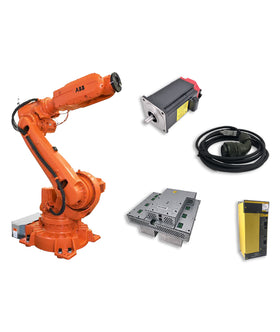
🔧 Recommended Parts for Profibus communication fault

Key components commonly involved in profibus communication fault issues and replacements.

前の記事 UR Joint Overload Error – Symptoms & Diagnostic Guide

コメントを残す

*必須フィールド

Blog posts

製品の比較

{"one"=>"比較する2つまたは3つのアイテムを選択します", "other"=>"選択された3つのアイテムの{{ count }}"}

比較する最初のアイテムを選択します

比較する2番目の項目を選択します

比較する3番目の項目を選択

比較