

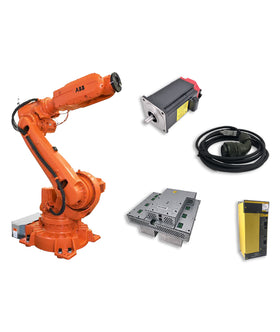

Yaskawa servo packs (servo drives) continuously monitor system conditions in real time.
When abnormal behavior is detected, the drive generates an alarm code to protect hardware and prevent secondary damage.
These alarms typically indicate issues in:
Important:
A servo alarm is not the root cause—It is a protective response triggered somewhere in the system chain.
Th is page covers the most frequently encountered servo pack alarms in industrial applications.
See full guide: Yaskawa A.710 Overcurrent Alarm
Meaning: Output current exceeds safe limits
Typical causes:
Insight: Persistent A.710 often indicates internal drive failure.
See full guide: Yaskawa A.720 Overload Alarm
Meaning: Excessive torque demand over time
Common causes:
See full guide: Yaskawa A.810 Encoder Error
Meaning: Feedback signal lost or unstable
Typical causes:
Field data: Most cases are cable-related.
Meaning: Regenerative energy cannot be dissipated
Common causes:
Meaning: DC bus voltage exceeds safe limits
Typical causes:
Key Insight:
While alarms appear different, many failures originate from the same upstream components—especially the servo drive.
|
Category |
Common Alarms |
Likely Root Cause |
|
Electrical Faults |
A.710, A.840 |
Servo Drive (internal power stage) |
|
Mechanical Issues |
A.720 |
Load / gearbox / motor system |
|
Feedback Errors |
A.810, A.820 |
Encoder cable / signal path |
Diagnostic Rule:
If alarms persist across different conditions → Servo Drive is the primary suspect
Use a structured isolation process to avoid unnecessary component replacement.
Record the exact alarm number and frequency of occurrence.
Disconnect motor and external load, then power the drive:
This is one of the fastest methods to isolate servo drive failure.
After isolation, faults typically converge to one of the following components:
Primary suspect when:
Required when:
Common failure point when:
In electrical alarm cases, servo drive failure is the most frequent root cause after external components are excluded.
When troubleshooting servo-related alarms, selecting the correct repair path is critical to avoid unnecessary downtime and replacement costs. Below are the most effective solutions basedon real-world failure scenarios:
All replacements should be validated under real load conditions.
If alarms persist after external checks and isolation tests, the servo drive is typically beyond stable recovery through repair.
In production environments, repeated alarm events usually cost more in downtime than the replacement hardware itself.
Servo drive internal degradation is the most frequent cause in aging systems.
No. Alarms will return if the root cause remains unresolved.
If alarms persist after isolation tests, the drive is the likely failure point.
Most are cable-related, but severe cases may involve drive interface failure.
When internal electrical faults persist after all external components are verified.
Key components commonly involved in issues and replacements.
No related parts found. Please check available components in our catalog.


{"one"=>"Seleziona 2 o 3 articoli da confrontare", "other"=>"{{ count }} di 3 elementi selezionati"}
Seleziona il primo elemento da confrontare
Seleziona il secondo elemento da confrontare
Seleziona il terzo elemento da confrontare
Lascia un commento