

When a Universal Robots controller fails to boot after power-on, the issue is rarely caused by a single failed component.
In real factory troubleshooting, “not booting” can describe several completely different failure states:
The important diagnostic step is identifying where the startup sequence stops.
On UR systems, the boot process depends on multiple layers operating correctly in sequence:
A failure anywhere in this chain can produce what operators simply describe as:
“the robot will not boot.”
This is why random part replacement often wastes time during field service.
Universal Robots controllers follow a highly predictable startup process.
Because the sequence is consistent, startup timing itself becomes an important diagnostic tool.
Immediately after power-on:
Power conversion path:
24V→12V/5V24V \rightarrow 12V/5V24V→12V/5V
During this stage, the controller is still performing low-level hardware initialization.
If failure occurs here, the system usually shows:
During this phase:
If the robot freezes at the logo screen, the problem is frequently related to:
This is especially common after improper shutdown or power loss during write activity.
Once the operating system is active, the controller begins:
At this stage, some robots appear partially alive but never fully enter operational mode.
Typical symptoms include:
In many field cases, the controller hardware is actually functional while startup is blocked elsewhere in the initialization chain.

Before reinstalling firmware or replacing hardware, check controller LEDs first.
LED behavior is often the fastest way to separate:
This usually means:
In many field cases, the problem involves:
The controller may appear powered externally while internal startup logic remains inactive.
When the Power OK LED remains OFF, always verify external power conditions before suspecting the controller itself.
Common causes include:
One common field mistake is replacing controller hardware before checking whether the safety circuit is preventing power enable.
A blinking status LED with no usable display often indicates the operating system is partially running.
In these situations, the fault is more likely related to:
This type of failure is fundamentally different from complete boot failure.
The controller may still be alive internally even though the operator sees only a black or frozen screen.
UR controllers do not operate from a single voltage rail.
This creates one of the most misunderstood startup behaviors in field service:
the controller may appear powered while critical startup logic is actually dead.
Primarily supports:
Typically involved in:
The 5V rail is especially important because it supports:
A very common field pattern is:
In many cases, the underlying cause is unstable or collapsed 5V regulation.
A spinning fan only confirms:
It does not confirm:
This distinction is frequently overlooked during troubleshooting.
Startup failure should always be interpreted according to the exact stage where initialization stops.
Different failure points usually indicate different root causes.
If the controller shows little or no startup activity, investigate:
When the controller repeatedly freezes on the UR logo, the issue is commonly related to:
This is one of the most common startup failures on aging CB3 systems.
This behavior often appears when:
The controller hardware itself may still be healthy.
When:
the issue is more likely associated with:
Not all black-screen conditions indicate the same failure category.
Storage-related boot failure is extremely common on UR systems, especially after:
However, CB3 and e-Series controllers fail differently because they use different storage architectures.
CB3 systems primarily use MicroSD-based storage.
Over time, these systems become vulnerable to:
A very common field scenario is:
the robot was operating normally, power was interrupted unexpectedly, and the controller never booted again afterward.
Typical symptoms include:
These failures become increasingly common on older production systems with high runtime hours.
e-Series controllers typically use:
Mechanically, these systems are more robust than CB3 platforms.
However, e-Series failures are often linked to:
The behavior is usually less wear-driven and more event-driven.
This distinction is important because troubleshooting strategy changes depending on the platform generation.
Even when controller hardware appears normal, startup may still be blocked by safety logic.
In many field cases, the robot powers on successfully but never fully completes initialization because the safety layer does not reach a valid state.
Check:
A common field pattern is:
This situation is frequently mistaken for motherboard failure even though the controller itself may be functional.
One surprisingly common issue is external USB boot interference.
If a USB device remains connected during startup, the controller may attempt to boot from the wrong device path.
Typical symptoms include:
In these cases, the controller hardware may be completely healthy.
The startup process simply becomes redirected away from internal storage.
Before performing firmware recovery:
This simple check is frequently skipped during field troubleshooting.
In practice, most “UR Robot Not Booting” cases fall into three major groups.
Common real-world causes include:
These failures often appear intermittent before becoming permanent.
Frequently triggered by:
This is one of the highest-frequency failure categories on long-running systems.
Typically associated with:
The controller may appear powered but never reachfullfull operational state.
When diagnosing UR startup failure:
Only after structured isolation should hardware replacement be considered.
Most common causes:
Not necessarily motherboard damage.
Usually:
Very common after improper shutdown.
Yes.
Incorrect USB boot priority can redirect startup away from internal storage.
In some cases, yes.
Safety-layer initialization failure may blockfullfull runtime startup or UI loading.
No.
Many startup failures are recoverable through structured diagnostics:
Explore the Full Guide: Industrial Robot Knowledge Hub → Repair & Troubleshooting Cluster
Explore the complete guide for troubleshooting, repair strategies, and component replacement across industrial robot systems.
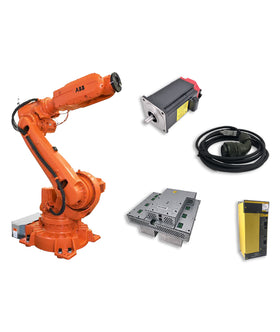
Key components commonly involved in issues and replacements.


{"one"=>"Seleccione 2 o 3 artículos para comparar", "other"=>"{{ count }} de 3 artículos seleccionados"}
Seleccione el primer artículo para comparar
Seleccione el segundo artículo para comparar
Seleccione el tercer elemento para comparar
Dejar un comentario