


In Universal Robots systems, C153 is a safety-layer shutdown triggered when the controller detects inconsistency inside the safety validation process.
This is not a standard motion alarm and not a normal servo overload event.
C153 originates from the safety processor layer.
When the fault appears, the controller no longer considers the system safety state reliable.
Typical conditions include:
Once detected, robot motion stops immediately.
There is no gradual warning stage.
Typical field behavior:
In many cases, the safety layer reacts before the motion-control layer detects any abnormality.
Robot mechanics are often still operating normally.
A common early indicator before C153 appears.
Possible symptoms:
In many production environments, reboot temporarily restores operation before the fault returns later.
This usually points toward signal instability rather than controller logic failure.
The external safety chain may become unstable briefly.
Typical observations:
Common root causes include:
The UR safety system runs redundant dual-channel validation.
Channel A and Channel B must switch inside a tight timing window.
If timing drifts:
Channel A ≠ Channel B → C153 triggers immediately
Timing window: ~50–100 ms (system dependent)
Typical field causes:
Even when both channels appear electrically ON, timing mismatch alone can trigger the fault.
C153 often appears during:
In many cases, the issue is not pure motion failure.
The fault is more closely related to braking energy, voltage stability, and safety timing disturbance occurring simultaneously.
The safety processor continuously validates:
Even a short mismatch can trigger immediate shutdown.
Safety systems do not allow gradual degradation.
Very common in real production environments.
During deceleration:
If the system becomes unstable:
These conditions place additional stress on both power and safety timing systems.
Safety logic depends on stable 24V power.
Common weak points include:
Even short-duration voltage drops can destabilize safety validation.
Do not rely only on a multimeter.
If possible, monitor the 24V rail using an oscilloscope during:
Short dips below stable operating range can trigger intermittent safety faults.
Electromagnetic interference is a major contributor in industrial environments.
Common sources:
Problems often become worse:
Weak grounding can closely imitate internal safety failure.
One of the highest-frequency field causes.
High-risk locations include:
A very small vibration-induced interruption can briefly break synchronization timing.
The wiring may still pass continuity checks while failing dynamically during motion.
This is extremely common in aging control cabinets.
| Observed Symptom | Likely Cause | Recommended Action | Priority |
| C153 during deceleration | Regenerative energy / DC bus instability | Reduce accel / inspect braking system | High |
| Trigger when moving pendant cable | Cable fatigue / micro-break | Wiggle test / replace cable | High |
| Trigger when machine nearby starts | EMI / grounding issue | Improve grounding / shielding | High |
| Random safety reset | Loose Safety I/O terminals | Re-tighten / re-seat terminals | High |
| Immediate after startup | External safety loop open | Check E-stop chain | Critical |
Inspect:
Many intermittent C153 faults begin in the external safety loop.
Focus on:
A loose terminal can create a micro-disconnect that standard continuity testing may not detect.
Use an oscilloscope if available.
Capture voltage behavior during:
Short transient dips can destabilize safety timing even if average voltage appears normal.
Check whether the fault correlates with:
Quick validation method:
Reduce:
Then observe whether C153 frequency decreases.
Inspect rear ventilation and thermal conditions for:
Thermal stress can worsen regenerative instability.
Inspect:
Improper grounding is one of the most overlooked causes of intermittent safety faults,
Some cases shift after firmware update.
Observed in field:
Field interpretation:
Not a “faulty firmware” case.
More like sensitivity adjustment in safety validation.
When diagnosing C153:
Repeated C153 events usually indicate overall system integrity instability rather than isolated component failure.
Because C153 is triggered by safety validation failure rather than physical impact.
Rapid braking increases regenerative energy and electrical stress, which can disturb safety timing stability.
Yes. Even a very brief interruption inside the safety circuit can break dual-channel synchronization.
Reboot resets the safety synchronization state, but the underlying instability usually remains.
UR C153 is fundamentally a safety synchronization and validation fault.
In real-world production systems, the root cause is commonly related to:
Before replacing:
Always verify:
Many intermittent C153 faults originate in those layers first.
Explore the Full Guide: Industrial Robot Knowledge Hub → Repair & Troubleshooting Cluster
Explore the complete guide for troubleshooting, repair strategies, and component replacement across industrial robot systems.
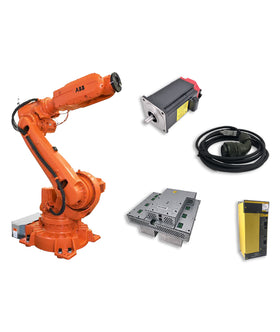
Key components commonly involved in issues and replacements.


{"one"=>"Seleccione 2 o 3 artículos para comparar", "other"=>"{{ count }} de 3 artículos seleccionados"}
Seleccione el primer artículo para comparar
Seleccione el segundo artículo para comparar
Seleccione el tercer elemento para comparar
Dejar un comentario