


This is a complete reference hub for KUKA robot error codes (KSS), covering the most common alarms found on KRC4 controllers. Instead of generic explanations, each linked guide focuses on real causes, on-site symptoms, and practical fixes used by technicians.
If your robot stops with errors like KSS00006 (Drives Not Enabled), KSS00004 (Safety Circuit Fault), or KSS01420 (Ethernet Communication Error), start with the sections below to quickly identify and resolve the issue.
This troubleshooting hub applies to most modern KUKA robot systems, including:
KUKA KSS error codes are not random system messages. Most alarms point to a specific subsystem inside the robot controller architecture, including:
Understanding which subsystem generated the error is the fastest way to reduce troubleshooting time on a production line.
For example:
In real industrial environments, KUKA errors rarely appear in isolation.
Many recurring alarms are triggered by underlying hardware instability, including:
Technicians often see the same error appear intermittently before complete system failure occurs.
These are the most frequently reported faults in real production environments:
These faults usually block robot motion and are related to safety circuits, drives, or hardware readiness.
Use Ctrl + F (or search on mobile) and enter your error code (example: KSS00006). All errors are listed numerically for quick navigation.
Preventive inspection can significantly reduce unexpected KUKA downtime and recurring intermittent alarms.
KSS00006 (Drives Not Enabled) is one of the most common errors, usually caused by safety circuit issues or missing enable signals.
Safety errors are typically caused by emergency stop activation, safety relay faults, or wiring issues in the safety loop.
Most errors require fixing the root cause first, then acknowledging the message on the SmartPad. Some faults require a controller restart.
KSS (KUKA System Software) is the core software running on the KRC controller, responsible for motion control, safety, and system logic.
Intermittent KUKA errors are often caused by unstable communication, loose connectors, damaged robot cables, or temperature-related hardware instability.
Yes. Many KUKA communication, encoder, and safety errors are ultimately traced back to damaged robot cable assemblies or pendant cables.
Before replacing hardware, technicians should verify safety inputs, fieldbus communication, encoder feedback, cable continuity, and WorkVisual project consistency.
No. Many KUKA alarms are recoverable after resolving the underlying trigger condition without rebooting the entire system.
Most KUKA KSS errors are linked to safety logic, communication stability, encoder feedback, or software configuration inconsistencies.
Accurate troubleshooting requires identifying whether the fault originates from hardware, network communication, safety circuits, or KSS configuration layers.
This reference hub organizes the most common KUKA robot errors used in real industrial maintenance environments to help technicians reduce downtime and isolate root causes faster.
Explore the Full Guide: Industrial Robot Knowledge Hub → Industrial Robot Fault Codes Library
Explore the complete guide for troubleshooting, repair strategies, and component replacement across industrial robot systems.
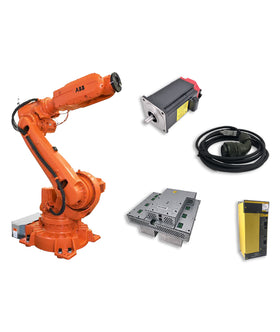
Key components commonly involved in kuka error code repair issues and replacements.


{"one"=>"Seleccione 2 o 3 artículos para comparar", "other"=>"{{ count }} de 3 artículos seleccionados"}
Seleccione el primer artículo para comparar
Seleccione el segundo artículo para comparar
Seleccione el tercer elemento para comparar
Dejar un comentario