

If a Communication Error appears on your FANUC controller, try these immediate actions:
These steps may temporarily clear the alarm while helping identify the root cause.
A FANUC Communication Error occurs when the controller cannot properly exchange data with servo amplifiers, I/O modules, fieldbus devices, or other connected controllers.
This alarm protects:
When triggered, robot axes may stop or refuse to operate until the communication fault is resolved.
Communication Error indicates that the controller has detected data loss, invalid signals, or timeouts in its network or peripheral communications.
Consequences include:
Faulty cables or connectors are the most common source.
Common issues include:
1. Broken, frayed, or damaged cables
2. Loose terminal connectors
3. Poor shielding causing interference
Securing or replacing cables restores proper communication.
Modules responsible for transmitting signals may fail.
Communication errors can originate from internal controller circuits or amplifiers.
External electromagnetic interference can corrupt signals.
Corrupt firmware or misconfigured settings can interrupt communication.
A structured isolation method commonly used by experienced service engineers:
Step-by-Step Isolation:
Interpret Results:
Why It Works:
In many FANUC communication error cases, the issue is not caused by a single module failure, but rather by unstable signal transmission across the robot cable network. This includes internal wiring, connectors, and routing paths.
Robot cables are exposed to constant motion, vibration, and electrical noise, which can cause intermittent communication loss, signal attenuation, or shielding degradation over time—often without visible damage.
Next Step:
If isolating modules does not resolve the issue, inspect and replace critical communication cables. Using high-flex FANUC robot cables designed for high-motion environments will restore stable data transmission and reduce signal interference.
Understanding related alarms helps differentiate between communication, servo, and controller issues.
Common causes include faulty cables, I/O or fieldbus module failure, amplifier issues, electrical interference, or firmware corruption.
Only if the issue is temporary. Persistent alarms require immediate troubleshooting.
Yes, as it can halt robot motion and disrupt I/O operations.
Inspect wiring and connectors, verify modules and amplifiers, check controller hardware, and update firmware/configuration.
Explore the Full Guide: Repair & Troubleshooting Cluster → Fanuc Alarm Codes
Explore the complete guide for troubleshooting, repair strategies, and component replacement across industrial robot systems.
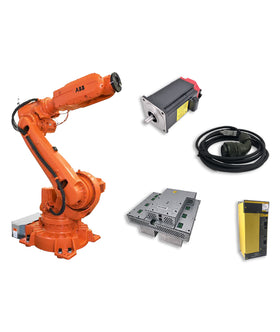
Key components commonly involved in fanuc alarm troubleshooting issues and replacements.
No related parts found. Please check available components in our catalog.


{"one"=>"Seleccione 2 o 3 artículos para comparar", "other"=>"{{ count }} de 3 artículos seleccionados"}
Seleccione el primer artículo para comparar
Seleccione el segundo artículo para comparar
Seleccione el tercer elemento para comparar
Dejar un comentario