


ABB robot Error 10014 – Motion Supervision Triggered is one of the most common alarms encountered during robot operation. It occurs when the robot controller detects that the robot axis deviates from the expected motion path beyond the allowed tolerance.
This alarm is designed as a protection mechanism to prevent potential mechanical damage, collisions, or unsafe motion conditions.
Understanding the causes of Error 10014 and following a structured troubleshooting process can help engineers quickly restore robot operation and minimize production downtime.
Error 10014 indicates that the robot controller has detected excessive deviation between the commanded motion and the actual robot movement.
ABB robots continuously monitor axis position and torque during motion. If the difference between the expected trajectory and the real axis position becomes too large, the controller triggers Motion Supervision.
This monitoring function is built into controllers such as the ABB IRC5 Controller to protect both the robot and surrounding equipment.
In most cases, the robot stops immediately when this alarm appears.
Several conditions may trigger Motion Supervision alarms.
If the robot is carrying a payload beyond its specified limits, motors may struggle to maintain the programmed trajectory, causing deviation.
Common scenarios include:
Ensure the payload is within the robot’s limits and verify the correct configuration in the controller to prevent deviation.
Friction in robot joints can prevent accurate motion and cause the robot to deviate from its path.
Possible causes include:
Regularly inspect and maintain joints, gearboxes, and other mechanical components to reduce friction and prevent motion errors.
Unexpected contact with external objects can also cause motion deviation.
Typical examples include:
Even minor collisions can activate motion supervision.
Faults in the robot drive system can affect motion accuracy.
Components such as servo drives inside the robot controller cabinet—like the ABB DSQC 679 Servo Drive—may cause motion errors if they malfunction.
In many cases, unstable feedback signals or power transmission issues related to servo motors and encoder cables can also contribute to motion deviation.
Possible causes include:
Programmed motion parameters may exceed robot capabilities.
Examples include:
These conditions may cause the robot to deviate from the planned trajectory.
Follow these steps to diagnose and resolve the issue.
Review the alarm details using the teach pendant or diagnostic software such as ABB RobotStudio.
Important information includes:
This information helps identify whether the error is mechanical or programming-related.
Check the robot program and motion instructions.
Look for:
If necessary, reduce speed or adjust the robot path.
Ensure that the payload parameters match the actual robot tooling.
Verify:
Incorrect payload data is a common cause of motion supervision alarms.
Check the robot arm for mechanical problems such as:
Manual movement tests can help identify abnormal resistance.
If the issue persists, inspect the robot drive system and feedback components.
Controller modules, including drive units used with the ABB IRC5 Controller, should be examined for faults or overheating.
In some cases, replacing damaged hardware may be required.
After resolving the root cause, the alarm can typically be cleared using the following procedure:
If the error occurs again, further inspection is necessary.
To reduce the risk of Error 10014 occurring again, maintenance teams should follow several best practices:
Using simulation tools like ABB RobotStudio can also help identify potential motion issues before deploying programs to real robots.
Engineers troubleshooting motion problems may also encounter related ABB robot alarms, including:
Understanding these related faults can help identify underlying mechanical or electrical issues. For a complete list of ABB robot error codes and troubleshooting solutions, refer to our full ABB error code guide.
ABB Robot Error 10014 – Motion Supervision Triggered is a protective alarm designed to stop robot motion when excessive deviation is detected.
The most common causes include incorrect payload configuration, mechanical resistance, robot collisions, and drive system problems.
By carefully reviewing the robot program, inspecting mechanical components, and verifying drive system performance, engineers can quickly identify the root cause and restore safe robot operation.
This guide is part of the Robot Fault Code Library, providing troubleshooting information for common industrial robot alarms and system faults.
Explore the Full Guide: Industrial Robot Fault Codes Library → ABB Robot Error Codes
Explore the complete guide for troubleshooting, repair strategies, and component replacement across industrial robot systems.
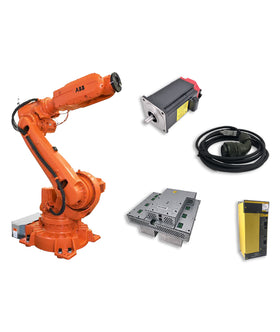
Key components commonly involved in abb fault code repair issues and replacements.


{"one"=>"Seleccione 2 o 3 artículos para comparar", "other"=>"{{ count }} de 3 artículos seleccionados"}
Seleccione el primer artículo para comparar
Seleccione el segundo artículo para comparar
Seleccione el tercer elemento para comparar
Dejar un comentario