
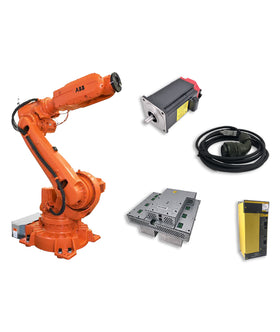


Robotic systems have transformed industrial automation, logistics, and precision engineering. At the heart of this revolution lie three core systems: manipulation robotic systems, mobile robotic systems, and data acquisition & control systems. Each plays a vital role in optimizing production efficiency, enabling autonomous operations, and facilitating intelligent decision-making. This article provides a comprehensive overview of these systems, their technological advancements, interdisciplinary integration, and outlook for the future of robotics.
Robotic manipulators are the workhorses of industrial automation, designed for high precision, repeatability, and significant payload capacities. For example, the 6-axis KUKA KR210 manipulator offers ±0.02 mm repeatability and can handle payloads up to 210 kg, making it ideal for automotive spot welding and heavy assembly tasks.
Recent innovations include advanced control algorithms such as Model Predictive Control (MPC) and impedance control, which improve force sensitivity and adaptability during delicate operations. Collaborative robots (cobots), equipped with torque sensors and safe interaction protocols, excel in semiconductor manufacturing by delicately handling fragile wafers.
Challenges remain, especially in unstructured or dynamic environments, where robotic arms must integrate real-time vision and adaptive grasping to operate reliably.
Mobile robotics extends automation into dynamic, unpredictable environments. Systems range from Automated Guided Vehicles (AGVs) in warehouses to autonomous drones in search and rescue.
Technologies such as SLAM (Simultaneous Localization and Mapping) enable these robots to navigate and map GPS-denied areas. Boston Dynamics’ Spot robot, for instance, achieves localization accuracy within 0.1 meters using LiDAR and stereo cameras, making it effective in complex terrains.
Path planning algorithms like A* and Dijkstra optimize route efficiency amidst obstacles. Logistics giants, such as Amazon, employ Kiva robots to streamline inventory movement, dramatically improving warehouse throughput.
Key challenges include energy management due to battery constraints and ensuring human safety in shared workspaces, tackled via international safety standards like ISO/TS 15066.
Data-driven robotic systems integrate sensors and edge computing to enable real-time monitoring and control. For example, Siemens’ Spectrum Power 7 platform processes over 500 parameters per second in energy grids, allowing predictive maintenance that reduces downtime by up to 30%.
Thermal cameras, force sensors, and other advanced sensors feed AI algorithms for anomaly detection and system optimization. Hybrid architectures balance edge processing with cloud resources, mitigating latency and cybersecurity risks.
Challenges include maintaining low latency in cloud-dependent setups and safeguarding systems against cyber threats, necessitating robust encryption and secure communication protocols.
The fusion of robotics with Artificial Intelligence (AI) and the Internet of Things (IoT) drives the emergence of smart factories and intelligent healthcare solutions. Platforms like Siemens MindSphere connect over one million devices, leveraging reinforcement learning to optimize energy consumption and process efficiency.
In medicine, robotic surgical systems like Intuitive Surgical’s da Vinci incorporate haptic feedback and 3D vision to perform minimally invasive operations with unparalleled precision.
Ethical considerations, including AI algorithm biases and data privacy, are increasingly critical as these systems evolve.
Manufacturing: Robotic arms enable nonstop production with exceptional precision, as seen in Tesla’s battery assembly lines.
Logistics: Autonomous drones and AGVs reduce delivery times and operational costs for companies like FedEx.
Energy: Inspection drones with thermal imaging detect faults in power lines, preventing outages.
Healthcare: Surgical robots improve outcomes with enhanced accuracy and faster patient recovery.
Agriculture & Environment: Autonomous tractors and underwater robots advance crop management and coral reef restoration.
Robotic systems face ongoing challenges:
Energy Efficiency: Limited battery life constrains mobile robots; advances in solid-state batteries and energy harvesting are promising solutions.
Safety: Collaborative environments require improved sensors and real-time risk assessment to ensure zero-risk human-robot interaction.
Cybersecurity: Robust encryption and intrusion detection are essential to protect connected robotic infrastructures.
Future innovations include:
Swarm Robotics: Decentralized coordination inspired by natural systems for large-scale tasks.
Soft Robotics: Safer, more compliant robots for sensitive applications like elder care.
Quantum Computing: Potential to revolutionize optimization and path planning through exponential computation speedups.
5G & XR Integration: Enabling real-time remote control and immersive operator training.
The evolution of manipulation, mobile, and data acquisition robotic systems marks a shift toward highly autonomous and intelligent machinery. By combining robotics with AI, IoT, and advanced computing, industries worldwide are witnessing unprecedented efficiency and innovation. Addressing challenges in safety, energy, and cybersecurity will be key to unlocking the full potential of these transformative technologies.
Q1: How do robotic manipulators differ from cobots?
Manipulators focus on precision and heavy payload handling, while cobots emphasize safety and adaptability for working alongside humans.
Q2: What is the significance of SLAM in mobile robotics?
SLAM allows robots to simultaneously map and localize themselves in unknown or GPS-denied environments, essential for autonomous navigation.
Q3: How do AI and edge computing improve data acquisition systems?
AI enables predictive analytics and anomaly detection, while edge computing reduces latency, enhancing real-time decision-making and reliability.
Explore the Full Guide: Industrial Automation System Cluster →
Explore foundational knowledge and practical insights to better understand industrial robot systems and components.
Key components commonly involved in automation systems issues and replacements.


{"one"=>"Seleccione 2 o 3 artículos para comparar", "other"=>"{{ count }} de 3 artículos seleccionados"}
Seleccione el primer artículo para comparar
Seleccione el segundo artículo para comparar
Seleccione el tercer elemento para comparar
Dejar un comentario