
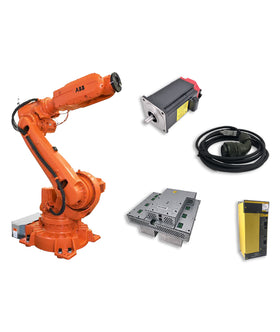


Autonomous robots are no longer a futuristic concept—they're already transforming industries and daily life. From self-driving cars and delivery drones to robotic vacuums and industrial arms, these intelligent machines are capable of perceiving their environment and making decisions on their own. This article explores what makes a robot autonomous, how these systems work, where they are used, and why they are becoming essential to modern automation.

An autonomous robot is a machine that can sense its environment, process information, and act independently without human intervention. It combines AI algorithms, sensors, and actuators to perform complex tasks such as navigation, manipulation, or decision-making.
Unlike remote-controlled or pre-programmed robots, autonomous robots can adapt in real time. They rely on machine learning, deep learning, and sensor fusion to perceive their surroundings and respond dynamically—whether driving through traffic or cleaning a home.
Autonomous robots monitor their internal state. For instance, robotic vacuums or electric vehicles can return to charging docks when batteries run low. Sensors also detect internal conditions like heat or motor function for safe operation.
These robots use LiDAR, ultrasonic, camera, IR, sound, and temperature sensors to understand their surroundings. From detecting obstacles to identifying terrain, external sensors are vital for safe and smart decisions.
Autonomous robots can physically act based on environmental input—whether navigating around furniture, sorting packages, or performing surgery. Advanced robots can even learn from feedback to improve task performance over time.
Autonomous robots are now used across many sectors. Here are key industries benefiting from their capabilities:
Medication delivery
Surgical assistance
Hospital disinfection
Picking and packing
Automated forklifts
Real-time inventory tracking
Drones for disaster zones
Surveillance in dangerous areas
Ocean and forest exploration
Air quality and climate data collection
Mars rovers (e.g., NASA's Perseverance)
Unmanned planetary probes
They can work 24/7 without fatigue, making them ideal for manufacturing, logistics, and farming.
They can operate in hazardous environments, minimizing risks for humans—such as in nuclear facilities or disaster sites.
Once deployed, autonomous robots reduce labor costs, improve accuracy, and can be scaled based on demand with minimal setup.
Self-Driving Cars: Tesla, Waymo, and others lead the field in autonomous vehicle development.
Robotic Vacuums: iRobot Roomba maps and cleans homes intelligently.
AI-Driven Industrial Arms: Used for welding, assembly, or quality control.
Agricultural Robots: Drones for crop monitoring or autonomous tractors for precision planting.
As AI, sensor tech, and connectivity continue to evolve, autonomous robots will become even more capable. From last-mile delivery and smart farming to space colonization, the possibilities are endless. The market for autonomous systems is growing, and platforms like inRobots.shop provide a wide selection of robot parts—from sensors and motors to full control systems—supporting this rapid growth.
Self-driving cars are a top example. They combine sensors, AI, and navigation software to drive without human control.
Autonomous robots make independent decisions based on real-time data, while controlled robots require human input to operate.
No. Some robots are manually operated or programmed for fixed tasks, while autonomous robots can adjust their actions without external control.
Explore the Full Guide: Industrial Robot Knowledge Hub → Industrial Robot Types & Applications Cluster
Explore foundational knowledge and practical insights to better understand industrial robot systems and components.
Key components commonly involved in robot applications issues and replacements.


{"one"=>"Seleccione 2 o 3 artículos para comparar", "other"=>"{{ count }} de 3 artículos seleccionados"}
Seleccione el primer artículo para comparar
Seleccione el segundo artículo para comparar
Seleccione el tercer elemento para comparar
Dejar un comentario