
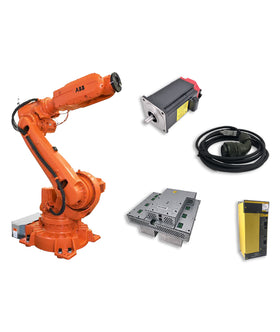

In industrial environments, charging is not an isolated function but a continuity constraint within autonomous cleaning operations.
Industrial cleaning robots typically operate in warehouses, logistics centers, and manufacturing facilities where runtime demands are continuous and environmental conditions are highly dynamic.
In these settings, cleaning robot automatic charging is determined by system-level constraints rather than user interaction. The robot must coordinate energy replenishment while maintaining operational coverage across large and frequently changing floor areas.
Key constraints include:
As a result, charging becomes an embedded component of the operational workflow rather than a standalone action.
When charging systems are not properly integrated into fleet logic, the impact extends across the entire cleaning operation rather than remaining at device level.
A robot leaving mid-cycle creates incomplete spatial coverage, requiring:
In multi-robot deployments, inefficient charging leads to uneven workload distribution:
Charging inefficiencies translate into indirect operational costs:
At scale, these effects compound across multiple robots and operational shifts.
Industrial cleaning robots operate in environments where physical and operational conditions are continuously changing.
A typical warehouse environment includes:
Within this environment, robots must continuously evaluate operational decisions such as:
Charging stations are usually positioned at peripheral zones of operational areas, requiring navigation through active logistics traffic.
This introduces a dual constraint:
Charging is both an energy recovery process and a navigation coordination task.
In modern industrial cleaning systems, charging is no longer a manual or operator-driven process.
It is integrated into an autonomous operational loop governed by system-level logic.
This transition includes three structural changes:
Robots initiate return-to-dock behavior based on system conditions such as:
Charging becomes a shared resource within the fleet:
Charging is embedded into the continuous operational cycle:
navigate → clean → monitor energy → return → recharge → resume task
This ensures uninterrupted cleaning coverage without manual intervention.
Automatic charging in industrial cleaning robots is enabled by a multi-layer system architecture combining energy monitoring, docking alignment, charging infrastructure, and navigation intelligence.
The robot continuously tracks its energy state through internal monitoring systems including:
When energy thresholds are reached, the system triggers a return-to-dock operation.
The docking system ensures precise physical alignment between robot and charging station.
Core functions include:
This subsystem is critical for maintaining reliable robot docking operations in dynamic environments.
The robot charging station functions as a controlled energy node within industrial facilities.
It provides:
In larger deployments, multiple charging stations are distributed across operational zones to reduce travel distance and improve fleet efficiency.
The robot navigation system integrates mapping and real-time path planning to execute return-to-charge operations.
Key capabilities include:
This ensures charging operations do not interfere with ongoing industrial workflows.
From a system perspective, automatic charging is not a single feature but a coordinated operational loop integrating multiple subsystems.
It combines:
Within this framework, cleaning robot automatic charging functions as a structural component of autonomous industrial operations, ensuring continuous system availability.
Robot docking refers to the autonomous process where a cleaning robot aligns with and connects to a charging station to restore energy.
They manage controlled energy delivery, coordinate multiple robot charging sequences, and stabilize electrical load across industrial environments.
They return based on system triggers such as battery thresholds, task completion status, and fleet-level scheduling logic.
The system initiates re-navigation attempts and fallback positioning logic depending on fleet configuration and environmental conditions.
Key components commonly involved in issues and replacements.
No related parts found. Please check available components in our catalog.


{"one"=>"Seleccione 2 o 3 artículos para comparar", "other"=>"{{ count }} de 3 artículos seleccionados"}
Seleccione el primer artículo para comparar
Seleccione el segundo artículo para comparar
Seleccione el tercer elemento para comparar
Dejar un comentario