



Field insight:
In real-world applications, the Yaskawa A.840 overspeed error is rarely caused by speed alone.
Most cases are related to unstable feedback signals, incorrect servo tuning, or motion control instability, where the controller believes the motor speed exceeds safe operating limits.
The Yaskawa A.840 alarm occurs when the servo system detects that actual motor speed exceeds the allowable threshold or deviates abnormally from commanded speed.
In simple terms:
The controller detects abnormal speed behavior and shuts the system down to prevent damage or loss of motion control.
This is what differentiates A.840 from other servo alarms:
Before deep troubleshooting, try th is:
In many industrial environments, the controller falsely detects overspeed because feedback signals become unstable.
Th is commonly occurs after:
Mechanical instability can create inconsistent speed response during movement.
In some applications, unstable motion tracking may also trigger related following alarms.
If the robot shows continuous lag during movement, reviewing Yaskawa A.860 following error troubleshooting may help identify servo response limitations.
Unlike overload or temperature alarms, A.840 troubleshooting should focuson feedback accuracy and motion control stability.
Inspect:
Feedback instability is the most common trigger for A.840 alarms.
In many cases, worn wiring causes intermittent signal distortion.
Inspect Yaskawa motor cables to rule out feedback transmission issues.
If encoder-related alarms also appear, reviewing Yaskawa A.810 encoder error troubleshooting can help confirm whether signal loss is involved.
If the alarm disappears after reducing motion demand, tuning or parameter limits are likely responsible.
Check:
Improper tuning is one of the most common causes of unstable speed control.
Mechanical instability often amplifies feedback fluctuations.
If motor performance is inconsistent, replacing it with a suitable model from your Yaskawa servo motors range can restore stable motion control.
|
Symptom |
Likely Cause |
|
Alarm at high speed |
Parameter or tuning issue |
|
Random overspeed alarm |
Encoder or cable issue |
|
Unstable motion |
Mechanical or feedback problem |
|
Alarm after tuning |
Configuration error |
Once the root cause is confirmed, the issue is usually related to one of the following components:
Encoder / Servo Motor
If speed feedback is inaccurate or unstable, the encoder (inside the motor) may be the root cause. Selecting a reliable replacement from your Yaskawa servo motors range ensures accurate speed feedback and stable operation.
Motor Cables (High Priority Check)
Intermittent encoder signals are frequently caused by cable degradation.
Inspect or replace Yaskawa motor cables and encoder cables if signal interruption or distortion is suspected.
Servo Drive
If servo tuning cannot stabilize speed control, the Yaskawa servo drive may require inspection or replacement.
Most A.840 alarms are related to configuration or signal instability rather than permanent hardware failure.
Replacement is recommended when the system cannot achieve predictable motion behavior after tuning and wiring checks.
Understanding Yaskawa Alarm Codes can help isolate root causes more efficiently:
These alarms are frequently interconnected in high-speed robotic systems.
Encoder feedback instability or incorrect servo tuning is the most common cause.
Not usually. In most cases, the problem is unstable or inaccurate speed feedback rather than speed itself.
Yes. Damaged or unstable encoder cables can distort speed feedback signals and create false overspeed detection.
Yes. Many A.840 alarms are resolved by adjusting speed limits, gain settings, and acceleration profiles.
Only if encoder failure or unstable motor feedback is confirmed after testing.
Explore the Full Guide: Industrial Robot Fault Codes Library → Yaskawa Alarm Codes
Explore the complete guide for troubleshooting, repair strategies, and component replacement across industrial robot systems.
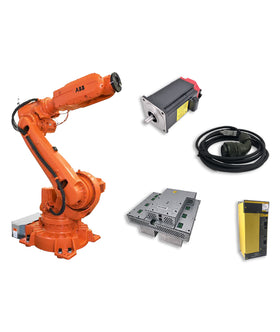
Key components commonly involved in yaskawa alarm troubleshooting issues and replacements.


{"one"=>"Wählen Sie 2 oder 3 Artikel zum Vergleichen aus", "other"=>"{{ count }} von 3 Elementen ausgewählt"}
Wählen Sie das erste zu vergleichende Element aus
Wählen Sie das zweite zu vergleichende Element aus
Wählen Sie das dritte Element zum Vergleichen aus
Einen Kommentar hinterlassen