



On Universal Robots systems, error codes are not isolated fault messages.
Most codes represent the final result of a larger system condition that has already been developing somewhere inside the robot.
This is why replacing hardware based only on the visible code often leads to repeated failures.
In real production environments, the important question is usually not:
“What does this code mean?”
but:
“Which system layer became unstable before the code appeared?”
A Protective Stop during acceleration, for example, may begin as:
long before the controller finally reports a visible alarm.
Effective troubleshooting therefore starts with identifying:
rather than treating the code itself as the root cause.
UR controllers — including both CB3 and e-Series platforms — monitor multiple system layers simultaneously.
When instability appears, the controller determines:
The resulting code reflects that decision process.
In practical field troubleshooting, most UR errors fall into four major diagnostic domains:
| Failure Layer | Typical Behavior | Common Field Direction |
| Safety Layer | Immediate stop or safety lock | E-stop chain, safety timing, signal interruption |
| Motion Layer | Protective Stop during movement | Payload, torque deviation, collision behavior |
| Feedback Layer | Position instability or communication loss | Encoder signals, cable wear, EMI |
| System Layer | Runtime instability or startup failure | PolyScope, storage, scripts, controller state |
The value of this structure is speed.
Once the unstable layer is identified, troubleshooting becomes much more focused.

One common mistake is focusing only on the numeric code itself.
In practice, the controller’s response behavior is usually more important.
The same underlying issue can appear first as:
depending on how far the instability has progressed.
Some messages are primarily diagnostic indicators.
The robot may continue operating normally while the controller records:
These warnings are often the first sign of degradation developing somewhere in the system.
In many production environments, major failures are preceded by warning-level events hours or days earlier.
Protective Stops are among the most common UR production interruptions.
Typical examples include:
These events usually indicate the controller no longer trusts the current motion condition.
A very common field pattern is:
In many cases, the root cause is related to:
rather than hard mechanical failure.
Safety-related faults typically involve:
Unlike Protective Stops, these conditions are treated as safety-critical by the controller.
Many field cases involve intermittent safety timing interruption rather than obvious hardware damage.
For example:
can all generate repeatable safety faults even when no visible wiring damage exists.
Fatal system errors usually indicate instability inside the controller itself.
These situations commonly involve:
A common field progression is:
In these situations, the visible error code is often only the final symptom.
Although exact mappings vary slightly between CB3 and e-Series systems, several error families appear frequently in production environments.
| Error Family | Typical Direction | Common Real-World Cause |
| C20x | Safety-related interruption | E-stop chain, timing instability, safety synchronization |
| C15x | Motion-model deviation | Payload mismatch, collision behavior, torque inconsistency |
| C19x | Feedback instability | Encoder signals, EMI, cable fatigue |
| C1x | System/runtime instability | PolyScope, storage corruption, script or memory issues |
The important point is that the code family often reveals the unstable system layer faster than the exact alarm description.
Many motion-related UR faults develop gradually.
The robot may initially:
This behavior is extremely common with:
The controller continuously compares expected motion behavior against actual feedback response.
Engineering representation:
ΔT=Texpected−Tactual\Delta T = T_{expected} - T_{actual}ΔT=Texpected−Tactual
When the deviation becomes too large, the controller interrupts motion before instability becomes unsafe.
This is why some Protective Stops appear “random” while actually following a very repeatable load-dependent pattern.
Feedback-related alarms often involve signal quality problems rather than complete encoder destruction.
A common field progression looks like this:
The underlying cause is frequently tied to:
In many cases, the robot still moves correctly at low speed while becoming unstable during dynamic motion.
This is one of the strongest indicators of signal integrity degradation rather than catastrophic hardware failure.
Controller-level faults are frequently misdiagnosed because the visible code appears after the real instability has already occurred.
In practice, the most useful diagnostic information often exists:
This is why experienced engineers focus heavily on:
rather than reading only the final alarm line.
A communication fault occurring during acceleration, for example, points toward a completely different root cause than the same fault appearing during idle operation.
Instead of troubleshooting by code alone, isolate the failure condition systematically.
Determine whether the issue occurs:
Timing behavior is often the strongest clue.
Focus on the system area most closely associated with the failure pattern:
Many UR errors are triggered externally rather than internally.
Always verify:
The visible error is often the final protection response.
The actual instability usually appears earlier.
Look for:
This often reveals the true failure progression.
Across production environments, several causes appear repeatedly:
Most repeated UR faults eventually trace back to one of these categories.
When troubleshooting repeated UR failures, symptoms are often more useful than the code itself.
Common troubleshooting directions include:
These symptoms usually reveal the unstable system layer faster than searching codes individually.
Most codes indicate which system layer triggered the protective response.
The code itself is usually the result of a deeper instability condition.
Common causes include:
This does not always indicate hardware damage.
Experienced troubleshooting relies heavily on:
The sequence leading to the stop is often more valuable than the final code itself.
The overall logic structure is similar, but implementation details and exact mappings differ between platforms.
Explore the Full Guide: Industrial Robot Knowledge Hub → Repair & Troubleshooting Cluster
Explore the complete guide for troubleshooting, repair strategies, and component replacement across industrial robot systems.
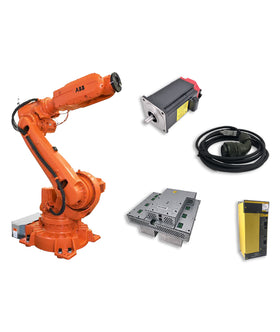
Key components commonly involved in issues and replacements.


{"one"=>"Wählen Sie 2 oder 3 Artikel zum Vergleichen aus", "other"=>"{{ count }} von 3 Elementen ausgewählt"}
Wählen Sie das erste zu vergleichende Element aus
Wählen Sie das zweite zu vergleichende Element aus
Wählen Sie das dritte Element zum Vergleichen aus
Einen Kommentar hinterlassen