


Random disconnection issues in KUKA robots are often reported as:
In most real-world KUKA cases, these symptoms are not caused by controller failure, but by communication instability in smartPAD cables, EtherCAT network lines, or internal signal wiring.
Field diagnostics show that a significant portion of intermittent KUKA disconnect issues originate from degraded communication cables or signal integrity loss under dynamic motion conditions.
Typical KUKA communication instability symptoms include:
⚠️ Key observation:
If the system recovers after reboot but the fault returns randomly, the issue is highly likely related to physical communication layer instability rather than software or controller logic.
KUKA systems may not always generate fixed “SRVO-style” codes, but the following patterns are commonly observed:
⚠️ Diagnostic insight:
These errors often appear intermittently and disappear after restart, which strongly suggests signal integrity issues rather than controller hardware failure.
In KUKA systems, the smartPAD is deeply integrated into both control and safety communication.
Common failure modes include:
Symptoms:
In field diagnostics, this is often the first component to inspect physically before controller-level analysis.
KUKA KRC systems rely on stable internal communication between controller modules and servo drives.
Typical issues include:
Resulting behavior:
Recommended solution path: KUKA Robot Communication Cable
KUKA systems are highly sensitive to EtherCAT timing and synchronization.
Failure mechanisms:
⚠️ Important:
Fieldbus instability can mimic controller failure or safety shutdown, making physical inspection critical.
In industrial environments with welding or high-load equipment:
These conditions often amplify existing cable degradation issues.
A practical KUKA diagnostic method:
A continuity test may show a “healthy” cable, but KUKA systems rely on high-speed deterministic communication (EtherCAT + real-time sync).
At this level:
can result in:
short-duration packet loss (10–50ms)
The system interprets this as:
→ communication instability → safety or bus fault trigger

Cable replacement should be considered when:
At this stage, repair is not stable — replacement is the only reliable solution.
Recommended category: Robot Communication Cable
KUKA robots (especially KRC4 architecture) rely on:
This means:
even minor cable degradation can triggerfullfull system-level communication faults.
If intermittent KUKA disconnect behavior is confirmed, follow this structured approach:
In most field cases, the root cause is physical communication cable degradation rather than controller failure.
When a KUKA robot presents intermittent communication loss, especially involving smartPAD instability or EtherCAT-related interruptions, the issue should always be approached as a physical signal integrity problem first.
Unlike software or controller faults, these failures are typically:
In most field cases, replacing or restoring the affected communication path is the most effective long-term resolution strategy.
This is usually caused by communication cable degradation or EtherCAT instability, not controller failure.
Most commonly due to internal cable fatigue or connector instability.
Because the issue is temporary signal loss, not permanent hardware damage.
If the issue correlates with movement or vibration → cable is confirmed as primary suspect.
Explore the Full Guide: Repair & Troubleshooting Cluster → Robot Disconnects Randomly
Explore the complete guide for troubleshooting, repair strategies, and component replacement across industrial robot systems.
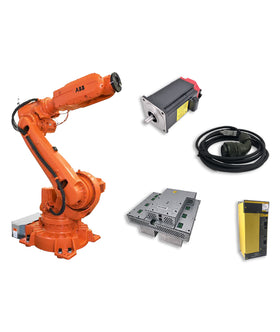
Key components commonly involved in kuka robot communication intermittent fault issues and replacements.
No related parts found. Please check available components in our catalog.


{"one"=>"Wählen Sie 2 oder 3 Artikel zum Vergleichen aus", "other"=>"{{ count }} von 3 Elementen ausgewählt"}
Wählen Sie das erste zu vergleichende Element aus
Wählen Sie das zweite zu vergleichende Element aus
Wählen Sie das dritte Element zum Vergleichen aus
Einen Kommentar hinterlassen