


In a real factory, an Industrial Ethernet failure rarely shows up as a clean “network down” event.
More often, it starts with unstable behavior:
At this point, the issue is already affecting production — but the root cause is still unclear.
Unlike traditional fieldbus systems, Industrial Ethernet (such as PROFINET, EtherNet/IP, or Modbus TCP) depends on packet transmission, switch behavior, and network configuration.
That makes faults more dynamic — and much harder to isolate.
Most engineers first notice the problem through system behavior, not diagnostics.
Common signs include:
If motion accuracy or cycle time starts drifting, network instability is often involved.
From real maintenance cases, most Industrial Ethernet issues are not caused by software.
They come from the physical and network layers:
This is the #1 failure source in robotic systems.
In moving applications, Ethernet cables degrade much faster than expected.
Industrial environments introduce strong EMI.
Typical causes:
This often creates intermittent, hard-to-reproduce communication faults.
Less frequent, but still important:
If multiple devices fail at the same time, always suspect topology issues.
Always begin here. It solves most cases.
Critical check:
Make sure the cable shield is grounded through the connector housing.
Poor grounding can introduce noise and cause unstable communication that looks like a “software problem”.
A stable link light does not guarantee stable communication — but an unstable light always indicates a problem.
Even minimal packet loss (1–2%) can significantly disrupt industrial communication.
IP conflicts often cause intermittent, confusing failures.
Important insight:
A network loop can trigger a broadcast storm, causing multiple robots to disconnect simultaneously.
If the issue is:
Replace the cable first.
In practice, this is the fastest way to eliminate uncertainty.
Choosing the right cable is critical in robotic environments.
Office Ethernet cables are not designed for industrial use and fail quickly in robot applications.
| Scenario | What to Do First |
| Intermittent connection | Replace cable |
| Packet loss / delay | Check switch + traffic |
| Device not reachable | Verify IP settings |
| Multiple devices failing | Check network topology |
In real maintenance work: Cable replacement is often the fastest and most reliable first step.
If the issue persists after cable replacement, move upstream: switch → interface → controller module
Cable degradation and poor connections are the most frequent causes.
Yes. Even small packet loss can disrupt real-time control and synchronization.
No. They are not designed for industrial environments with EMI and motion.
Cable fatigue, EMI interference, and network congestion are common causes.
Yes. Improper grounding can introduce noise and cause unstable communication.
Best Practice:
Ensure the cable shield is properly grounded through connectors to maintain signal integrity.
Explore the Full Guide: Industrial Robot Knowledge Hub → Repair & Troubleshooting Cluster
Explore the complete guide for troubleshooting, repair strategies, and component replacement across industrial robot systems.
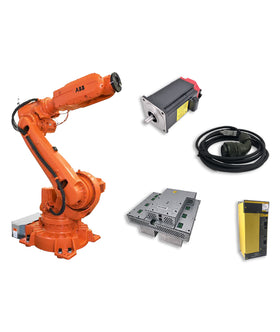
Key components commonly involved in industrial ethernet failure issues and replacements.
No related parts found. Please check available components in our catalog.


{"one"=>"Wählen Sie 2 oder 3 Artikel zum Vergleichen aus", "other"=>"{{ count }} von 3 Elementen ausgewählt"}
Wählen Sie das erste zu vergleichende Element aus
Wählen Sie das zweite zu vergleichende Element aus
Wählen Sie das dritte Element zum Vergleichen aus
Einen Kommentar hinterlassen