

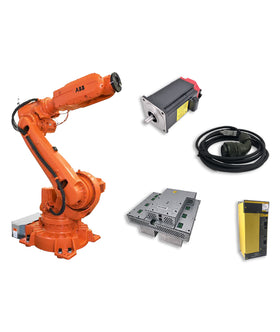


FANUC is a global leader in industrial automation, known for its CNC systems, industrial robots, and servo drives. With unmatched reliability, precision control, and advanced manufacturing capabilities, FANUC products power industries ranging from machine tools and automotive manufacturing to electronics assembly. While these systems are engineered for durability, even the most dependable CNC equipment can encounter faults over time.
This guide covers five of the most common FANUC CNC faults—and how to troubleshoot them effectively—so you can keep your machines running smoothly and minimize downtime.
Power and hardware faults can cause a complete halt in operations. Common symptoms include failure to start, loss of power indicator lights, or voltage instability.
Inspect wiring and replace damaged power cords.
Check the power module for defects.
For display problems like screen distortion, dimness, or frozen images, inspect the circuit board and replace the LCD or entire display if needed.
For black-and-white screens, try adjusting the brightness knob; if that fails, consider system initialization or motherboard replacement.
If overheating causes auto-shutdown, clean dust from the cooling fan and radiator, and check coolant flow.
Addressing these early helps prevent further electrical or mechanical stress on the CNC system.
Servo malfunctions can drastically reduce precision and productivity. One common alarm is servo overcurrent, which indicates excessive output current.
Check motor insulation and repair or replace faulty motors.
Verify power cable phase sequence and adjust servo parameters to match motor specs.
For unstable axis motion or lost reference points, inspect lead screws, couplings, and mechanical assemblies for wear.
Calibrate encoders and grating scale feedback signals.
If encoders fail, clean contacts, replace the encoder, and inspect cables for breaks.
These measures ensure smooth, accurate motion control and prolong equipment lifespan.
Incorrect parameter settings or faulty software can cause unexpected behavior, such as axis overtravel or abnormal program execution.
Compare current parameters with the FANUC manual, restore factory defaults if needed, and back up parameters to a CF card.
Use the system’s Program Check feature to detect syntax errors in G-code or M-code.
Rewrite programs to match machine specifications.
Update system firmware to fix bugs and improve stability.
Use diagnostic tools to scan for and repair damaged files.
Regular backups and careful parameter management can prevent costly downtime.
Excessive mechanical load can trigger servo overload alarms, often due to dull tools or aggressive machining parameters.
Replace worn cutting tools and optimize cutting feeds and speeds.
Increase acceleration/deceleration times to reduce load spikes.
Train operators to follow proper procedures and avoid overtravel or abrupt stops.
Maintain consistent lubrication and clean debris from guide rails, bearings, and machine interiors.
Proper training and preventive care can dramatically reduce failure frequency.
Preventive maintenance is the key to avoiding repeat breakdowns.
Perform monthly inspections of cable connections, joint tightness, and cooling systems.
Calibrate sensors and servo parameters annually for precision.
Keep essential spare parts—like batteries and servo modules—on hand for quick replacement.
Maintain a clean, temperature- and humidity-controlled workshop to protect electronics.
When diagnosing FANUC faults, work from the simplest to the most complex cause. For persistent issues, seek professional FANUC service support. Consistent maintenance not only reduces repair costs but also ensures peak machining quality.
Explore the Full Guide: Industrial Robot Knowledge Hub → Repair & Troubleshooting Cluster
Explore the full guide to discover related topics and gain deeper insights into industrial automation.
Key components commonly involved in repair guides issues and replacements.


{"one"=>"Wählen Sie 2 oder 3 Artikel zum Vergleichen aus", "other"=>"{{ count }} von 3 Elementen ausgewählt"}
Wählen Sie das erste zu vergleichende Element aus
Wählen Sie das zweite zu vergleichende Element aus
Wählen Sie das dritte Element zum Vergleichen aus
Einen Kommentar hinterlassen