

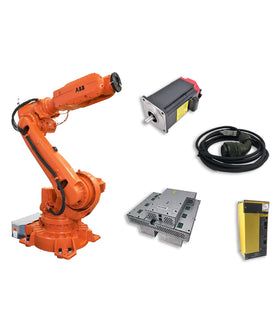

When purchasing industrial robot spare parts, buyers often receive several options for the same component: new, new surplus, used, or refurbished.
The price difference can be significant, but choosing the lowest-priced option is not always the best decision.
A new component may be unused but come from older inventory. A used component may have been removed from a working robot, while a refurbished unit may have undergone repairs or component replacement.
These descriptions do not automatically tell buyers whether a product is genuine, fully functional, or suitable for their application.
Before placing an order, purchasing teams should ask suppliers for evidence that supports the product's identity, condition, testing status, and replacement compatibility.
This guide explains the differences between new, used, and refurbished industrial robot parts, what evidence buyers should request, and how to evaluate a supplier's response before purchasing.
The first step is to understand what each product condition actually means.
Suppliers may use different descriptions, so buyers should confirm the exact condition rather than relying on the product title alone.
New robot parts are represented as unused products.
They may come from current production, original distribution inventory, or previously purchased stock.
However, the word "new" does not necessarily mean recently manufactured or currently supported by the manufacturer.
For discontinued robot components, unused inventory may have been stored for several years.
Before purchasing, ask:
Is the product unused?
Is it original manufacturer stock?
Is the original packaging available?
Is the manufacturing date or date code identifiable?
Has the product been stored under appropriate conditions?
For electronic components, storage history can matter, particularly when considering long-term exposure to moisture, heat, or unsuitable packaging.
New surplus refers to unused inventory that remains from previous purchasing, distribution, or equipment projects.
These parts may no longer be available through regular distribution channels but can still be suitable sourcing options.
Buyers should distinguish new surplus from used or refurbished inventory.
Ask whether the component has been installed, powered on, repaired, or otherwise operated.
Also request clear photos of the product label and packaging where available.
Used parts have previously been installed or operated.
They may have been removed from:
Decommissioned robot systems
Equipment upgrades
Production line replacements
Machines undergoing refurbishment
Systems dismantled for spare parts
A used component may still be functional, but its previous operating history and remaining service life may be uncertain.
For this reason, buyers should request information about its source, visible condition, inspection results, and any available functional testing.

Refurbished components have previously been used or may have had an earlier fault, followed by some form of repair, restoration, or component replacement.
However, refurbishment standards vary between suppliers.
One supplier may replace damaged electronic components and perform functional testing. Another may only clean the product and replace its housing.
The word "refurbished" alone does not describe the work performed.
Ask the supplier:
What work was completed?
Which components were replaced?
Were any repairs performed on the PCB?
Was the product tested after refurbishment?
Are test records available?
Is a warranty provided?
A clear refurbishment description is more useful than a general condition label.
Regardless of whether a component is new, used, or refurbished, buyers should request evidence that helps verify the product.
The following six categories are particularly important.
Start with clear photographs of the actual component being offered.
Request photos showing:
Front and rear of the product
Manufacturer name
Complete part number
Model number
Hardware revision
Serial number or identification label, where available
Connector configuration
Any visible damage or repair marks
For electronic boards, ask for clear images of the PCB markings and component area.
For Teach Pendants, request photos of the front, rear, connectors, display, keypad, and housing.
For robot cables, request photos of both connectors, cable markings, and the overall cable assembly.
Product identification photos help buyers check whether the offered item matches the required part.
A generic catalog image is not sufficient evidence of the actual unit's condition or identity.
Ask the supplier to describe the physical condition of the actual product.
A useful inspection record should identify any visible issues rather than simply stating "good condition."
For example:
| Component | What to Inspect |
|---|---|
| Teach Pendant | Screen, keypad, housing, switches, connectors |
| PCB | Burn marks, corrosion, damaged components, connectors |
| Servo Drive | Housing, terminals, cooling fan, visible damage |
| Servo Motor | Shaft, connectors, housing, brake connections |
| Robot Cable | Jacket, connector condition, strain relief, visible damage |
| LCD / Touch Panel | Display surface, cracks, scratches, connector condition |
Physical inspection does not prove that an electronic component works correctly, but it provides important information about its condition.
For products with visible wear or previous repairs, request additional close-up photos.
For used and refurbished electronic components, testing information is particularly important.
A supplier should explain what was actually tested.
For example, a PCB described as tested may have undergone only a basic power-on check, rather than a complete functional test in a compatible robot controller.
Ask:
Was the product tested?
What test procedure was used?
Was it tested in a compatible system?
Which functions were verified?
Were any alarms or faults recorded?
Is a test report or inspection record available?
Different components require different testing methods.
| Component | Useful Testing Evidence |
|---|---|
| Teach Pendant | Power-on, display, keypad, touch, communication, relevant switches |
| PCB / Control Board | Visual inspection, electrical checks, applicable functional tests |
| Servo Drive | Power-on, diagnostic status, supported functional checks |
| Servo Motor | Electrical checks and appropriate motor testing |
| LCD Display | Display operation and image quality |
| Touch Panel | Touch response and functional operation |
| Cable Assembly | Continuity, pin configuration, and applicable electrical checks |
Not every supplier can perform full system-level testing.
That does not automatically make the product unsuitable, but buyers should understand the limitations.
A clear statement such as "visually inspected only" is more useful than an unsupported claim that the product is fully tested.
For high-value or critical components, buyers should also ask about product origin and available traceability.
Relevant evidence may include:
Original packaging
Manufacturer labels
Product identification records
Previous inventory records
Supplier purchasing records, where available
Removal or decommissioning records, where available
Traceability can help establish where a product came from and whether its identification information is consistent.
However, not every independent supplier can provide a complete manufacturer distribution history, particularly for older surplus or used inventory.
Buyers should distinguish between verified documentation and information that is simply provided verbally.
Do not assume that a label or logo alone proves authenticity.
A component can be genuine and in good physical condition but still be unsuitable for the intended robot system.
This is particularly important for:
Robot controller boards
Servo drives
Power supply modules
Teach Pendants
Encoders
Motor and signal cables
Ask the supplier to confirm the relevant compatibility details.
| Verification Area | Information to Check |
|---|---|
| Part Number | Complete original and replacement numbers |
| Revision | Hardware revision and approved replacement relationship |
| Robot Model | Intended robot model |
| Controller | Controller generation and configuration |
| Electrical Specifications | Voltage, current, and relevant ratings |
| Connections | Connector type, pinout, and interface |
| Firmware | Applicable software or firmware requirements |
| Parameters | Configuration or commissioning requirements |
If the offered product is a different model or revision, request supporting documentation for the proposed replacement relationship.
A similar appearance or matching connector does not establish compatibility.
Before purchasing, understand what protection is available if the product does not match the description or fails during the agreed warranty period.
Ask for written confirmation of:
Warranty duration
What the warranty covers
Return eligibility
Return authorization procedure
Who pays return shipping
Whether installation-related failures are covered
Any exclusions for used or refurbished products
Warranty terms can vary considerably by product condition and supplier.
Do not assume that new, used, and refurbished products carry identical coverage.
For high-value electronic components, written terms are particularly important.
Different product conditions require different levels of evidence.
The following table provides a practical purchasing reference.
| Evidence | New | New Surplus | Used | Refurbished |
|---|---|---|---|---|
| Actual Product Photos | Recommended | Recommended | Essential | Essential |
| Part Number / Revision | Essential | Essential | Essential | Essential |
| Packaging Photos | Useful | Useful | If available | If available |
| Physical Inspection | Recommended | Recommended | Essential | Essential |
| Functional Test | Depends on component | Depends on component | Strongly recommended | Strongly recommended |
| Repair History | Usually not applicable | Usually not applicable | If known | Essential |
| Testing Records | If available | If available | If tested | If tested |
| Compatibility Verification | Essential | Essential | Essential | Essential |
| Warranty / Return Terms | Confirm | Confirm | Confirm | Confirm |
This table is a purchasing guideline, not a universal certification standard.
The required evidence depends on the component type, product value, application risk, and supplier's testing capabilities.
For example, a used cable assembly and a refurbished servo drive do not require exactly the same verification process.
When sourcing industrial robot spare parts, certain supplier responses should trigger additional questions.
If the supplier cannot provide actual product photos, it may be difficult to confirm the exact part number, revision, and physical condition.
Request photos of the specific unit being offered.
A listing may show only a partial part number or a product family name.
This can create compatibility risks, particularly for electronic boards, servo drives, and controller modules.
Ask for the complete identification number and revision.
A statement such as "100% tested" is not very useful without knowing what was tested.
Ask for the test scope and whether the component was evaluated in a compatible system.
If a refurbished product is offered without any explanation of the work performed, request further details.
The supplier should be able to describe the refurbishment process or clearly state what information is unavailable.
Be cautious if a supplier confirms compatibility only because two products look similar or have related model numbers.
Request manufacturer documentation, approved supersession information, or other relevant technical evidence.
If the supplier cannot explain the warranty or return conditions before payment, the purchasing risk may be higher.
Obtain written terms before placing the order.
Not all evidence has the same value.
A product photograph confirms visible identification and condition, but it does not prove functional performance.
A test report may provide evidence of operation, but it does not automatically prove compatibility with a different controller.
Use the following framework to evaluate the information provided.
| Evidence Type | What It Can Support | What It Cannot Prove Alone |
|---|---|---|
| Product Photos | Appearance, labels, visible condition | Internal functionality |
| Nameplate | Product identification and ratings | Authenticity or operational condition |
| Inspection Record | Observed physical condition | Complete functional performance |
| Test Report | Specific functions or checks performed | Compatibility with every application |
| Manufacturer Documentation | Specifications and approved replacement relationships | Actual condition of the supplied unit |
| Warranty Terms | Agreed coverage and remedies | Guaranteed future service life |
The most reliable purchasing decision combines several types of evidence.
For example, when buying a used FANUC control board, a buyer should ideally obtain:
Actual photos of the board.
Complete part number and revision.
Physical inspection information.
Testing scope or test records, if available.
Compatibility confirmation for the intended controller.
Written warranty and return terms.
No single document should be treated as proof of every aspect of product quality.
The best choice depends on the component's function, availability, budget, and the consequences of failure.
New components are generally worth prioritizing when:
The component is critical to machine safety or production.
The application requires a new product.
Manufacturer support or traceability is important.
Suitable new inventory is available.
The cost difference is justified by the application risk.
However, buyers should still verify the part number, storage condition, and compatibility.
New surplus can be a practical option when:
The original component is discontinued.
Unused inventory is available from previous stock.
The part number and revision can be verified.
Storage and packaging conditions are acceptable.
The product meets the application's requirements.
This can be particularly relevant for older robot controller generations.
Used components may be worth considering when:
New stock is unavailable.
The component has been inspected.
Its condition is clearly disclosed.
Appropriate testing information is available.
The supplier provides acceptable return terms.
For high-risk applications, additional technical evaluation may be necessary.
Refurbished components may offer a practical alternative when:
The original component is difficult to source.
The refurbishment process is documented.
Replaced components and repair work are disclosed.
Relevant functional testing has been completed.
Warranty terms are acceptable.
Do not choose refurbished simply because it is described as restored or repaired.
Understand exactly what work was performed and what remains unverified.
Electronic components deserve particular attention because their visible appearance does not always reflect their internal condition.
Request complete board identification, revision information, photos of both sides where practical, and details of any previous repair work.
Ask whether the board was tested and what functions were checked.
Verify the exact model, electrical ratings, hardware revision, and compatibility with the motor and controller.
For used or refurbished drives, ask what inspection and functional testing were performed.
Check the display, touch panel, keypad, emergency stop switch, housing, connectors, and cable interface as applicable to the model.
A pendant that powers on may still have defective buttons, an unresponsive touch panel, or intermittent communication problems.
Request photos of both connectors and the cable jacket.
Confirm the cable function, part number, length, connector configuration, and relevant electrical specifications.
Visual inspection alone cannot confirm the internal conductor condition.
Before confirming an order, make sure the following information is available.
Complete part number and model
Hardware revision, where applicable
Actual photos of the supplied product
Product condition clearly stated
Visible damage or previous repairs disclosed
Testing scope explained
Relevant test records provided, if available
Robot and controller compatibility checked
Alternative or superseded part relationship verified
Warranty and return terms confirmed
Product quantity and availability confirmed
Delivery arrangements agreed
If the supplier cannot provide every item, identify which information is missing and decide whether the remaining uncertainty is acceptable for the application.
The goal is not to collect the largest number of documents. It is to obtain enough reliable evidence to make an informed purchasing decision.
Buyers can also help suppliers provide better evidence by submitting accurate product information from the beginning.
Include:
Part Identification
Original part number
Manufacturer and product model
Hardware revision, if available
Application Information
Robot model
Controller model and generation
Intended application
Product Condition Requirements
New only
New surplus acceptable
Refurbished acceptable
Used acceptable, subject to inspection
Technical Requirements
Required compatibility information
Testing or inspection requirements
Any specific documentation needed
Purchase Information
Required quantity
Delivery destination
Target delivery time
Warranty expectations
If the original part number is unclear, provide photos of the label, connectors, and overall product.
This helps suppliers identify the correct component and determine what additional evidence may be available.
Selecting an industrial robot spare part involves more than comparing prices and product condition labels.
Buyers need to understand what they are purchasing, what evidence supports the product description, and whether the component is suitable for the intended robot system.
InRobots supports industrial robot spare parts sourcing for major manufacturers including ABB, FANUC, KUKA, and Yaskawa.
Our product categories include:
Teach Pendants and repair components
Robot cables and Teach Pendant cables
Circuit boards and electronic modules
Servo drives and servo motors
Power supply modules
LCD displays, touch panels, and keypad components
Other industrial robot spare parts
When requesting a quote, let us know your preferred product condition and any inspection, testing, or documentation requirements.
You can also provide the original part number, robot model, controller information, and product photos to help identify the correct component.
Looking for industrial robot spare parts with clearly defined product conditions?
Contact InRobots for a Spare Parts Quote
Send us your part number and requirements to start your inquiry.
New surplus parts are unused inventory from previous stock or purchasing activities. Refurbished parts have undergone some form of repair, restoration, or component replacement after previous use or an earlier fault. Buyers should confirm the actual condition and work performed.
Reliability depends on the component's previous use, physical condition, inspection, testing, and application. Request actual product photos, available test records, and written warranty terms before purchasing.
Not necessarily. Testing may cover only specific functions or basic operating conditions. Ask what tests were performed, whether the component was tested in a compatible system, and what limitations remain.
Request actual board photos, complete part number, hardware revision, physical inspection details, testing information, and compatibility confirmation for your controller. Also ask about any previous repairs and available warranty coverage.
Not necessarily. New parts may be preferable for critical applications, but new surplus, refurbished, or used components can be practical options when the original part is discontinued or unavailable. The decision should be based on verified condition, compatibility, evidence, and application requirements.
Only if the refurbished drive is compatible with the intended motor and controller configuration and meets the application's requirements. Verify its model, revision, electrical specifications, firmware, parameters, testing scope, and warranty before installation.
Ask what inspection or testing was actually performed and whether other evidence is available. If no functional test was conducted, the product should not be treated as functionally verified. Decide whether that level of uncertainty is acceptable before ordering.
Before purchasing a new, used, or refurbished robot component, make sure you know exactly what you are receiving.
Submit Your Spare Parts Inquiry to InRobots
Provide the original part number, preferred condition, and any testing or documentation requirements to start your inquiry.
Key components commonly involved in issues and replacements.
No related parts found. Please check available components in our catalog.


{"one"=>"Wählen Sie 2 oder 3 Artikel zum Vergleichen aus", "other"=>"{{ count }} von 3 Elementen ausgewählt"}
Wählen Sie das erste zu vergleichende Element aus
Wählen Sie das zweite zu vergleichende Element aus
Wählen Sie das dritte Element zum Vergleichen aus
Einen Kommentar hinterlassen